
By Paul O’Keeffe and Claire MacEvilly
Across Europe and the wider world, education is increasingly being called upon to foster ecological literacy, social cohesion, and community resilience (European Commission 2024). The urgency of climate change, biodiversity loss, food insecurity, rising migration, and broader social and environmental pressures demands pedagogical approaches that go beyond transferring knowledge and instead actively transform values, behaviors, and relationships with the natural world. Within this context, living classroom models are gaining significance as dynamic, participatory, and community-centered approaches to sustainability education. At its core, a living classroom constitutes place-based and hands-on learning that connects participants with their environment in a grounded and holistic manner (Yemini, Engel, and Simon 2023).
In the world of sustainability education, the living classroom directly engages learners with their local ecological, agricultural, social, and cultural systems. As a model of empirical learning, the living classroom enables learners to move beyond abstract concepts to a lived, experiential understanding (Tagliaferro 2022). Airfield Estate[1] in Dublin, an education and food sustainability charity, represents a compelling European example of such a model. As Ireland’s leading urban farm, gardens, and research center open to the public, Airfield integrates organic agriculture, biodiversity restoration, cultural heritage, public engagement, and research into a unified educational framework. It functions simultaneously as a working farm, research hub, community space, and place-based learning environment where people of all ages encounter food systems and ecological processes as tangible realities rather than theoretical constructs (Airfield 2025). The approach is grounded in the principle that learning is most impactful when individuals participate in and help shape the systems they are studying (Kong 2021). Rather than separating knowledge from practice, Airfield’s sustainability pedagogy situates learning within the interconnected processes that sustain life, including soil formation, pollination, nutrient cycling, plant and animal care, food preparation, waste transformation, and cultural food traditions (Heslin, Sullivan, and Mcadoo, 2024).
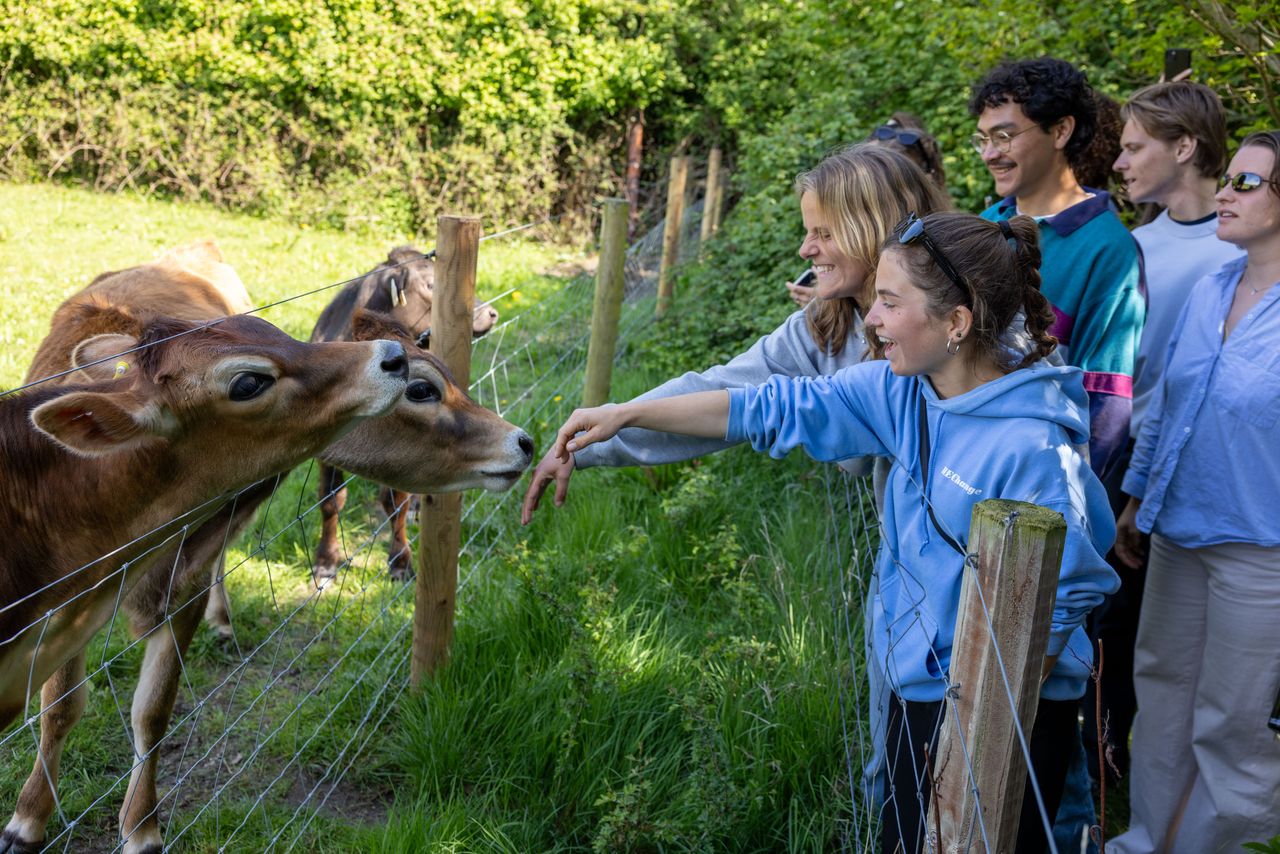
To operationalize this model, Airfield employs a range of structured and informal learning opportunities, including farm-based workshops, horticulture programs, culinary education, biodiversity activities, citizen-science initiatives, and research and dissemination partnerships with tertiary institutions. Participants can engage in practices such as planting and harvesting vegetables, livestock husbandry, composting, soil quality testing, pollinator observation, and seasonal food preparation. Through these activities, the living classroom fosters ecological literacy, practical competence, and an understanding of food systems as social-ecological networks embedded in place and community. Such experiences cultivate not only scientific understanding but also sensory awareness, emotional connection, reduced loneliness and isolation, and ethical responsibility. They enable learners to witness the transformation of organic waste into soil fertility, milk into butter, seeds into crops, and community gardens into sites of belonging and exchange. These processes reconnect people to the land and help to demystify food systems while at the same time fostering stewardship, agency, and collective responsibility towards achieving sustainability transitions.
Importantly, Airfield’s living-classroom approach resonates beyond its immediate geographical and socioeconomic context, even across profoundly different environmental and social settings. Through collaboration with the CHARM-EU program at Trinity College Dublin, in 2025, parallels between Airfield’s sustainability practices and refugee-led agricultural initiatives in Kakuma Refugee Camp in north-western Kenya were explored (CHARM-EU 2025). As part of their CHARM-EU Masters’ in Sustainability project work, students from the program connected online with members of the farming community-based organization Vijana Twaweza Community[3] in Kakuma refugee camp, to learn about farming in the camp and exchange their insights into sustainable agricultural knowledge and practices. In the collaboration, the students and farmers analyzed shared themes of food systems, resilience, and community-led development. Despite operating in vastly different conditions, participants identified strong intercultural connections and mutual learning opportunities, illustrating the potential of living classroom principles to extend beyond the immediate place to support diverse communities in cultivating sustainable and socially cohesive futures.
Food as Pedagogy and Social Infrastructure
Food is central to the living classroom pedagogical model utilized at Airfield. It is approached not only as a biological necessity but also as a cultural artefact, a social experience, a climate lever, and a foundation for community life (Heslin, Sullivan, and Mcadoo 2024). Programs at Airfield link nutrition education with regenerative farming, food skills, biodiversity literacy, social learning, and cutting edge research. This emphasis reflects a broader shift in sustainability discourse toward food as an enabler of systemic transformation. Food intersects with climate mitigation, biodiversity protection, soil health, water systems, cultural identity, and community resilience. As such, food literacy allows us to understand, grow, prepare, and critically engage with food systems, and it is a key component of sustainability education (McManus, Prendergast, and Kanasa 2025).
Airfield’s food-centered approach also supports social integration. In a diverse urban area where as many as one in five people are migrants (CSO 2025), food can become a means for building cross-cultural understanding. Shared cooking activities, food storytelling, and community gardens have the potential to facilitate belonging and dialogue. For example, through shared culinary pursuits, food practices from around the world can intersect to create a learning environment where heritage is celebrated and identity is negotiated through these shared practices (Sustainability Directory 2025). This intercultural dimension allows the living classroom model to become more than an environmental initiative and to be a positive force for social cohesion and inclusion—something that is needed now more than ever.
Adding further to educational value of Airfield as a living classroom is the biodiversity that it provides to the metropolitan Dublin area. The estate’s hedgerows, meadows, orchards, pond, and organic pastures serve as active learning ecosystems with which visitors can actively engage. These habitats provide opportunities for citizen science, species identification, pollinator monitoring, and habitat restoration projects. Educational activities foreground regenerative principles such as sustainable grazing and heritage animal care, closed-loop nutrient systems, water purification through reed-bed filtration, agroforestry, and hedgerow ecology. This emphasis aligns with European One Health frameworks,[4] linking environmental health, animal welfare, and human wellbeing. In a time of rapid urbanization when populations often lack direct contact with ecological processes, living classrooms such as Airfield can enable environmental literacy by connecting learners with the rhythms and interdependencies of living systems, grounded in observation and participation rather than abstraction (Laurienti 2025).
Education for Sustainable Development and Curriculum Alignment
A key strength of the living classroom approach at Airfield lies in its integration with formal and informal education pathways. Airfield engages schools, further-education institutions, and universities, providing curriculum-aligned learning experiences that complement and extend classroom teaching (Airfield 2025). Primary and secondary students engage in place-based activities aligned with themes such as biodiversity, climate action, food systems, and health and wellbeing. These experiences address key policy priorities in Ireland and Europe, including the Department of Education’s Education for Sustainable Development strategy[5] and the European Green Deal’s[6] focus on ecological literacy and food systems transformation (Department of Education and Youth 2018).
For younger learners, nature-based play and direct sensory experiences such as touching soil, caring for animals, and tasting produce grown on site support emotional engagement, memory formation, and biodiversity awareness raising education in ways that classroom-based learning may not achieve alone (Beery and Jorgensen 2016). For older students, engagement with real-world sustainability challenges enhances critical thinking, systems thinking, and applied problem-solving skills (Uzorka, Akiyode, and Isa 2024). University-level collaborations encourage interdisciplinary exploration, encompassing not only environmental science and agriculture but also nutrition, architecture, urban planning, sociology, migration studies, and public policy.
Research-Led Practice and Knowledge Exchange
A defining feature of the living classroom model at Airfield is the way research and practice operate in a mutually reinforcing cycle. Airfield is not only a site of experiential sustainability education, it also functions as a research-active environment where emerging knowledge on sustainable agriculture, environmental governance, and community participation is generated, tested, and translated into everyday practice. This research-practice nexus strengthens the credibility of the living classroom approach and ensures that educational activities reflect the most current scientific and policy developments in sustainability.
Airfield’s role within three major Horizon Europe[7] research consortia—EnTrust, TRANSFORM,[9] and SOB4ES[10]—exemplifies this commitment and underscores the research-based education foundations of Airfield’s strategy. These projects collectively explore public participation in sustainability transitions, biodiversity enhancement, and the governance of agri-environmental systems across Europe. Through these collaborations, Airfield contributes to and benefits from cutting-edge European research examining how societies can equitably transition towards more sustainable futures. The estate thus sits not only within a local network of food system actors but within a broader pan-European research ecosystem shaping the direction of sustainability science and practice.
Critically, the insights generated through these initiatives and other research ventures on the estate directly inform public-facing programs and living classroom activities on the estate. Examples include participatory governance, citizen engagement in environmental decision-making, biodiversity stewardship, and socially just sustainability transitions, which all move from research papers and policy dialogues into hands-on learning experiences for school groups, families, community volunteers, and adult learners. Conversely, observations from the living classroom, including participant motivations, behavioral change, and community dynamics contribute to ongoing research, ensuring that European sustainability discourse remains connected to grounded, real-world practices. This bidirectional flow of knowledge reinforces Airfield’s role as an applied demonstration site for the principles explored in Horizon programs: participatory democracy in sustainability governance (EnTrust), public engagement and mission-oriented innovation (TRANSFORM), and biodiversity-centered transition pathways (SOB4ES).
The living classroom model has enabled Airfield to become more than a place where people learn about sustainability—it is a living laboratory where they learn through and with sustainability research, making complex ideas tangible, relatable, and relevant. It is a mediating space between science and society, where academic knowledge is translated into practical action, and where lived experience and community engagement enrich scientific inquiry. Ultimately, by being part of these leading European-wide research consortia, Airfield’s approach ensures that the integration of research and experiential sustainability learning gives gravitas to the pedagogical work undertaken on-site.
Public Engagement and the Role of the Media
Building on this commitment to connecting science and society, Airfield’s role in fostering public understanding of research extends beyond its living classrooms. Effective sustainability transitions depend not only on sound science but also on public trust in that science and on accurate communication in the media. This is where Airfield’s newest initiative plays a critical role. Since June 2024, Airfield is home to the All-Ireland Science Media Centre—an independent press office that connects scientists to journalists to ensure better reporting of science by the press. The All-Ireland Science Media Centre adds value to existing science communications and media relations in universities and research institutes through a focus on the news media and on the complex and contested science stories in the media that can lead to misinformation or disinformation. It also adds value by raising standards in both science journalism and science communication. The center facilitates media liaison and engagement to enhance opportunities for academics and researchers to share insight and expertise with the general public. Misinformation around food and nutrition are constantly in the headlines, and the goal of the Centre is to improve the quality of science in the media by adding value through academic insight and making it easier for journalists to access recognized academics and researchers.
Cultural Heritage and Historical Context
The living classroom model can be strengthened by grounding sustainability learning within cultural narratives and community settings. Ireland’s agricultural heritage and historical experiences of famine and dispossession lend specific emotional and ethical depth to food education in the country (Mac Con Iomaire 2018). Airfield Estate offers a specific socio-historical resonance that evokes collective memory around land, hunger, rural traditions, and social justices and injustices of the past and present. Simultaneously it offers a space to explore contemporary challenges such as urban-rural divides, climate change, sustainability and biodiversity loss, and migration an integration of new communities into the wider society. This dual emphasis on tradition and finding solutions for the modern world positions food as a tool for bridging past, present, and future and reflects a European context in which sustainability cannot be separated from social cohesion or from evolving cultural identities (EU Green 2025).
A Way Forward: Living Classrooms and the Renewal of Education
The living classroom model, as explored with the Airfield Estate case study represents a holistic vision of sustainability education. It cultivates ecological literacy, food citizenship, intercultural understanding, and community empowerment through direct engagement with the land and its processes. Aligning itself with contemporary educational and sustainability agendas such as the European Green Deal,[12] UNESCO’s Education for Sustainable Development framework,[13] and EU strategies on farm-to-fork[14] transitions and social inclusion, the model blurs conventional boundaries between education, agriculture, research, and community life. It supports better reporting of science by the media through the All-Ireland Science Media Centre. Furthermore, as exemplified by the CHARM-EU’s engagement with Vijana Twaweza Community in Kenya, it demonstrates its global relevance and that sustainable futures are universal and can be grown through practice, participation, and shared responsibility.
As Europe seeks pathways toward climate resilience, food-system transformation, and social inclusion, living classrooms offer not only a pedagogical approach but also a renewed vision of education as a public good tied to land, culture, community, and shared human futures. They demonstrate that sustainability is not only a topic to be studied but a way of being in the world, cultivated, practiced, and continually renewed through participation.
Paul O’Keeffe, PhD, is Head of Education and Research at Airfield Estate and has a background in education for sustainable development.
Claire MacEvilly is CEO of Airfield Estate and a public health nutritionist by background.
References
Airfield. 2025. “Educational Farm Visit | Airfield Estate Education.” Airfield Estate. September 4, 2025. https://www.airfield.ie/education/.
Beery, Thomas, and Kari Anne Jørgensen. 2016. “Children in Nature: Sensory Engagement and the Experience of Biodiversity.” Environmental Education Research 24 (1): 13–25. https://doi.org/10.1080/13504622.2016.1250149.
Charm EU. 2025. “Waste Not: CHARM-EU Students Tackle Real-World Sustainability Challenges – CHARM-EU.” Charm-Eu.eu. October 10, 2025. https://charm-eu.eu/waste-not-charm-eu-students-tackle-real-world-sustainability-challenges/.
CSO. 2025. “Population and Migration Estimates, April 2025 – Central Statistics Office.” Www.cso.ie. CSO. August 26, 2025. https://www.cso.ie/en/releasesandpublications/ep/p-pme/populationandmigrationestimatesapril2025/.
Department of Education and Youth. 2018. “National Strategy on Education for Sustainable Development in Ireland.” Gov.ie. 2018. https://www.gov.ie/en/department-of-education/publications/national-strategy-on-education-for-sustainable-development-in-ireland/.
EU Green. 2025. “Embracing Cultural Identities through Food.” EU GREEN. 2025. https://eugreenalliance.eu/bips-2025/embracing-cultural-identities-through-food/.
European Commission. 2024. “Learning for Sustainability in Europe – Publications Office of the EU.” Publications Office of the EU. 2024. https://op.europa.eu/publication-detail/-/publication/dc327457-f875-11ee-a251-01aa75ed71a1.
Heslin, Aoibhín, Eliza Sullivan, and Kirstie Mcadoo. 2024. “Food as Learning at Airfield Estate -Living the Legacy.” https://www.airfield.ie/wp-content/uploads/2024/07/Dublin-Gastronomy-Symposium-Food-as-Learning-at-Airfield-Estate-Living-the-Legacy.pdf.
Kong, Yangtao. 2021. “The Role of Experiential Learning on Students’ Motivation and Classroom Engagement.” Frontiers in Psychology 12 (1). https://doi.org/10.3389/fpsyg.2021.771272.
Laurienti, Bill. 2025. “Building Environmental Literacy in Schools.” SmartLab Learning. May 21, 2025. https://www.smartlablearning.com/building-environmental-literacy-in-schools/.
Mac Con Iomaire, Máirtín. 2018. “Recognizing Food as Part of Ireland’s Intangible Cultural Heritage.” Folk Life 56 (2): 93–115. https://doi.org/10.1080/04308778.2018.1502402.
McManus, Sarah, Donna Pendergast, and Harry Kanasa. 2025. “The Intersection between Food Literacy and Sustainability: A Systematic Quantitative Literature Review.” Sustainability 17 (2): 459. https://doi.org/10.3390/su17020459.
Sustainability Directory. 2025. “What Role Do Food Traditions Play in Cultural Identity? → Question.” Lifestyle → Sustainability Directory. April 5, 2025. https://lifestyle.sustainability-directory.com/question/what-role-do-food-traditions-play-in-cultural-identity/.
Tagliaferro, Luca. 2022. “What Is Experiential Learning and How Does It Work?” Future Fit. July 13, 2022. https://www.futurefit.co.uk/blog/what-is-experiential-learning/.
Uzorka, Afam , Oluwole Akiyode, and Sulaiman Muhammad Isa. 2024. “Strategies for Engaging Students in Sustainability Initiatives and Fostering a Sense of Ownership and Responsibility towards Sustainable Development.” Discover Sustainability 5 (1). https://doi.org/10.1007/s43621-024-00505-x.
Yemini, Miri, Laura Engel, and Adi Ben Simon. 2023. “Place-Based Education – a Systematic Review of Literature.” Educational Review 77 (2): 1–21. https://doi.org/10.1080/00131911.2023.2177260.
[1] Visit the Airfield Estate here.
[5] Department of Education’s Education for Sustainable Development strategy
[13] UNESCO’s Education for Sustainable Development framework
[14] EU strategies on farm-to-fork
Photo courtesy of Airfield Estate.
