
By Gaëlle Le Pavic
This article is based on research undertaken in the Georgian-Abkhazian[1] borderland, specifically the Samegrelo Zemo Svaneti region (hereafter Samegrelo), near Abkhazia.[2] Abkhazia separated from Georgia in 1994 after a thirteen-month war in 1992-1993. Since then, it has been recognized as a sovereign state by five other sovereign states—Russia, Venezuela, Nicaragua, Nauru, and Syria—while others have recognized it only as part of Georgia, which claims its reintegration (along with South Ossetia, called Samachablo in Georgian). I argue that Russia’s full-scale invasion of Ukraine, ongoing since February 24, 2022, has reactivated the contested division between Georgia and South Ossetia on the one hand and Georgia and Abkhazia on the other. This paper focuses on the latter, which has evolved from a ceasefire line to a contested border. The 1994 Moscow Agreement on a Ceasefire and Separation of Forces terminated the thirteen-month war, establishing a ceasefire line but leaving incomplete the settlement of the conflict, which resulted in the continuation of the territorial contestation over the last three decades (Prelz Oltramonti and Le Pavic 2025). Even historical accounts of this war diverge, with Abkhazian scholars emphasizing the prominence of Abkhazian fighters, while Georgian historians highlight the role of fighters from the Northern Caucasus Republics (Kvarchelia 1998; Nodia 1997).
These different views are also reflected in the terminology used to describe the actors involved and the reality on the ground. While the English language literature largely employs the term “de facto state” to depict states such as Abkhazia that lack (full) international sovereignty recognition (Pegg 2017; Kolstø 2022), my empirical research in Abkhazia and Georgia demonstrates that both sides reject this terminology. This difference in conceptualization extends to the understanding of the role of Russia in the region, in particular its relationship with Abkhazia. The Abkhaz respondents in my study focused on the need to end Abkhazia’s isolation, so that Russia is not left as its only option for access to “the outside world” (Kvarchelia 2008, 72). However, several Georgian respondents underlined the widespread role of Russia in Abkhazia, which the Georgian authorities and many citizens framed as an occupation after the 2008 Russia-Georgia war, mostly fought over South Ossetia. Indeed, at that time, Georgia issued a “Law on occupied territories” that aimed “to define the status of territories that [had] been occupied as a result of military aggression by the Russian Federation.”[3]
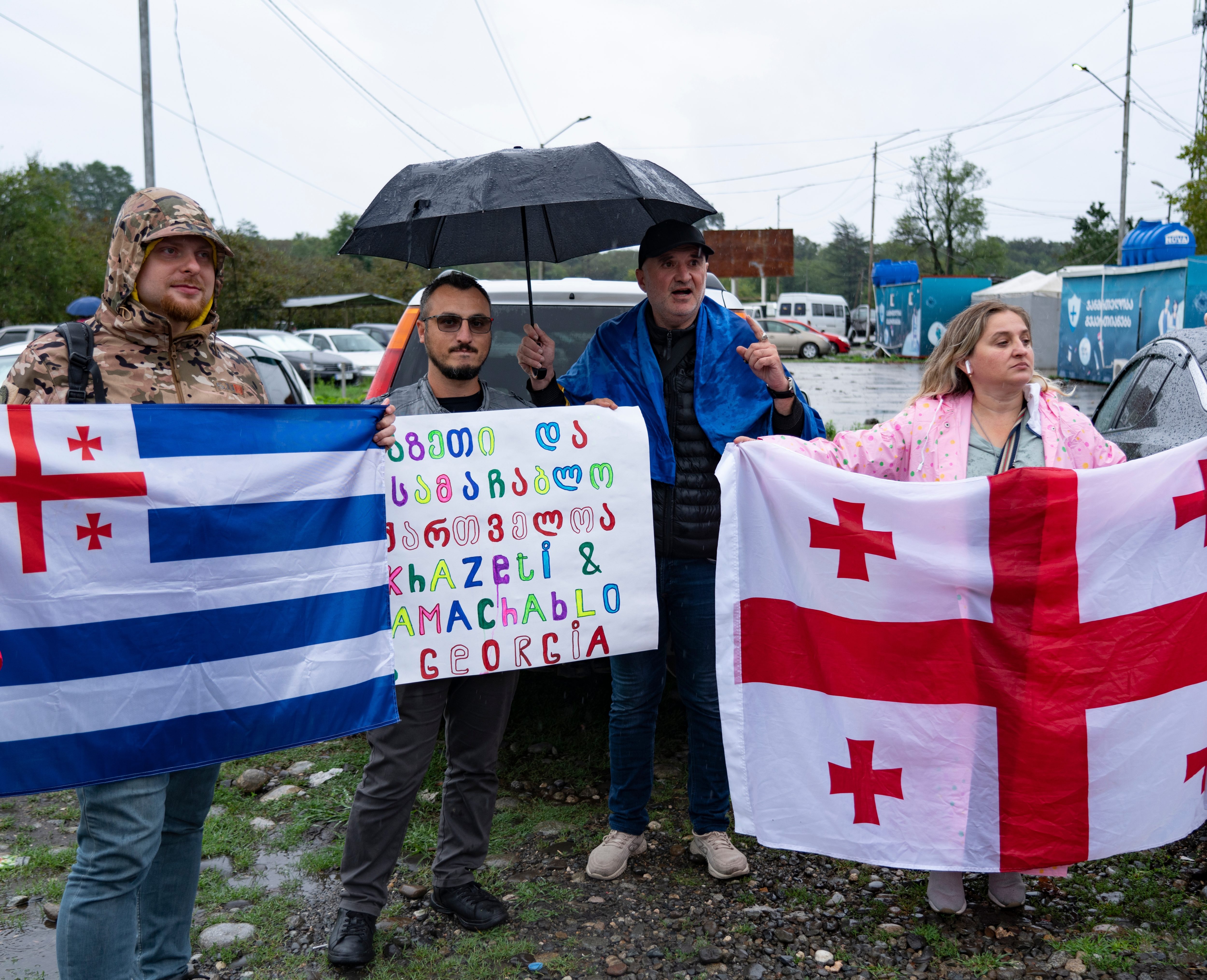
Russia’s full-scale invasion of Ukraine in 2022 has been a tragedy for the 39 million Ukrainians, killing and injuring hundreds of thousands of people and forcefully displacing over 11million people both internally and internationally (UNHCR 2025). This article takes a side-step to document and analyze how this invasion has reactivated the unresolved conflict between Georgia and Abkhazia. Using concepts from the field of border studies, I first show how the contested territorial divide was reactivated by actions taken on both the Georgian and Abkhazian sides, in a context staging two key actors: the European Union and Russia. Second, I focus on discussions among the civil society to show that Russia’s full-scale invasion of Ukraine pushed Georgian citizens to demand an increased level of integration in Europe for their country. I also demonstrate that the invasion reduced the possibility of a dialogue between Georgian and Abkhazian civil society representatives and citizens. Third, I use the Enguri/Ingur dam—where Georgians and Abkhazians are bound to cooperate to produce electricity—to explore openings for cooperation amid heightened (geo)political tensions.
To capture the complex dynamics of borderlands, I draw on Gloria Anzaldúa’s conceptualization of borderlands as simultaneously physical and metaphorical spaces marked by cultural, social, and emotional tension. Anzaldúa emphasizes how proximity and interconnection can generate a mestiza or hybrid consciousness that transcends formal territorial divisions (Anzaldúa 1999). This perspective is particularly relevant to the Georgian Abkhazian context, where historical, familial, and linguistic ties link Georgia’s Samegrelo region and eastern Abkhazia. In both spaces, a Mingrelian population spans an increasingly impermeable contested borderline (Broers 2012; Khutsishvili 2017). The map below (figure 1) represents these dynamics, for example by including placenames in both languages. For instance, the district called Gal in Abkhazia and Gali in Georgia is marked as Gal/i.

The contestation over terminology extends beyond placenames to the boundary itself, as terms such as “border,” “occupation line,” and “Administrative Boundary Line (ABL)” are used respectively by Abkhazians, Georgians, and international actors; these are not neutral descriptors but are contingent on the political positions and perspectives of the actors involved. While border contestation is a global phenomenon, it is particularly pronounced in Eastern Europe and the South Caucasus, where unresolved conflicts and wars following the end of the Soviet Union have generated enduring disputes over sovereignty and statehood. In the South Caucasus, Laurence Broers (2013) identifies three main phases of research on border and statehood contestation in Abkhazia, South Ossetia, and Nagorno-Karabakh/Artsakh. The first phase, spanning the 1990s to the early 2000s, focused on explaining violent ethnic secessionism. This period was marked by the prominent involvement of scholars and intellectuals from the conflict regions themselves, who examined explanatory factors such as identity formation, nation-building projects, and conflict resolution (Lakoba 1995; Kvarchelia 1998; see also Coppieters et al. 1998). These studies were largely concerned with understanding the causes of conflict and the emergence of competing claims to sovereignty.
The second phase, from the early 2000s to the mid-2000s, shifted attention to the lived realities in de facto states. Research during this period examined the survival and endurance of de facto statehood, emphasizing both internal dynamics and external conditions shaping these entities (King 2001; Lynch 2002; Kolstø 2006). Scholars increasingly argued for the necessity of engaging pragmatically with de facto states, a position echoed by international non-governmental organizations (INGOs) such as the International Crisis Group, Conciliation Resources, and International Alert, whose work foregrounded peacebuilding and conflict resolution. Research conducted during this phase acknowledged that, in the pursuit of peace, conflict management was unlikely to be sustainable if it did not include the perspectives of de facto states’ residents.
The third phase, emerging in the late 2000s, was shaped by renewed geopolitical fragmentation in the region, particularly following the Russia-Georgia war in August 2008 and Russia’s subsequent recognition of Abkhazia (and South Ossetia)—although ambivalent. Indeed, on the one hand, this recognition responded to a formal claim by Abkhazians for their own political leadership (O’loughlin et al. 2011), while on the other hand, it paradoxically reinforced Russia’s clout in Abkhazia, including at the contested border with Georgia, where the Russian Federal Services (FSB) have operated since 2012. During that time, Western academic research largely continued along an analytical trajectory that synthesized de facto statehood as a post–Cold War phenomenon, highlighting the possibility of internal sovereignty, state-building, and external engagement without international recognition (Berg and Toomla 2009; Blakkisrud and Kolstø 2011; Caspersen 2012).
More recent research has shown that the Georgian–Abkhazian divide is performed asymmetrically. On the Georgian side, the boundary is symbolically downplayed, notably through road signage indicating directions to Abkhazia’s main cities, as if unimpeded travel were possible, thus enacting the divide as a non-border. In contrast, Abkhazian authorities perform the line as a border-like regime of control and surveillance, emphasizing their territorial authority despite the presence of Russian security forces (Venhovens 2021). Moreover, the COVID-19 pandemic has sharply intensified the social consequences of this territorial separation, as the closure of crossing points has cut off residents of eastern Abkhazia from essential services located in Georgian-controlled territory such as healthcare and ATMs (from which people withdraw their pensions) (Golunov 2022).
At the same time, contemporary studies have documented the persistence of dense socio-economic and kinship ties across the divide, particularly between eastern Abkhazia and Georgia’s Samegrelo region. Informal trade and everyday cross-boundary practices, often mediated by local actors, have long sustained livelihoods in this borderland (Prelz Oltramonti 2015; 2017). These interactions are reinforced by kinship continuity, as populations on both sides are largely Mingrelian (Broers 2012). Research on displaced Georgian youth has further highlighted how distance from the boundary shapes imaginaries of return: those living farther from the border express stronger intentions to return to Abkhazia, while youth with no direct experience of the region construct emotional attachments through inherited memories and dominant political narratives rather than lived encounters (Lundgren 2016).
Methodological Note
The data were collected through a combination of desk-based analysis of legal and policy documents and semi-structured interviews conducted at local, national, and international levels with 1) inhabitants of the borderland and representatives of civil society organizations in both Abkhazia and the Samegrelo region and representatives of local authorities in Samegrelo; and 2) representatives of international organizations and donors. Empirical data were collected through nineteen weeks of fieldwork carried out between 2021 and 2025. Observations focused particularly on areas along the contested boundary with Abkhazia. While on-site fieldwork was possible in Georgia’s Samegrelo region, the lack of permission to enter Abkhazia gave me limited access so that data from Abkhazian sources were gathered remotely through media analysis and online interviews, primarily conducted in 2021 with follow-up exchanges in 2022 and 2025. All interviews followed strict ethical protocols, including informed consent procedures; interviews were recorded only with explicit permission, otherwise detailed notes were taken. The dataset was analyzed using thematic coding in NVivo-12.
The study also adopts a reflexive methodological stance, acknowledging the researcher’s positionality as a young, female, Western scholar (discussed in greater depth in Le Pavic 2024). While close observation of the contested border was possible, language limitations—notably the lack of proficiency in Georgian—shaped field interactions, with interviews conducted in English and Russian and, on three occasions, with the support of a translator. As I recognized the potential influence of translation on interview dynamics (Almalik et al. 2010), recorded interactions were back-translated with the assistance of Georgian-speaking students to enhance accuracy and reliability, which revealed interesting discrepancies in the terminology used to describe the separation between Georgia and Abkhazia. While the translator framed it in English as an “Administrative Boundary Line,” local stakeholders used several border-related terms, such as “border point,” and mentioned being “on the brink of a border,” emphasizing that the division is lived locally as a “border,” albeit a contested one (De Kock et al. 2025).
The Multidimensional Reactivation of the Georgian–Abkhazian Territorial Divide
Russia’s full-scale invasion of Ukraine in 2022 has reactivated the Georgian-Abkhazian divide across multiple scales. At the international level, Charlotte Hille (2022, 109) already described the Geneva International Discussions (GID)—meant to deal with the aftermath of the 2008 Russo-Georgian War—as an “impasse” even before the Russia-Ukraine war temporarily suspended these talks. Co-chaired by the European Union (EU), the United Nations (UN), and the Organization for Security and Co-operation in Europe (OSCE), the GID was established to oversee the implementation of the August 2008 ceasefire agreement. Despite attracting little media and public attention, the GID has remained the principal forum for Georgian-Abkhazian political dialogue. But although it has enabled regular discussions on practical issues—such as crossing procedures, detentions, access to services, and other humanitarian concerns—core political questions have remained blocked. Most notably, the issue of the forced displacement of Georgians from Abkhazia has been systematically sidelined, largely due to repeated walkouts by Russian and Abkhaz participants. As a result, the GID has contributed less to conflict resolution than to the management and containment of the current situation on the ground, tacitly accommodating Abkhazia’s de facto separation from Georgia without advancing a political settlement.
At the local level, the European Union Monitoring Mission (EUMM) has documented developments in the security situation, including human security dimensions affecting the everyday lives of borderland inhabitants. Established in 2009 following Russia’s veto over the renewal of the United Nations Observer Mission in Georgia (UNOMIG)—justified by the UN Security Council based on the claim that a new security regime was required (Churkin 2009)—the EUMM holds a formal mandate over the entire territory of Georgia. In practice, however, it is restricted to the Georgian-controlled side of what it terms the ABL (figure 2). Facing EUMM monitors on the opposite side are Russian Federal Security Service (FSB) units and Russian military personnel—many of them conscripts—who operate alongside Abkhazian security forces. Together, they contribute to the process of “borderization,” a term coined by the EUMM to describe the transformation of a conflict line into a hardened border through the implementation of fences, barriers, surveillance infrastructure, and patrols (Toal and Merabishvili 2019, 2).

Additionally, the contested border between Georgia and Abkhazia overlaps with a former security zone that emerged after the 1992–1993 war between the two and was formalized through the 1994 Moscow Ceasefire Agreement. Although both sides of the divide are together designated as a restricted weapons zone, they nonetheless accommodate police and military presence. Importantly, this is also a lived space where private property boundaries remain. Moreover, cattle may occasionally wander across the divide, as agricultural land extends across the zone. But this area is also increasingly characterized by emptiness: many houses have been abandoned, and those residents who have stayed face limited economic opportunities and poor access to social services (Dzenovska 2018; Le Pavic 2024). Despite growing constraints on movement—intensified during the COVID-19 pandemic and further exacerbated by Russia’s full-scale invasion of Ukraine—two official crossing points remain operational, alongside numerous sites for informal crossings, which occur daily. These practices contribute to shaping the Georgian–Abkhazian divide not as a static, frozen conflict, but as a lived and continuously negotiated reality (Görkem 2023; Venhovens 2025). This relative permeability allows for various forms of everyday interaction, albeit under highly securitized and unequal conditions. Those exercising control over the contested border derive benefits from it, while the majority of residents endure restricted social contact, limited access to agricultural land and cemeteries on the other side of the divide, and rising prices in cross-boundary trade.
Georgian-Abkhazian Civil Society Dialogue: A Shrinking Window since Russia’s All-out War
Anzaldúa developed the notion of the emotional tension of borderlands, and earlier research framed the Abkhazian-Georgian borderland as “suffocating,” particularly for Georgians living in Abkhazia (Venhovens 2025). In August 2022, I interviewed Georgian civil society organization (CSO) representatives. They expressed strong empathy for Ukraine and Ukrainians, echoing a widespread sentiment in Georgia and beyond. In the Georgian context, however, this solidarity carried particular depth, as it resonated with memories of the 2008 Russia–Georgia war and, for some, even earlier conflicts in the 1990s in Abkhazia and South Ossetia, in which Russia is widely perceived as a central actor. It is nonetheless important to recall that prior to recognizing Abkhazia’s independence in 2008, Russia had aligned itself with Georgia’s 1996 embargo agreement, which suspended commercial, financial, and transport links with Abkhazia. Russia did not formally withdraw from this embargo until spring 2008 (Fawn 2022).
Georgian citizens’ support for Ukraine has been highly visible in the landscape, from cities (Cole 2023) to remote villages in the Samegrelo region, as well as on social media platforms, particularly Facebook. This is exemplified by the social media avatar of a Georgian CSO representative based in Zugdidi, herself displaced from Abkhazia during the 1992–1993 war. The avatar represents a person whose facial features have been replaced by the Georgian flag embracing a figure entirely colored in blue and yellow—Ukraine’s colors. At the same time, while Russia continues to be viewed by many in Abkhazia as a security guarantor, its influence is increasingly criticized and contested. In April 2022, Abkhazian community activists publicly called for an end to the bloodshed in Ukraine (Echo Caucase 2022) and made a plea for continued cooperation with Western donors, the EU and its member states, and INGOs (Le Pavic 2023). These actors have become especially important following the withdrawal of USAID from the region in 2025, which significantly reduced available external funding sources.
In this context, civil society dialogue across the divide—ongoing since the early 1990s with the support of (Western) donors and organizations—has persisted, albeit under increasing strain. One major obstacle stems from the Western sanctions imposed on Russia after its all-out invasion of Ukraine, which have affected Abkhazia. These effects are particularly obvious in the process of passportization: approximately 80 percent of Abkhazia’s residents hold Russian passports, largely because Abkhazian travel documents are not recognized internationally, which prevents Abkhazians from legally travelling, working, or studying abroad (Ganohariti 2022). A 2023 EU circular prohibited the issuance of Schengen visas—even for participation in EU-funded projects—to holders of Russian passports issued in territories such as Abkhazia, South Ossetia, and Transnistria. While people in Transnistria hold multiple citizenships, hence mitigating this constraint on mobility, this is not the case in Abkhazia, where young people have expressed feelings of “existential denial”—some prefer not to leave Abkhazia rather than acquire a Russian passport (JAMnews 2023). In my study, one respondent, who coordinates an EU-funded project designed to bring together participants from different sides of the conflict divide—including Abkhazia and Georgia—explained being frustrated about his inability to implement the project due to the visa restrictions in effect in Abkhazia since Russia’s all-out invasion of Ukraine.
Additional obstacles include the impossibility of transferring funds to Abkhazian CSOs from internationally funded projects, as the Abkhazian banking system is integrated into the Russian one (Le Pavic et al. 2024). However, and to some extent paradoxically, unlike in South Ossetia where restrictive legislation on foreign funding has sharply curtailed international engagement, similar measures have thus far faced resistance in Abkhazia. This has allowed the EU to maintain indirect forms of presence and influence, often mediated through UN agencies such as UNDP, UN Women, UNHCR, and WHO. By contrast, Georgia’s adoption of the “Transparency of Foreign Influence” law in May 2024 significantly constrained Georgian CSOs’ cooperation with foreign—primarily Western—donors. Although widespread protests initially forced the government to withdraw the law in March 2023, it was ultimately passed and followed by additional repressive legislation, coinciding with the government’s decision to freeze EU accession talks until 2028 (Khoshtaria 2024). These developments have been strongly contested by segments of Georgian civil society and citizens. While the largest protests have taken place in Tbilisi (Georgia), field observations in August 2025 documented daily protests in Zugdidi, the main city of the Samegrelo region bordering Abkhazia. An interviewed protester explained that he was standing for the European future of his three children, noting that Zugdidi was the only city outside the capital where daily protests were taking place. The density of CSOs working near the conflict dividing line partly explains the resilience of the pro-EU protest movement beyond Tbilisi. In this context, the last section of this article delves into the Georgian-Abkhazian Ingur/Enguri dam as a specific example of ongoing cooperation amid acute (geo)political tensions.
The Ingur/Enguri Dam: Pragmatic Interdependence Across a Contested Borderland
Previous research has already identified the Enguri/Ingur Dam as both a peace facilitator and a site with latent potential for weaponization (Garb and Whiteley 2001). Over more than two decades, and amid tightening political relations, the dam has remained one of the few enduring channels of cooperation between Abkhazia and Georgia. Constructed between 1961 and 1987 as part of an integrated Soviet system, it continues to represent a core site of post-war interdependence.
The reservoir lies upstream in Georgia’s Samegrelo region, while the power station and generators are located downstream in the Gali district on the Abkhazian side, supplied via a long underground tunnel. Portions of this infrastructure fall within the former security zone and are patrolled on the Georgian-controlled side by Georgian police and the EUMM and by Abkhazian and Russian forces on the opposite side. In contrast to this securitized environment, parts of the dam on the Georgian-controlled side have been transformed into a tourist attraction, complete with guided tours and a cinema screening a documentary emphasizing its symbolic role in Georgian–Abkhazian rapprochement under the slogan “water has no borders,” echoing Maradia Tsaava’s film (2021).
Russia’s full-scale invasion of Ukraine did not disrupt technical cooperation at the dam, and tourism infrastructure actually expanded between 2022 and 2025. Nonetheless, respondents reported heightened tensions, particularly related to Abkhaz workers crossing weekly to the Georgian-controlled side under Russian military escort. In this context, the Enguri/Ingur dam remains one of the very few stable and institutionalized forms of cross-boundary cooperation between Georgia and Abkhazia. However, rather than advancing conflict resolution, it enables a form of everyday peace through technical interdependence. Regulated by a 1997 agreement allocating 40 percent of generated electricity to Abkhazia and 60 percent to Georgian government-controlled territory, the dam has fostered what anthropological research describes as both a sense of “fraternity” among workers and resentment on the Georgian side, especially during periods of frequent electricity outages (Görkem 2023). Since 2022, Abkhazia has faced an acute energy crisis, exacerbated by widespread cryptocurrency mining and the difficulty of curbing illegal installations. In response, Abkhaz authorities have requested “humanitarian electricity” supplies from Russia and introduced a tiered tariff system to mitigate the energy burden of less affluent households (Caucasian Knot 2025). While the dam cannot serve as a lever for peaceful conflict resolution, it nonetheless illustrates the indispensable nature of Georgian–Abkhaz cooperation—even amid heightened geopolitical tensions.
A Multi-sited Reactivation of the Georgian-Abkhazian Divide after Russia’s Invasion of Ukraine
While Russia’s full-scale invasion of Ukraine has not fundamentally transformed the Georgian-Abkhazian conflict, it has reactivated and intensified its territorial, political, and social dimensions across multiple scales, with particular effects at the international and local levels. International mediation frameworks such as the Geneva International Discussions continue to manage the conflict but have not resolved it; dynamics on the ground reveal a borderland that is neither frozen nor static, but lived, negotiated, and increasingly securitized. Dialogue among civil society persists despite shrinking political space, legal constraints, and the consequences of sanctions on Abkhazia, highlighting both the vulnerability and persistence of cross-conflict civil society cooperation. In this context, the Enguri/Ingur dam stands out as a rare site of pragmatic interdependence, sustaining cooperation through material necessity rather than political reconciliation. Together, these dynamics underline how contested borders are reproduced through everyday practices, infrastructural arrangements, and acute geopolitical pressures. They also suggest that peace in such a context results from formal agreements rather than populations’ fragile, functional coexistence, which is maintained under conditions of deep asymmetry and uncertainty amid increased authoritarianism in Georgia.
Gaëlle Le Pavic is a post-doctoral researcher and lecturer at Ghent University, Belgium, also affiliated with the United Nations University (CRIS). She completed her PhD with a dissertation on the social consequences of contested borders, focusing on Abkhazia and Transnistria as case studies. She has published on this topic in edited volumes and peer-reviewed journals.
References
Almalik, Mona, Alice Kiger, and Janet Tucker. 2010. “‘What Did She Say? What Did She Say?’ The Impact of Interpretation on Recruiting and Interviewing European Migrant Women in the United Kingdom.” International Journal of Qualitative Methods 9 (3): 252–69.
Anzaldúa, Gloria E. 1999. La Frontera: The New Mestiza. Aunt Lute.
Berg, Eiki, and Raul Toomla. 2009. “Forms of Normalisation in the Quest for de Facto Statehood.” The International Spectator 44 (4): 27–45.
Blakkisrud, Helge, and Pål Kolstø. 2011. “From Secessionist Conflict toward a Functioning State: Processes of State-and Nation-Building in Transnistria.” Post-Soviet Affairs 27 (2): 178–210.
Broers, Laurence. 2012. “Two Sons of One Mother: Nested Identities and Centre-Periphery Politics in Post-Soviet Georgia.” In When the Elephant Broke Out of the Zoo: A Festschrift for Donald Rayfield, edited by Andreas Schönle. Stanford University Press.
Broers, Laurence. 2013. “Recognising Politics in Unrecognised States: 20 Years of Enquiry into the de Facto States of the South Caucasus.” Caucasus Survey 1 (1): 1–14.
Caspersen, Nina. 2012. “States without Sovereignty: Imitating Democratic Statehood 1.” In Unrecognized States in the International System. Routledge.
Caucasian Knot. 2025. “Власти Абхазии Объявили о Введении Льготных Тарифов На Электроэнергию/The Abkhaz Authorities Announced the Introduction of Preferential Electricity Tariffs.” December 21. https://www.kavkaz-uzel.eu/articles/419277.
Cole, Michael. 2023. “‘Today, We Are All Ukrainians’—Visual Responses in Georgian Cities to Russia’s War in Ukraine.” Visual Anthropology 36 (4): 348–72.
Coppieters, Bruno, Ghia Nodia, Yuri Anchabadze, and Bundesinstitut für ostwissenschaftliche und internationale Studien. 1998. Georgians and Abkhazians: The Search for a Peace Settlement.
Dzenovska, Dace. 2018. “Emptiness and Its Futures: Staying and Leaving as Tactics of Life in Latvia.” Focaal 2018 (80): 16–29.
Echo Caucase. 2022. “Абхазские Общественники Призвали Остановить Кровопролитие в Украине/ Abkhaz Community Activists Call for the Bloodshed in Ukraine to Stop.” April 5. https://www.ekhokavkaza.com/a/31786376.html.
Fawn, Rick. 2022. “Abkhazia: Six Enduring Reflections from the 1990s.” In Abkhazia: 1992-2022 – Reflections on Abkhazia Series, edited by Metin Sönmez and George Hewitt. Koyusiyah Publishing.
Ganohariti, Ramesh. 2022. “Politics of Passportization and Territorial Conflicts.” In The Palgrave Encyclopedia of Peace and Conflict Studies. Springer.
Garb, Paula, and John M. Whiteley. 2001. “A Hydroelectric Power Complex on Both Sides of a War: Potential Weapon or Peace.” Reflections on Water: New Approaches to Transboundary Conflicts and Cooperation, 213.
Golunov, Serghei. 2022. “Pandemic Borders of Post-Soviet de Facto States.” Journal of Borderlands Studies 37 (4): 741–60.
Görkem, Aydemir-Kundakcı. 2023. “Electric Zone.” Anthropology News, November 21. https://www.anthropology-news.org/articles/electric-zone/.
Hille, Charlotte. 2022. “Thirty Years of Peace-Negotiations.” In Abkhazia: 1992-2022 – Reflections on Abkhazia Series, Edited by Metin Sönmez and George Hewitt. Koyusiyah Publishing.
JAMnews. 2023. “‘The World Denies Our Existence’. How Abkhazia’s Young People Are Doing after EU Sanctions.” October 22. https://jam-news.net/the-eu-does-not-recognize-the-abkhazian-passport/.
Khoshtaria, Tamar. 2024. “Protest Attitudes and Protest Behaviour in Georgia.” Caucasus Analytical Digest, no. 139: 19–28.
Khutsishvili, Ketevan. 2017. “Suddenly a Border: Hazelnut Trade across the De Facto Border between Abkhazia and the Zugdidi Municipal Region of Georgia.” Caucasus Analytical Digest 96: 9–12.
King, Charles. 2001. “The Benefits of Ethnic War: Understanding Eurasia’s Unrecognized States.” World Politics 53 (4): 524–52.
Kolstø, Pål. 2006. “The Sustainability and Future of Unrecognized Quasi-States.” Journal of Peace Research 43 (6): 723–40.
Kolstø, Pål. 2022. “What’s in a Name?‘De Facto States’, Terminological Choices, and Normative Consequences.” Пути к Миру и Безопасности/Pathways to Peace and Security, no. S1 (62): 30–46.
Kvarchelia, Liana. 1998. “Georgia-Abkhazia Conflict: View from Abkhazia.” Demokratizatsiya 6 (1): 18–27.
Kvarchelia, Liana. 2008. “Sanctions and the Path Away from Peace.” Powers of Persuasion: Incentives, Sanctions and Conditionality in Peacemaking.
Lakoba, Stanislav. 1995. “Abkhazia Is Abkhazia.” Central Asian Survey 14 (1): 97–105.
Le Pavic, Gaëlle. 2023. “An Abkhaz Civil Society Organization in the Abkhaz (De Facto) State.” In The Palgrave Handbook of Non-State Actors in East-West Relations, P. Marton et al. (eds.). Springer Nature Switzerland AG. https://doi.org/10.1007/978-3-031-05750-2_20-1.
Le Pavic, Gaëlle. 2024. “Social Services within and across Contested Borders: Insights from Transnistria, Abkhazia and Samegrelo.” PhD Dissertation, Ghent University. DOI: 10.13140/RG.2.2.24388.23682.
Le Pavic, Gaëlle, Giacomo Orsini, Fabienne Bossuyt, and Ine Lietaert. 2024. “Negotiating de Facto Borders: The Case of Social Services Provision in Abkhazia and Transnistria.” Eurasian Geography and Economics, ahead of print. https://doi.org/10.1080/15387216.2024.2305423.
Lundgren, Minna. 2016. “Boundaries of Displacement: Belonging and Return among Forcibly Displaced Young Georgians from Abkhazia.” Mittuniversitetet.
Lynch, Dov. 2002. “Separatist States and Post-Soviet Conflicts.” International Affairs 78 (4): 831–48.
Nodia, Ghia. 1997. “Causes and Visions of Conflict in Abkhazia.” Berkeley Program in Soviet and Post-Soviet Studies Working Paper Series.
O’loughlin, John, Vladimir Kolossov, Gerard Toal, and Gearóid Tuathail. 2011. “Inside Abkhazia: Survey of Attitudes in a de Facto State.” Post-Soviet Affairs 27 (1): 1–36.
Pegg, Scott. 2017. Twenty Years of de Facto State Studies: Progress, Problems, and Prospects.
Peinhopf, Andrea. 2022. “Crossing the Conflict Divide: De Facto Borders, State Belonging, and the Changing Dynamics of Enemy Relations in Abkhazia.” Ethnopolitics: 1–18.
Prelz Oltramonti, Giulia. 2015. “The Political Economy of a de Facto State: The Importance of Local Stakeholders in the Case of Abkhazia.” Caucasus Survey 3 (3): 291–308.
Prelz Oltramonti, Giulia. 2017. “Trajectories of Illegality and Informality in Conflict Protraction: The Abkhaz-Georgian Case.” Caucasus Survey 5 (1): 85–101.
Prelz Oltramonti, Giulia, and Gaëlle Le Pavic. 2025. “Hardening Ceasefire Lines in Protracted Secessionist Conflicts: From the Negotiating Table and International Law to Realities on the Ground in the Case of the Abkhaz–Georgian War.” In Contested States in War and Law. Bristol University Press.
Toal, Gerard, and Gela Merabishvili. 2019. “Borderization Theatre: Geopolitical Entrepreneurship on the South Ossetia Boundary Line, 2008–2018.” Caucasus Survey 7 (2): 110–33.
UNHCR. 2025. “Explainer: War in Ukraine – the Human Cost and Humanitarian Response.” https://www.unhcr.org/news/stories/explainer-war-ukraine-human-cost-and-humanitarian-response.
Venhovens, Mikel JH. 2021. “An Anxious Border: De-Facto Spectacles at the Frontier of the Republic of Abkhazia.” Journal of Borderlands Studies, 1–18.
Venhovens, Mikel JH. 2025. “Suffocating Borderlands: Enduring Coping Mechanisms amidst Tight Control in Abkhazia.” Territory, Politics, Governance, 1–18.
[1] Following Peinhopf (2022, 14), “Abkhaz” (singular and plural) is used when referring to people of Abkhaz ethnicity, while “Abkhazian(s)” is employed for all residents of Abkhazia and its acting authorities and institutions.
[2] This article is based on my PhD dissertation titled Social Services within and across contested borders: insights from Transnistria, Abkhazia and Samegrelo and draws on a conference paper titled “Glory to Ukraine and Abkhazia is Georgia”: changes in the production of space in the Georgian Abkhazian borderland after Russia’s full-scale invasion of Ukraine, presented at the Centre Marc Bloch in Berlin in December 2024. Both are accessible on researchgate (Gaelle-Le-Pavic).
[3] https://matsne.gov.ge/en/document/view/19132?publication=6
