
By Julia Khrebtan-Hörhager
The ancient Roman maxim si vis pacem, para bellum, or “if you desire peace, prepare for war,” has long captured a paradox at the heart of political order. Peace, though often narrated as the natural outcome of diplomacy and economic cooperation, has historically depended upon the credible capacity to deter aggression. Indeed, history repeatedly teaches that investing in defense and maintaining armed readiness is not merely militaristic reflex but often a condition of sovereignty itself. Napoleon Bonaparte’s frequently cited observation that “God is on the side of the big battalions” articulates a related, uncomfortable truth: moral authority alone rarely prevails in the absence of material force. A companion maxim attributed to Bonaparte, “a nation that does not feed its army will soon feed another’s,” expresses the same lesson with greater severity.
For much of the post–Cold War period, Europe appeared convinced it had transcended this logic. Democratic governance, economic interdependence, and international organizations—following the logic of Immanuel Kant’s pillars of peace—were assumed to have rendered major interstate war obsolete. The postwar promise of Nie Wieder, or Never Again, was institutionalized through European integration, NATO’s security umbrella, and an expanding web of international law. For decades, this framework functioned with remarkable success.
Yet history rarely repeats itself identically; it returns through structural echoes. The present moment reveals how fragile Europe’s post-historical confidence proved to be. Questions of sovereignty, territorial revisionism, democratic resilience, and state violence have re-entered political life. Europe now confronts a dilemma: how to preserve liberal democratic values while acknowledging that power politics never fully disappeared. Intentional demilitarization and civilian disarmament, once seen as irreversible achievements, now require re-evaluation.
Public disarmament and weapons policy provide one revealing lens through which these tensions become visible:
Gun control policies tell us a great deal about a country—its legal culture, the balance it strikes between individual rights and collective responsibilities, and the tensions between the complementary principles of liberty and authority. Analyzing these policies raises crucial questions about the nature and scope of state power and prompts reflection on the social contract between the state and its citizens, revealing legal, political, and cultural approaches that vary across specific contexts and historical periods. In short, they function as a litmus test, allowing us to reconstruct conceptions of state authority, along with its ambitions and its limits, as they evolve over time.[1][2]
Debates about armament therefore extend far beyond technical regulation. They expose how societies negotiate authority, responsibility, and fear, illuminating evolving understandings of citizenship, culture, and the legitimate monopoly of violence. As European states reconsider defense and security policies, deeper anxieties about sovereignty and collective protection resurface. History offers sobering lessons.
The Cold War Lessons, and Their Sobering Aftermath: Ukraine
During the Cold War, the United States and the Soviet Union militarized on an unprecedented scale, waged proxy wars in Korea, Vietnam, and Afghanistan, and divided Europe into opposing security blocs. Europe itself often functioned as a geopolitical chessboard between two superpowers, otherwise known as the era’s unmistakable big guns. After 1991, Europe transformed. Democratic transitions expanded eastward; former Soviet satellites joined NATO and the European Union. Yet while Europe pursued demilitarization and integration, Russia retained and modernized its military power, preserving imperial reflexes under new political forms.
Ukraine became the tragic focal point of this divergence. Ironically, Europe’s geographic center lies in Ukraine, yet this central position and pacifistic mindset never translated into full European integration, leaving the country’s political and security position precarious. In the 1990s, Kyiv relinquished the world’s third-largest nuclear arsenal in exchange for security assurances under the Budapest Memorandum, negotiated under President Leonid Kuchma with support from Washington and Moscow. That decision, once celebrated as a triumph of post–Cold War disarmament, now appears tragically naïve. Worse still, Napoleon’s warnings about military power seem newly relevant: today, Russian battalions call the shots, and occupied Ukrainian territories are effectively compelled to sustain the army of the former Soviet Br/other…
As analyzed in studies of political Othering, former imperial “Brothers” can rapidly become existential Others when power hierarchies shift.[3] Russia’s annexation of Crimea in 2014, executed through the deniable deployment of the infamous “little green men,” marked the first major warning. Europe responded cautiously, but insufficiently. The full-scale invasion of February 2022 demonstrated the collapse of assumptions about postwar security.
Ukraine cannot withstand Russian military pressure alone, and Europe struggles to guarantee security even within its own neighborhood. Meanwhile, negotiations about Ukraine’s future often occur between Washington and Moscow, with Europe itself marginalized. The continent finds itself dependent upon external actors while facing the consequences of decisions made decades earlier.
Kant’s Pillars of Perpetual Peace Under Attack: Post-Historical Europe Reconsidered
Immanuel Kant’s vision of perpetual peace rested on three interlocking foundations: democratic governance, economic interdependence, and international institutions. And indeed, for much of the post–Cold War period, Europe appeared to embody this model. For nearly three decades, the continent enjoyed unprecedented stability. Military confrontation seemed obsolete, economic integration replaced strategic rivalry, and pacifism evolved from an ethical aspiration into an institutional norm embedded in European political culture.
Yet this transformation also produced unintended vulnerabilities. Defense preparedness became politically suspect, military spending declined, and security guarantees were increasingly outsourced. The assumption that war had become structurally impossible in Europe allowed strategic dependency to deepen. Security, once defended domestically, became externalized.
Recent conflicts have exposed the fragility of this arrangement. Agreements, diplomatic assurances, and economic integration proved insufficient to deter territorial revisionism or organized military aggression. Democratic aspirations and peaceful revolutions, however morally compelling, cannot alone prevent forceful intervention. Europe thus finds itself under the gun: compelled to reconsider assumptions once believed permanent.
Each of Kant’s pillars now shows strain. Economic interdependence, once expected to pacify relations, increasingly produces friction rather than harmony, especially as recent tariff disputes with the United States reveal how quickly economic cooperation can give way to strategic competition. Measures once considered routine trade negotiations now carry geopolitical and cultural consequences, exposing Europe’s vulnerability when supply chains, energy markets, and industrial production become instruments of political leverage. Tensions within the European Union over migration policy, fiscal responsibility, energy dependency, and industrial competitiveness reveal enduring national priorities beneath inclusive transnational rhetoric. Relations with the United States, long Europe’s economic and security anchor, have grown less predictable amid trade disputes and tariff conflicts. Interdependence now exposes vulnerability as much as stability.
International institutions face similar pressures. NATO, once (and still!) the cornerstone of European security, struggles with internal disputes over burden-sharing and strategic direction, while the (not-that-) United Nations often prove unable to respond effectively to conflicts shaped by great-power rivalry. Ironically enough, multilateralism appears constrained rather than empowered in an era of renewed power politics. Most alarmingly and consequentially, though, democratic governance itself confronts mounting pressures. Polarization, institutional distrust, and external interference weaken democratic cohesion across multiple societies. Negotiations directly affecting European security increasingly occur between geopolitical heavyweights, or the contemporary big guns, even when Europe itself bears the consequences. Political leaders willing to disrupt established norms operate as loose cannons within international politics, further eroding predictability.
Under these cumulative pressures, Kant’s third pillar, that is of democratic governance, becomes increasingly fragile, almost utopian… Europe’s challenge, therefore, is not merely military or economic but also cultural and philosophical: how to defend liberal democratic values in a world where power politics has unmistakably returned, without abandoning the very principles that made peace possible in the first place. Is that task even possible?
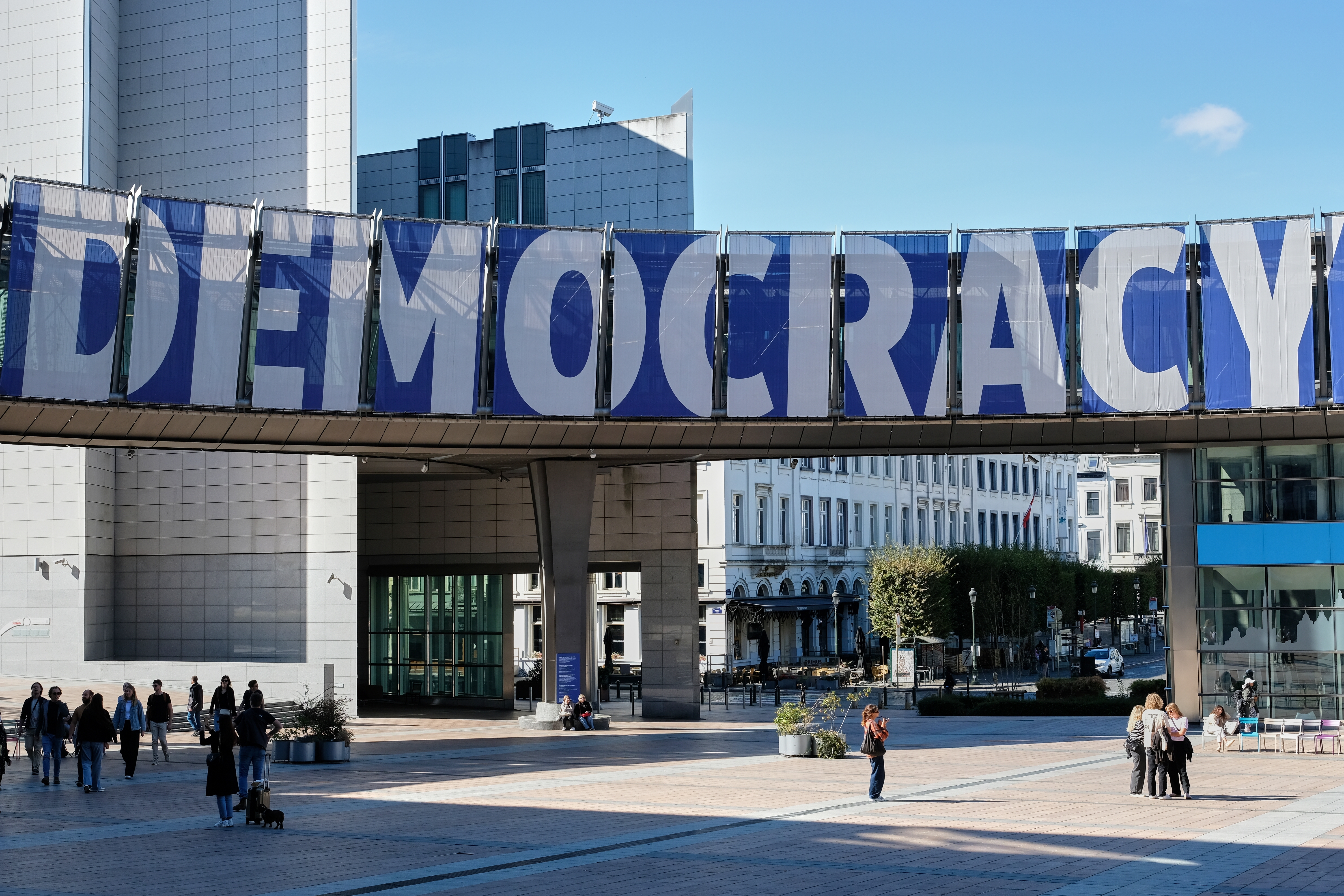
Democracy in the Line of Fire: Authoritarian Recurrence and the Militarization of Youth
Europe now confronts a danger more profound than territorial insecurity or economic competition: the vulnerability of democracy itself. The continent that gave birth to democracy, i.e., to modern constitutional governance, human rights discourse, and liberal political institutions, now finds its defining achievement under simultaneous external and internal pressure. Granted, democracies rarely collapse in a single dramatic moment. More often, erosion proceeds incrementally: through propaganda, polarization, normalization of exclusionary rhetoric, distrust in institutions, and the gradual transformation of political opponents into existential enemies. But much of that is already happening, and we are now witnessing a chilling déjà vu…
Authoritarian politics seldom return in identical historical forms; rather, they resurface through cultural patterns that make domination appear necessary or desirable.[4] Political movements re-emerge that glorify strength, cultivate resentment, and transform social anxieties into narratives of humiliation and revenge.[5] Discipline becomes aestheticized, submission reframed as patriotism, and violence presented as purification or renewal.[6] Contemporary political discourse increasingly mobilizes narratives of victimhood and betrayal, allowing leaders to portray aggressive policies as defensive necessities.[7] Recent analyses further suggest that practices resembling state intimidation and political violence may already be reappearing within formally democratic systems, blurring the distinction between democratic governance and coercive control.[8]
These dynamics are visible again across many societies. Compromise becomes weakness; negotiation becomes surrender. Political adversaries become enemies of the nation, its undesirable and thus eliminate-able Others, as for example Alexei Navalny in Putin’s Russia and the victims in the most recent cases of ICE-related interventions in Trump’s America have taught us. Importantly, democratic erosion proceeds not only through gun violence and tanks in the streets but through rhetorical escalation, legal manipulation, and the steady weakening of institutional norms. History’s shadows lengthen not because events repeat exactly, but because familiar structures of fear and resentment resurface under new conditions.
The most troubling dimension of this transformation lies in the socialization of younger generations. Authoritarian regimes historically recognized that lasting power requires shaping youth identity. Fascist Italy’s Balilla, Nazi Germany’s Hitlerjugend, and subsequent nationalist youth organizations demonstrate how regimes militarized childhood itself, embedding loyalty and discipline before critical political consciousness could form. Contemporary analyses reveal echoes of such strategies in renewed patriotic education campaigns, glorification of military service, and normalization of violence within youth across cultures (e.g., Russia and North Korea), framed as “cultural diplomacy.”[9]
Yet the militarization of youth today extends beyond formal state programs. A broader cultural shift is visible across many societies. Digital environments increasingly expose young people to violent subcultures that glamorize conflict and humiliation. Urban marginalization fosters gang formations in which belonging is constructed through violence and territorial identity. Across several European cities, the rise of so-called “baby gangs” (very young adolescents engaged in organized violence) signals just how insecurity and social fragmentation can generate early normalization of aggression.[10] Globally, child soldiers continue to be recruited into conflicts, demonstrating how easily childhood can be weaponized when social structures collapse. A generation that grew up in what was assumed to be post-war, post-historical Europe now confronts renewed insecurity, economic anxiety, and geopolitical instability. For many young people, political narratives of crisis replace narratives of integration and opportunity. In the troubled, peace-deprived world, a new version of génération perdue, or a lost generation, risks emerging once more, shaped less by democratic optimism than by uncertainty and resentment.
Democracies therefore face a paradoxical challenge. On the one hand, defense preparedness (“Napoleonic” feeding of its own army) is necessary in a world where force remains a political instrument. On the other hand, militarizing social identity risks undermining the pluralism and civic trust on which democratic societies depend. In other words, here comes the impossible task: preparing societies for defense must not become preparation for permanent confrontation. Europe’s dilemma is thus existential. Democracy—the core political legacy of the continent—is now in the line of fire. External aggression, geopolitical rivalry, economic pressure, and internal polarization converge to challenge the resilience of democratic institutions. Democracies do not only fall through invasion; they collapse when fear and division corrode trust within societies themselves.
Certainly, peace cannot be sustained through idealism alone. Yet defense preparedness must not become a justification for a matter-of-factly authoritarian transformation, rhetorically framed as a necessity. The task facing Europe is therefore unprecedented in its difficulty: to strengthen security while preserving democratic openness; to resist aggression without surrendering pluralism; to defend freedom without becoming captive to fear. Whether democracy in Europe remains a living project or becomes merely a historical inheritance now depends on whether societies can resist both external coercion and the internal temptation to abandon the very principles they seek to protect.
Guns N’ Roses: Europe’s Choice Between Power and Peace
Recent warnings from leading European policymakers underscore the urgency of the moment. Mario Draghi has argued that the global economic order sustaining European prosperity is effectively exhausted, warning that without deeper integration the continent risks becoming subordinated, divided, and deindustrialized.[11] Economic strength, once Europe’s principal source of geopolitical influence, can no longer be taken for granted. Industrial competitiveness, technological sovereignty, and energy security now intersect with defense and strategic autonomy in ways unseen since the Cold War.
In this context, French President Emmanuel Macron has emerged as one of the most forceful advocates for a European strategic awakening. Echoing, in a paradoxical modern form, earlier European debates about power and sovereignty, Macron insists that freedom requires credible deterrence. Unlike Napoleon’s national militarization in service of French dominance, Macron advances not only a French but also distinctly European project: the creation of a continent capable of defending itself collectively. His controversial formulation—that to remain free, one must also be feared—captures a renewed realism entering European discourse. The statement is not a celebration of militarism but an acknowledgment that deterrence remains a necessary condition of sovereignty in a world where power politics has returned.[12]
The debate surrounding European defense integration reflects deeper historical tensions. Recent analysis suggests that Europe’s internal divisions remain shaped by the legacies of long-lost empires whose borders and memories still influence political alignments today. Eastern and Western security perspectives differ; former imperial centers and formerly subordinated regions carry divergent historical experiences of sovereignty and dependency. The question of whether Europe can develop a unified strategic posture is therefore not only institutional but deeply cultural, even civilizational, entangled with unresolved historical inheritances that continue to shape political behavior.[13]
Meanwhile, Europe increasingly finds itself shaped by forces beyond its control. In technological and digital domains, commentators increasingly describe the continent as dependent upon external technological infrastructures, particularly those dominated by American and Asian corporations. In geopolitical terms, the return of overt power politics, characterized by transactional diplomacy and territorial bargaining, recalls earlier imperial eras in which Europe itself once dominated global affairs. The difference now is that Europe risks becoming an object rather than a subject of geopolitical maneuvering. If a new age of empire is indeed emerging, Europe may find itself among the territories influenced rather than among the powers directing events.
Yet calls for European strategic autonomy encounter substantial skepticism. Critics warn that creating a separate European military structure alongside NATO could weaken rather than strengthen collective defense. Concerns center on the practical question of command structures during crises: divided authority risks paralysis precisely when clarity is most needed. Instead of constructing parallel institutions, many leaders argue that European defense efforts must reinforce NATO rather than compete with it. Strengthening European military capacity, in this view, should occur within the alliance framework, ensuring complementarity rather than fragmentation.¹¹
Northern European leaders similarly emphasize that Europe already contributes significantly to its collective security. Countries such as Norway, for example, positioned geographically near Russia’s strategic military infrastructure, play a critical role in monitoring and intelligence-sharing, vital to NATO deterrence. European contributions to security, it is argued, are often underestimated in public debate, even though they form a crucial component of transatlantic defense arrangements.
Europe thus stands at a strategic crossroads. Calls for autonomy compete with fears of fragmentation. Efforts to increase military capacity coexist with anxiety about abandoning decades-long commitments to pacification and demilitarization. Economic uncertainty, geopolitical rivalry, and technological dependency compound this dilemma. Beneath institutional debates lies a deeper question: who calls the shots in Europe’s future? The challenge is not merely military. Europe must determine whether it remains a spectator to decisions taken by external powers or becomes capable of shaping its own destiny. It is the question of agency. Yet strategic awakening must not come at the expense of the democratic commitments and cooperative institutions that define the European project. Because militarization without political cohesion risks reproducing the very dynamics Europe sought to escape after 1945.
History’s echoes are unmistakable. The return of power politics forces Europe to reconsider long-held assumptions about peace, security, and sovereignty. In short, to reconsider its Europeanness, its Culture, with a capital “C.” Whether the continent can respond with strategic clarity while preserving democratic principles will determine whether the promise of Never Again remains a living political project or becomes merely a commemorative slogan attached to a fading historical memory.
Julia Khrebtan-Hörhager is Professor at Colorado State University. She specializes in critical cultural communication and international studies. She is Director & Leader of Education Abroad programs in Italy and Austria and Program Director of ACT Human Rights Film Festival.
[1] Aterrano, Marco Maria. La pacificazione degli animi: controllo delle armi e disarmo dei civili in Italia, 1817–1926 [The Pacification of Souls: Gun Control and the Disarmament of Civilians in Italy, 1817–1926]. Rome: Viella, 2023.
[2] Translation from the Italian by the author.
[3] Khrebtan-Hörhager, Julia. Communicating the Other across Cultures. Ann Arbor: University of Michigan Press, 2023.
[4] Eco, Umberto. “Ur-Fascism.” The New York Review of Books, June 22, 1995.
[5] Sontag, Susan. “Fascinating Fascism.” In Under the Sign of Saturn. New York: Farrar, Straus and Giroux, 1980.
[6] Arendt, Hannah. The Origins of Totalitarianism. New York: Harcourt, 1951.
[7] Stanley, Jason. How Fascism Works: The Politics of Us and Them. New York: Random House, 2018.
[8] Gessen, Masha. “State Terror Has Arrived.” The New York Times, January 24, 2026. https://www.nytimes.com/2026/01/24/opinion/state-terror-has-arrived.html.
[9]. Khrebtan‑Hörhager, Julia. “Russia’s New Ideological Battlefield: The Militarization of Young Minds.” The Conversation, October 2, 2024. https://theconversation.com/russias-new-ideological-battlefield-the-militarization-of-young-minds-238715.
[10] Euronews. “Gang Crime on the Rise: Which European Countries Have the Most Dangerous Neighborhoods?” March 10, 2025. https://www.euronews.com/my-europe/2025/03/10/gang-crime-on-the-rise-which-european-countries-have-the-most-dangerous-neighbourhoods.
[11] Krupa, Jakub. “Current World Order ‘Dead,’ Draghi Warns Europe, as He Outlines US and China Threats – as it Happened.” The Guardian, February 2, 2026. https://www.theguardian.com/world/live/2026/feb/02/eu-us-foreign-policy-shift-security-defence-latest-news-updates
[12] Khatsenkova, Sophia. “‘To Remain Free, One Must Be Feared’: Macron Says of France’s Defence Priorities.” Euronews, January 15, 2026. https://www.euronews.com/2026/01/15/to-remain-free-one-must-be-feared-macron-says-of-frances-defence-priorities
[13] Aktan, Sertac. “Kallas Denies Rift Between NATO and EU, Rejects Calls for a European Army.” Euronews, February 2, 2026. https://www.euronews.com/2026/02/02/kallas-denies-rift-between-nato-and-eu-rejects-calls-for-a-european-army.
