
By Victor Taki
The century that followed the foundation of Quebec City by Samuel de Champlain in July 1608 witnessed a nearly continuous conflict among European powers. Quasi-permanent warfare profoundly transformed the politics, society, and economy of the Old Continent and was a major factor in the history of the European colonization of the New World. This article explores the Northern American dimension of the early modern military revolution, an epochal transformation in the character of Western war-making, whereby medieval hosts of heavily armed mounted knights gave way to much larger infantry forces carrying firearms. The article reveals significant Northern American deviations from the emergent European paradigm of warfare. It also discusses original peace-making strategies that came out of the efforts of European diplomats and colonial governors to delink Old World and New World conflicts from each other.
The early modern military revolution resulted in greater government control over the armed forces.[1] As part of this rethinking of warfare and in the wake of the particularly destructive Thirty Years War (1618 – 1648), European governments sought to render their armies less harmful to the non-fighting population, whose economic well-being the mercantilist and cameralist royal advisors recognized as indispensable for the overall increase of taxable wealth.[2] As a result, the late medieval and early modern mercenary formations that sustained themselves through plunder gradually gave way to more uniform (and uniformed) permanent forces relying on logistical systems.[3] In parallel, the royal “taming” of the aristocracy helped transform war into “the affair of kings” and give it a more controlled character.[4]
One can debate to what extent this military-political centralization rendered war indeed less destructive.[5] It is undeniable, however, that this centralization changed the understanding of how war should be waged.[6] From then on, regular armies were supposed to engage in war of maneuver interspersed with quite bloody, although increasingly rare, grand battles, in the course of which formations of well-drilled commoner soldiers had to execute the orders of noble officers with the unfailing obedience of human automata.[7] In parallel, the distinction between the military and civilians emerged as an element of this new European military culture, not least because soldiers in the eighteenth century looked and behaved quite differently from the rest of the population. They wore uniforms and were increasingly accommodated in barracks—away from civilian housing—and subjected to collective drills.[8] By contrast, civilians were often disarmed and subject to policing, through which territorial states claimed monopoly on legitimate violence.[9] Even if the military-civilian distinction did not greatly improve the lot of the eighteenth-century population in war, there was a new shared assumption among European commanders and officers that civilians, when they offered no resistance, were not legitimate objects of military violence.[10]
By virtue of Northern American geography, low population density, and the circumstances of early colonization there, the history of the late seventeenth- and early eighteenth-century conflicts in and around Canada demonstrates certain deviations from the Western European military pattern emerging at the time.[11] The first major difference was the limited size of the armed forces: Whereas the War of Spanish Succession (1701 – 1714) in Europe entailed battles between armies of more than 50,000 soldiers, the total mobilizable forces of French Canada at that time did not surpass 4,000.[12] Moreover, regular troops composed only a small part of this force, which consisted above all of militiamen.[13] At the same time, the latter constituted a much larger percentage of the available male population than had ever been the case in the metropole. As a result, French Canada offered an example of “a people in arms” well before the French revolutionary levée en masse.[14]
According to Canadian historian George F. Stanley, the early Canadian militia was “one of the most remarkable creations of the Old Regime.”[15] In contrast to the militias operating in the English colonies, which still constituted medieval institutions and whose decidedly local character and poor training limited their military effectiveness, the militia of New France was essentially a novel creation, particularly after its reorganization by Louis de Buade, Comte de Frontenac, in 1673.[16] In anticipation of the mass citizen armies of the late nineteenth and early twentieth centuries, Louis XIV’s instructions to Frontenac declared service in the militia a universal military duty for all able-bodied men aged sixteen to sixty. Frontenac thus organized militiamen into companies under the command of capitaines de côte, who supervised biweekly training sessions. As was the case in New England, the militia of New France assumed a number of administrative and police functions, particularly after the division of the province into parishes in 1683. From this point onwards, the capitaines de côte were often elected by the parishioners, yet the French Canadian militia remained a centrally commanded “protonational” institution with a military effectiveness superior not only to that of its Anglo-American counterparts but also to that of the regular troops dispatched from France.[17]
The armed forces in New France and New England differed in size and structure from those located in the European metropoles, which necessarily resulted in a different kind of warfare. In Northern America, field battles were virtually absent, whereas these often decided the outcome of conflicts in Europe during the early modern period.[18] There were also differences across colonies. The aristocratic governors of New France and their soldiers were much more embedded in the practices of European warfare than their Anglo-American counterparts. Nevertheless, they avoided frontal confrontations because of the shortage of troops and the demographic weakness of French Canada compared to England’s Northern American colonies. As the weaker side in the conflict, the French Canadians preferred to engage in small war, which consisted in unexpected attacks on Anglo-American settlements along the ill-defined frontier between New France and New England. Such tactics also accorded well with the type of warfare practiced by the Indigenous allies of the French.[19]
Alliances with Indigenous tribes (Abenaki, Algonquin, Huron, and Montagnais) maintained by Frontenac, Louis-Hector de Callière, Philippe de Rigaud de Vaudreuil, and other governors of New France constitute an important peculiarity of the French colonization of North America.[20] In contrast to the Puritans of New England, who were mostly interested in land and viewed the Indigenous tribes as an obstacle to agricultural colonization,[21] the French colonists were above all interested in fur and needed the First Nations as partners in the fur trade.[22] This partnership, however unequal and ultimately detrimental to the Indigenous societies it may have been, nevertheless served as the basis for a more systematic participation of Indigenous warriors alongside regular soldiers and militiamen in the joint detachments organized by French governors and commanders. As a result, although the French implemented a “European” state-led colonization in Canada in the early stages, they quickly adopted native warfare practices against the forces of England and its colonies.
Small war, as practiced by the French and their Indigenous allies against English colonies in the 1690s, was strongly criticized by both contemporary English military and later American and Anglo-Canadian historians.[23] French raids, such as those against Schenectady and Salmon Falls in 1690, certainly contradicted the emergent Enlightenment norms of “restrained warfare.”[24] At the same time, contemporary critics themselves hardly lived up to the notions of regular warfare: New England’s authorities were the first to introduce bounties for the scalps of hostile Indians and maintained this practice in all Anglo-French conflicts beginning with King William’s War of 1688 – 1697.[25] The French quickly reciprocated, and both sides would eventually offer bounties for the scalps of not only enemy Indians but also enemy colonists.[26] And yet there was a fundamental difference: Whereas scalping bounties helped French governors mobilize their Indigenous allies, for New England authorities they were a means (and sometimes uniquely so) to keep their own colonist militiamen in the field.[27]
The character of Northern American warfare made the line between war and peace rather difficult to draw precisely at a time when this line became clearer in Europe as a result of the state’s monopolization of military violence.[28] Hence, the metropoles became interested in a legal regime that would safeguard them from the repercussion of unwanted conflicts between their colonial subjects and Indigenous allies. Already in the late 1600s, concrete examples of this approach had emerged in the Anglo-French Treaty of American Neutrality of 1686 (Treaty of Whitehall). This treaty outlined procedures for the resolution of such conflicts, rendering war in America and in Europe independent from each other. Indeed, the treaty stipulated that if conflict arose between French and British subjects in America, it would not be considered cause for war between France and Great Britian on European soil. In other words, war in Northern America between the two countries did not mean war at home. Reciprocally, any conflict occurring in Europe between the two nations was to have no effect in America, where subjects of both nations were to continue “in the same manner as if no such rupture had occurred in Europe.”[29] Although this treaty proved to be short-lived and remained one of a kind, the student of early American diplomacy Max Savelle called it “one of the most explicit expressions of the concept of two separate spheres.”[30]
This principle actually had its roots in the sixteenth century, when the French and the English contested Spain’s exclusivist claims on the Western hemisphere. At a time in which the struggle between Protestants and Catholics provided numerous pretexts for war on the Old Continent, European diplomats tacitly agreed not to treat the New World’s conflicts as an additional casus belli. As a result, neither the Franco-Spanish clashes in Florida and Carolina during the 1560s, nor the famous pirate raids of Francis Drake on Spanish possessions in South America during the 1570s, disturbed the peace that existed between these nations on the European continent. Informing the Franco-Spanish treaties of Cateau-Cambrésis (1559) and Vervins (1598), as well as the Anglo-Spanish Treaty of London (1604), “the two separate spheres” approach safeguarded European powers from the spillover of possible conflicts between their explorers and colonists, but the reverse was not true.[31] Thus, the Anglo-French war of 1627 – 1629 had major repercussions for Canada, as it led to the temporary capture of Québec during David Kirke’s expedition.[32]
Dependent though they were on the vagaries of European conflicts, the French and English colonial authorities sought a way to implement the concept of the two separate spheres in a manner that would advantage the colonies. The middle decades of the seventeenth century witnessed the first attempt at a peace treaty between New France and New England that would assure their neutrality in case of a conflict between their respective European metropoles.[33] Although unsuccessful, this attempt demonstrates a significant measure of effective autonomy enjoyed by both the French and English colonies at the time, when both metropoles were gripped by civil strife (the English Civil War of 1642 – 1651 and the Fronde in France in 1648 – 1653). Even in the absence of a formal treaty, the colonies of France and England demonstrated an ability to maintain overall peaceful relations, even when one of the metropoles sought conflict. Thus, in 1666 – 1667 Charles II failed to get New England involved in his war against France, no doubt because of the conciliatory attitude adopted by the governors of New France with respect to their counterparts in Boston.[34]
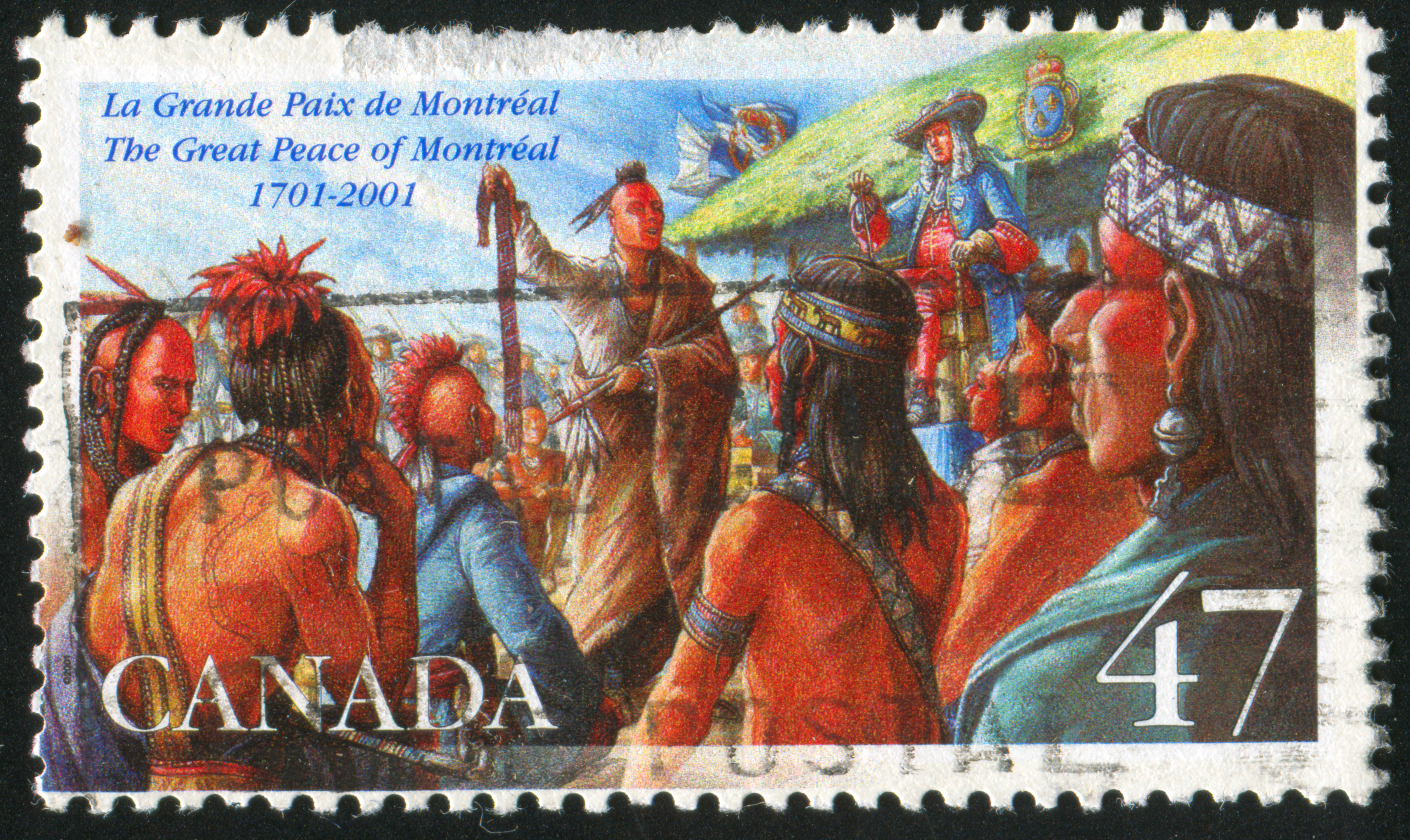
On the French side, the Great Peace of Montreal concluded in August 1701 between New France, its Hurons and Algonquins allies, and the British-allied Iroquois Confederacy offers a characteristic example of Québec’s autonomy from the central power in Versailles.[35] The architect of this agreement, Frontenac’s successor Callière, chose not to follow very closely the ministerial instructions he was given, which in the wake of King William’s War (1688 – 1697) between New England and New France prescribed him to seek an unconditional reconciliation between the French-allied Indigenous tribes and the Iroquois Confederacy. Instead, Callière secured the Confederacy’s admission of defeat in its decades-long conflict with New France’s Indigenous allies over the control of fur trade, as well as its guaranteed neutrality in case of future Anglo-French confrontations. The agreement severely undermined the notion that the Iroquois were English subjects and at the same time asserted the role of the French as custodians of peace and arbiters of inter-tribal conflicts.[36]
Instead of forcing Iroquois representatives to explicitly repudiate their status as British subjects, Callière encouraged the Confederacy to act as an independent power and thereby managed to effectively neutralize this important instrument of English policy for the entire duration of the ensuing War of Spanish Succession (1701 – 1714) that opposed France and the Anglo-Austrian coalition.[37] This subtle and pragmatic approach of New France’s authorities was altogether uncommon for the European diplomacy of this period, still greatly preoccupied with status and ceremony.[38] Callière’s originality consisted in treating First Nations as effective subjects of international relations in the post-Westphalian world order. The readiness with which the governors of Québec resorted to the waging of “small war” in the heyday of field battles was thus matched only by their inventive and non-conventional use of diplomacy in their relations with Indigenous tribes and other non-state actors.
Historians of early modern warfare and diplomacy justly consider France as the paradigmatic example of military-political centralization that was one of the principal consequences of the Military Revolution. However, as the above discussion demonstrates, the authorities of New France deviated significantly from the French-centered Western European paradigm of war- and peace-making. This difference of approach between the metropole and its most important early modern colony becomes all the more evident in view of the habitual characterization of French colonial expansion as “state-driven” and motivated by political and ideological considerations rather than spontaneous and propelled by entrepreneurial and commercial interests. The well-known demographical weakness of New France and the peculiar relation the French colonists had with land and with the Indigenous population certainly help explain this apparent paradox. However, a better understanding of the early Canadian approach to warfare and diplomacy also requires a critical unpacking of both the early modern state and entrepreneurship, which played a significant role in shaping New France.
Victor Taki is a historian of Russia and Eastern Europe living in Canada. Over the past two decades, he has taught at Carleton University, University of Alberta, Dalhousie University, the King’s University, and Concordia University of Edmonton. He is the author of Tsar and Sultan: Russian Encounters with the Ottoman Empire (I.B. Tauris, 2016), Russia on the Danube: Empire, Elites, and Reform in Moldavia and Wallachia, 1812-1834 (CEU Press, 2021), and Russia’s Turkish Wars: The Tsarist Army and the Balkan Peoples in the Nineteenth Century (University of Toronto Press, 2024).
[1] See Clifford J. Rogers, ed., The Military Revolution Debate: Readings on the Military Transformation of Early Modern Europe (Boulder, CO: Westview Press, 1995).
[2] For the most recent discussions of Cameralism, see Marten Seppel and Keith Tribe, eds., Cameralism in Practice: State Administration and Economy in Early Modern Europe (Woodbridge, UK: Boydell Press, 2017); Ere Nokkala and Nicholas B. Miller, eds., Cameralism and the Enlightenment: Happiness, Governance, and Reform in Transnational Perspective (New York and London: Routledge, 2019).
[3] On the development of the military administration and its growing role in the relations between the troops and the civilian population, see André Corvisier, Armies and Societies in Europe, 1494–1789. Translated from the French by A. T. Siddall (Bloomington, IN; Indiana University Press, 1978), 73–83; Charles A. Lynn, The Giant of the Grand Siècle: The French Army, 1610–1714 (Cambridge, UK: Cambridge University Press, 1997), 67–220.
[4] On monarchical monopolization of military violence, see, most importantly, James O. Whitman, Verdict of Battle: The Law of Victory and the Making of the Modern War (Cambridge, MA: Harvard University Press, 2012), esp. 133–171.
[5] On the limitations of the Western European warfare in this period, as well as on the limits of the “limited warfare” thesis, see John Childs, Armies and Warfare in Europe, 1648–1789 (Manchester, UK: Manchester University Press, 1982), 1–27. Historians also debate whether the restraint in war was the product of the Enlightenment or an aristocratic Old Regime phenomenon that had already been in place by 1700. For the opposing perspectives, see Christy Pichichero, The Military Enlightenment: War and Culture in the French Empire From Louis XIV to Napoleon (Ithaca and London: Cornell University Press, 2017) and Armstrong Starkey, War in the Age of Enlightenment, 1700–1789 (Westport, Conn.: Praeger, 2003), 20–21 respectively.
[6] The normative aspects of the eighteenth-century warfare, or the culture of war, are explored by Daniel A. Bell, The First Total War: Napoleon’s Europe and the Birth of Warfare as We Know It (Boston: Houghton Mifflin, 2007), 11–17; On the importance of humanity, sensibility, and civility in the Enlightenment culture of war, see Pichichero, The Military Enlightenment, 7–11.
[7] For the discussion of these tendencies, see Whitman, Verdict of Battle, passim; McNeill. The Pursuit of Power: Technology, Armed Forces and Society since 1000 AD (Chicago, Il: University of Chicago Press, 1982), 117–143; Gunther E. Rothenberg, The Art of Warfare in the Age of Napoleon (Bloomington, IN: Indiana University Press, 1978), 11–14; Bell, The First Total War, 44–51.
[8] On drill and military discipline, see David Chandler, The Art of Warfare in the Age of Marlborough (New York: Sarpedon, 1995), 102–108; Lynn, The Giant of the Grand Siècle, 397–415. On the psychological impact of drill, see William H. McNeill, Keeping Together in Time: Dance and Drill in Human History (Cambridge, MA: Harvard University Press, 1995).
[9] Marc Raeff, Well-Ordered Police State: Social Change Through Law in Germanies and Russia, 1600–1800 (New Haven: Yale University Press, 1983).
[10] Pichichero, The Military Enlightenment, Starkey, War in the Age of Enlightenment, 18.
[11] On the limits of the European paradigm of warfare, see Jeremy Black, War and the World: Military Power and the Fate of Continents, 1450–2000 (New Haven and London: Yale University Press, 2000), 23.
[12] As is clear from Vaudreuil to Pontchartrain, October 1, 1709, Rapport de l’Archiviste de la province de Québec (1942–1943): 404.
[13] On French Canadian militia, see George F.G. Stanley, Nos soldats. L’histoire militaire du Canada de 1604 à nos jours (Montréal : Editions de l’Homme, 1980), 51–55. On the militia of England’s American colonies, see Lawrence D. Cress, Citizens in Arms: The Army and the Militia in American Society to the War of 1812 (Chapel Hill: University of North Carolina Press, 1982).
[14] A much greater level of military mobilization that characterised the French Canada in comparison to England’s American colonies reminded Robert Leckie of ancient Sparta. See Robert Leckie, “A Few Acres of Snow”: The Saga of the French and Indian Wars (New York: Wiley, 1999), 229. See also William J. Eccles, The French in North America, 1500–1783 (Markham: Fitzhenry & Whiteside, 1998), 123.
[15] Stanley, Nos soldats, 54.
[16] On medieval and early modern militias in Europe, see Corvisier, Armies and Societies in Europe, 25–36.
[17] William J. Eccles, Frontenac: The Courtier Governor (Toronto: McClelland and Stewart, 1965), 215.
[18] See Whitman, Verdict of Battle.
[19] George F.G. Stanley, Canada’s Soldiers, 1604–1954: The Military History of an Unmilitary People (Toronto: Macmillan, 1954), 47.
[20] Cornelius Jaenen, Friend and Foe. Aspects of French-Amerindian Cultural Contacts in the Sixteenth and the Seventeenth Century (New York, NJ: Columbia University Press, 1976).
[21] Peter C. Mancall, “Native Americans and Europeans in English North America, 1500–1700,” in The Oxford History of the British Empire, Vol. 1, The Origins of Empire. British Overseas Enterprise to the Close of the Seventeenth Century, ed. By Nicholas Canny (Oxford and New York: Oxford University Press, 1998), 349.
[22] William J. Eccles, France in America (New York: Harper&Row, 1972), 100–101. For a general discussion of the impact of fur trade on the Indigenous population of North America, see Eric R. Wolff, Europe and the People without History (Berkely, CA: University of California Press, 1982), 158–194.
[23] Francis Parkman, France and England in North America. 2 Vols. (New York: Library of America, 1983), 2:264, 273.
[24] Douglas E. Leach, Arms for Empire: A Military History of the British Colonies in North America, 1607 – 1763 (New York: Macmillan, 1973), 85–89.
[25] Spencer C. Tucker (ed.) An Encyclopedia of North American Indian Wars, 1607–1890 (Santa Barbara, CA: ABC-CLIO, 2011), 708.
[26] Armstrong Starkey, European and Native American Warfare, 1675–1815 (Berkley, CA: UCL Press, 1998), 30–31; John Grenier, The First Way of War: American War Making on the Frontier, 1607–1814 (Cambridge: Cambridge University Press, 2005), 39–43.
[27] Leach, Arms for Empire, 132.
[28] See Whiteman, Verdict of Battle, 133–171.
[29] Max Savelle, The Origins of American Diplomacy: The International History of Angloamerica, 1492 – 1763 (New York: Macmillan, 1967), 108.
[30] Savelle, The Origins of American Diplomacy, 108.
[31] See On the peace treaties of 1598 and 1604 see Marcel Trudel, Histoire de la Nouvelle France. Vol. 2, Le Comptoir, 1604–1627 (Montréal: Fides, 1966), 6, and Kenneth R. Andrews, “Caribbean Rivalry and the Anglo-Spanish Peace of 1604,” History 59, no. 195 (1974) : 1–17.
[32] Quebec and the rest of the nascent New France was returned under the control of Paris by the treaty of Saint-Germain-en-Laye (1632).
[33] Marcel Trudel, Histoire de la Nouvelle France. Vol. 3, La seigneurie de Cent-Associes, 1627–1663. Part. 1 (Montréal: Fides, 1979), 205.
[34] Savelle, The Origins of American Diplomacy, 92.
[35] See Gilles Havard, The Great Peace of Montreal of 1701: French-Native Diplomacy in the Seventeenth Century (Montreal: McGill-Queen’s University Press, 2001).
[36] William J. Eccles, Canada Under Louis XIV, 1663–1701 (Toronto: McClelland and Steward, 1964), 244; Leach, Arms for Empire, 120.
[37] Francis Jennings, The Ambiguous Iroquois Empire: The Covenant Chain Confederation of Indian Tribes with English Colonies from its Beginnings to the Lancaster Treaty of 1744 (New York: W.W. Norton and Co., 1984), 221.
[38] On the ceremonial aspect of early modern diplomacy, see William Roosen, “Early Modern Diplomatic Ceremonial: A Systems Approach,” The Journal of Modern History 52, no. 3 (1980): 452–76. On the persistent importance of status, see Christian Windler, “Afterword. From Social Status to Sovereignty: Practices of Foreign Relations from the Renaissance to the Sattelzeit,” in Practices of Diplomacy in Early Modern Europe, ca. 1410 – 1800, eds., Tracey A. Sowerby and Jan Hennings (London and New York: Routledge, 2017), 254–262.
