
By Zvi Gilboa
This is part of our Research in Focus feature on Eurovision: A Vision for Europe?
Against the backdrop of recent controversies surrounding Israel’s participation in the Eurovision Song Contest, it is easy to overlook the extent to which Eurovision occupies a central place in Israeli cultural life. The first non-European country to join the competition in 1973 and a four-time winner, Israel has participated in the song contest with remarkable consistency. This article in broad strokes reviews Israel’s Eurovision history and argues that Israel’s participation in the contest functions as a symbolic arena through which the regionally, relatively isolated state and society project aspirations of cultural belonging while simultaneously revealing the social and political limits of inclusion and representation within Israeli society itself.
Early Victories and Cultural Recognition
Israel took Eurovision by storm as soon as it joined the song contest; its first submission in 1973 finished fourth, and its fifth and sixth entries—in 1978 and 1979—both won the competition. These early successes were widely experienced within Israel as symbolic confirmations that the country had achieved cultural recognition in Europe, at a time when it was still very much regionally isolated. The continued symbolic and emotional charge of Israel’s Eurovision in the 1970s was recently illustrated on the Israeli television channel Kan-11 in a feature on singer and Eurovision legend Izhar Cohen, aired on March 13, 2026, in celebration of his seventy-fifth birthday.[1]
Born in Tel Aviv in 1951 to Sarah, a popular singer, and Shlomo Cohen (nicknamed סולימאן הגדול, or Suliman the Great), himself a pioneer in Israel’s communal singing scene, Izhar Cohen grew up in a family deeply embedded in Israel’s Yemenite Jewish community. At the age of five, he joined the family’s singing band Lahakat Bnei-Machol (להקת בני-מחול), later becoming its soloist. On April 22, 1978, shortly after winning Israel’s Song and Tune Festival (Festival HaZemer VeHaPizmon Halvri, פסטיבל הזמר והפזמון העברי), Cohen represented Israel at the Eurovision Song Contest in Paris with the song A-Ba-Ni-Bi.[2] Written by Ehud Manor and composed by Nurit Hirsh, the song drew on a playful childhood linguistic code that disguised expressions of affection through syllabic transformation.[3] Musically, “A-Ba-Ni-Bi” combined a catchy melody and harmonic idiom grounded in 1970s European pop with carefully staged “exotic” vocal and visual touches. Cohen’s darker complexion, naturally curly hair, and stylized stage presentation allowed the performance to play into European expectations of difference while remaining legible within Eurovision’s pop framework. With the white-clad Alphabeta band standing in Cohen’s background, his charismatic performance captured both audience and jury votes, thereby securing Israel’s first Eurovision victory.
The continuing cultural significance of that moment is captured well in the Kan-11 feature, which opens with a family gathering, situating Cohen within a present-day intimate domestic setting before turning to his public career. In the following segment, Dana Herman interviews Cohen as they walk together down a Tel Aviv alley, asking him about romantic love. Cohen responds by mentioning his home and family as the primary sources of love in his life. “And,” he adds, “I’ve got the love of the [people on the] street.” As Cohen utters these words, the camera shows him passing a group of people, most of whom appear too young to have been born before 1978, sitting together and enjoying a sunny afternoon. As soon as Cohen approaches them, they begin singing A-Ba-Ni-Bi and clapping their hands. Here, A-Ba-Ni-Bi appears not merely as a Eurovision winning entry but as a durable cultural reference point, namely to the historical aspiration within Israel—a country that back then was largely isolated within its region—to secure cultural recognition within and beyond its borders.
Double Victory and First Constraints
Cohen’s victory in Eurovision with A-Ba-Ni-Bi brought the song contest to Israel. The 1979 contest took place in Jerusalem on March 31, five days after the Egypt-Israel Peace Treaty was signed in Washington, D.C. by Egyptian President Anwar Sadat and Israeli Prime Minister Menachem Begin. Israel participated with the song “Hallelujah,” performed by Milk and Honey. While the song was not written with the peace process in mind, its minimalist stage presentation and lyrics calling for “Hallelujah to the world, Hallelujah for everyone to sing” resonated strongly with audiences and juries alike and ultimately secured Israel’s victory after a dramatic final round of voting in which Spain led until its jury cast the final scores and handed the first place to Israel. With that, Israel became the fourth country to win Eurovision the year it also hosting it.
The consecutive victories of 1978 and 1979 marked high points in Israel’s Eurovision participation, triggering both national pride and international recognition. Shortly thereafter, however, structural constraints became visible. Although the winning country is supposed to host the contest in the year after the win, Israel was unable to host the event twice in a row due to the financial burden involved, and when the 1980 Eurovision was scheduled for April 19 in The Hague instead, it withdrew because the date coincided with Yom HaZikaron, Israel’s Memorial Day.[4] These developments underscore that Israel’s participation, while enthusiastically pursued, remained bounded by economic capacity and national commemorative priorities.
National Media, Selection Format, and Identity Politics
In the 1970s and 1980s, the national significance of Israel’s participation was closely tied to the structure of Israel’s media landscape. With only one national television channel and no sanctioned regional or local alternatives, broadcasting created a synchronized national viewing public and a shared cultural experience. This context also established a hierarchy of cultural visibility, signaling which forms of cultural production carried national significance. It is within this environment that the Pre-Eurovision Song Contest (תחרות הקדם אירוויזיון) was introduced, where singers and bands competed with songs written specifically for the contest in the hope that they would be selected for performance on the Eurovision stage.
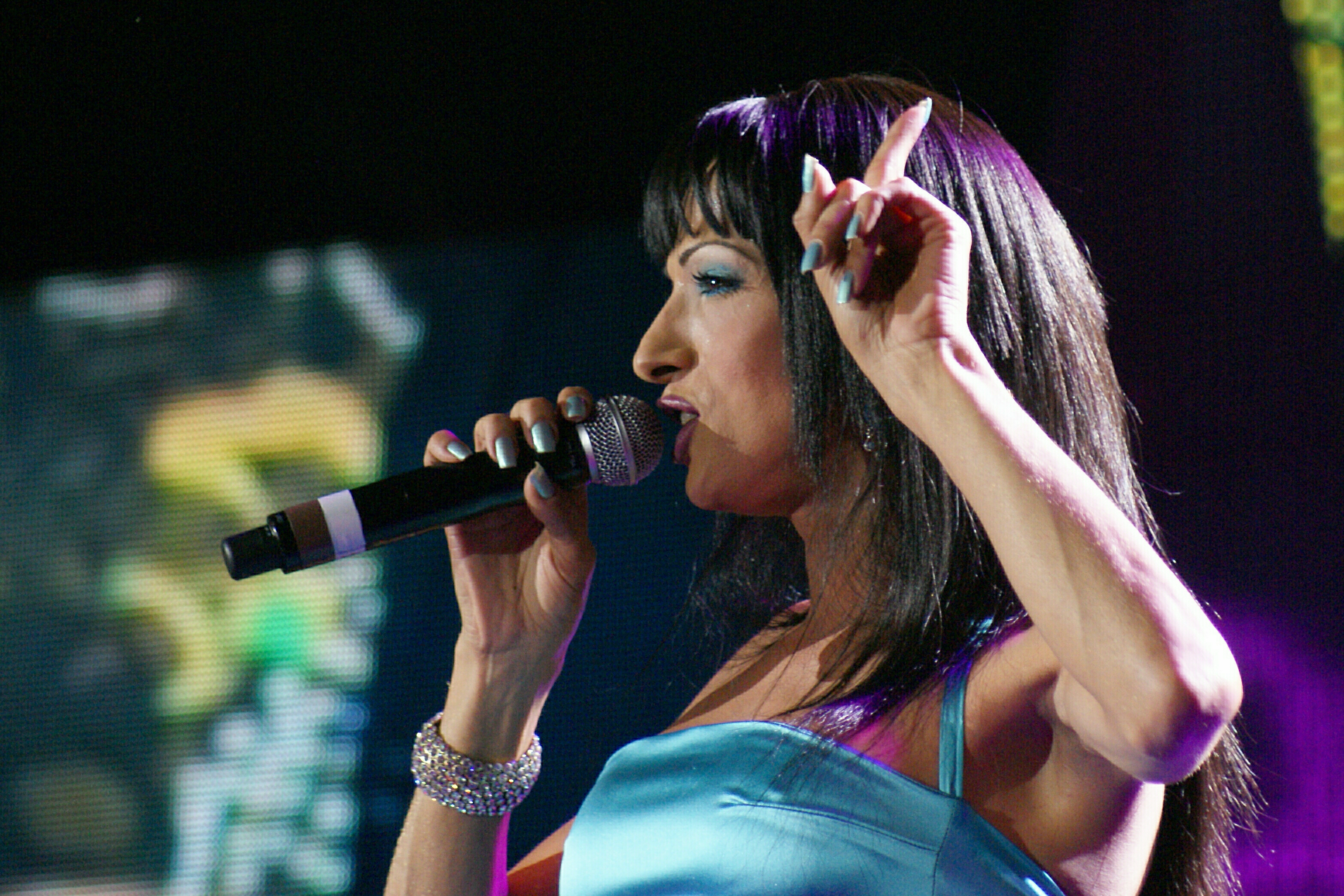
By the end of the 1990s, after several unsuccessful results at Eurovision, the Israel Broadcasting Authority (IBA) decided that it would return to a professional selection committee to pick songs for the 1998 contest, instead of the popular nomination process it had used. That new professional committee chose Dana International, a transgender performer who had already achieved international recognition.[5] Despite public and institutional opposition related to her gender identity, Dana International’s performance of “Diva” functioned as both spectacle and intervention. It not only secured victory for Israel once again but also staged visibility and representation for the LGBT community (Q+ added later); and the song’s sustained success in European charts extended its impact beyond the competition itself. For Israel, the 1998 Eurovision thus carried a dual significance: it reflected a measure of mainstream acceptance of the LGBTQ+ community within Israel while simultaneously projecting a progressive national image ahead of hosting the 1999 contest in Jerusalem.
Multilingual Representation and Shared Address
The 1999 Eurovision introduced rule changes that removed the requirement for participating countries to perform in an official national language. This change was reflected in Israel’s 2005 Pre-Eurovision performances, where English featured more prominently alongside Hebrew, and where Arabic, Israel’s second official language at the time, saw its first incorporation into the repertoire.[6] Arabic appeared in the song זמן (“Zman” or “time”), performed by Mira Awad, an accomplished musician and the first Arab Israeli to participate in Israel’s Pre-Eurovision competition. Co-written by Awad (Arabic lyrics) and Ehud Manor, the song combines the themes of melancholy and perseverance, as well as a restrained but persistent sense of hope. Although the song placed last, Awad’s participation—and the inclusion of Arabic alongside Hebrew—marked a significant shift in Israel’s articulation of cultural belonging and civic participation on the Eurovision stage. Foregrounding linguistic plurality as a mode of civic presence, the performance reconfigured the terms through which participation could be understood.
Towards the end of 2008, the IBA restructured the Pre-Eurovision’s format yet again, this time by appointing an internal committee to choose one or several artists, who would then perform several competing songs during a televised selection round. After unsuccessful attempts to recruit performers—including Harel Skaat, Maya Bouskilla, and Marina Maximilian Blumin—the IBA approached Achinoam Nini (internationally known as Noa), a prominent musician and political activist. Nini agreed to participate on the condition that she would perform as part of a duo with Mira Awad. The IBA accepted this condition, and Awad became the first non-Jewish Israeli citizen to represent the country at the Eurovision Song Contest
Nini and Awad’s resulting performance extended the earlier incorporation of Arabic in Israel’s Eurovision song by transforming it into a structured exchange between the two singers. Their selected song, “There Must be Another Way,”[8] combined Hebrew, Arabic, and English but more importantly organized these languages as a dialogic interaction rather than a simple multilingual repertoire. The song avoided direct political terminology, omitting explicit references to “war” or “peace,” and instead articulated a shared condition of vulnerability and longing. In doing so, it navigated the tension between universalized appeals and the specific constraints of the Israeli-Palestinian conflict.
The dialogic structure was further reinforced by the gendered grammar of both Hebrew and Arabic, which positioned the performance as an exchange between two female voices. Addressing one another as “sister,” the singers moved from individual expression toward a shared horizon articulated in the first-person plural: “אנחנו מחכות, רק ליום שיבוא אחרי” (“we wait, just for the day that will come after”). This linguistic shift reoriented the performance toward relationality and aligned it with emerging initiatives in Israel that positioned women as central actors in peacebuilding, anticipating later organizational efforts such as Women Making Peace.
Reality Television and the Eurovision “Melting Pot”
In 2013, the IBA elected to send Evyatar Korkus, who had won the Israeli reality show HaKokhav HaBa (הכוכב הבא, “The Next Star”), as Israel’s representative to Eurovision. From 2015 onward, and with only one exception (in 2023), the show doubled as Israel’s official Pre-Eurovision competition and was renamed twice to reflect that, first as “The Next Star to Eurovision” (הכוכב הבא לאירוויזיון) in 2016, and later as “Israel’s Next Star to Eurovision” (הכוכב הבא של ישראל לאירוויזיון) in 2026. With high levels of viewership, a format that foregrounded contestants’ life stories, and an abundance of references to the show in the media, the show became a centerpiece of Israel’s collective televised .
Across its various stages, from auditions to the final round, the show encourages viewers to encounter contestants first as individuals and only subsequently as musicians. The audition stage, which regularly includes contestants who do not proceed further in the competition, most clearly reveals the program’s investment in diversity. Given Israel’s social fabric and individuals’ association with specific groups, contestants are informally “tagged,” and aspects of their personal stories highlighted according to their religion, diasporic heritage, level of religious observance, gender, age, distinctive biographies, and the physical and emotional challenges they have faced.
Within this framework, one story that stands out is that of Valerie Hamaty. Born in Jaffa in 1999 to an Arab Christian Orthodox family, Hamaty was educated in an Arab and Christian environment up to high school, and she then attended the Hebrew, non-religious Ironi Dalet (עירוני ד’) High-School in Tel-Aviv.[9] Hamaty participated in HaKokhav HaBa on two occasions: in the eighth season (2021), which determined Israel’s representative for the 2022 Eurovision, and again in the eleventh season (2024), which selected the representative for the 2025 contest. In both seasons, her performances were highly praised, and she was widely considered one of the strongest contenders. She reached the final stage in 2021 and 2025, finishing second on both occasions.
From a historical perspective, the two seasons in which Hamaty participated were separated by a profound shift in Israel’s political and social climate. The 2021 season took place before the October 7 attacks, whereas the 2025 season unfolded after the attacks and amid the ongoing war in Gaza. The shift had a profound impact on Hamaty’s reception. While she continued to receive considerable support after October 7, she also became the target of hostile and often vicious reactions on social media, including from Arab Israelis and Palestinian citizens of Israel, who accused her of betrayal and denounced her participation in the show.
Held in the midst of war and featuring contestants who had experienced the October 7 attacks and their aftermath—whether as civilians or as soldiers—the 2025 season ultimately crowned Yuval Raphael, a Jewish singer a year younger than Hamaty who survived the Nova music festival massacre by hiding for hours beneath the bodies of those killed. In an interview with Ynet conducted shortly before the 2025 Eurovision Song Contest, Hamaty praised Raphael’s vocal abilities and wished her success in the competition.[10] She then reflected on her own aspirations and her continued hope to one day represent Israel internationally as an Arab citizen of the state. She balanced expressions of resilience with an acknowledgement of pain, describing both the support and hate statements—such as “better have a Jew finish last [at the Eurovision], than an Arab finish first”—that she had received. When asked about her reaction to the season’s outcome, Hamaty admitted that she was hurt by the sense that some viewers had favored Raphael less for musical reasons than for reasons of identity, preferring the story of a Jewish survivor of the Nova massacre over that of an Arab Israeli woman who, despite the war, continued to see herself as Israel’s musical ambassador.
Israel’s Musical Ambassadors and Projected National Images
Along with Israel’s early victories that brought to the country international recognition, the later changes in the language spoken in performances and the evolution of the media framework have allowed Israel to use its participation in Eurovision to project a carefully constructed image of itself to the (European) world. Resulting from this predominantly outward-looking process is the common perception (within Israel) that Israel’s contestants at Eurovision are the state’s musical ambassadors not only to the contest but to Europe at large. In fact, Israel’s success at Eurovision owes much to European responses to such crafted images, for example to Cohen’s “exotic” appeal in 1978 and Hallelujah’s message of peace and harmony in 1979 following the peace agreements between Israel and Egypt. In this historical context, Dana International’s singing of “Diva” continued to break boundaries, as did Nova survivor Yuval Raphael, whose song “New Day Will Rise” was embraced by European audiences and finished second at the 2025 competition.
In parallel to the ways in which Israel has sought to position itself in the world through its participation in Eurovision, that participation has had effects domestically, in particular because of Israel’s successes in the song contest and the pre-Eurovision process. When songs were no longer selected by a committee of IBA professionals but through a pre-Eurovision contest and finally the HaKokhav HaBa reality show, the once music-centered song selection process turned into a more complex arena of cultural self-articulation. The case of Valerie Hamaty brings these dynamics into sharp relief. Her repeated near-selection and the contrasting ways in which her candidacy was received before and after October 7 demonstrate that Eurovision functions as a stage on which competing visions of Israeli identity are performed, contested, and reconfigured. Rather than resolving these tensions, the Eurovision framework renders them visible, thus offering a revealing lens through which to examine the relationship between culture, politics, and belonging within national and transnational frameworks.
Zvi Gilboa holds a PhD in German Literature and Culture from Indiana University, as well as a Master of Music in Piano Performance degree from Indiana University. Gilboa is currently Associate Professor of Modern Hebrew in the Department of Middle Eastern and South Asian Languages and Cultures at the University of Virginia, where he is also a core member of the Jewish Studies Program and Center for German Studies. Gilboa’s research interests lie in the fields of transnational studies, German literature and culture, transnational literature in Hebrew, and language pedagogy, the latter with strong emphasis on cultural and literary authorship by non-native speakers.
Notes
[1] “נסיך הפופ העברי חוגג 75: יזהר כהן נשאר צעיר לנצח” [The Prince of Israeli Pop Celebrates 75: Izhar Cohen Stays Young Forever]. https://www.kan.org.il/content/kan-news/newstv/p-963853/s2/1011653/. Kan-11 video article, March 13, 2026. Accessed March 27, 2026.
[2] “יזהר כהן” [Yzhar Cohen]. Israel National Library, artist biographical entry. Accessed March 31, 2026. https://www.nli.org.il/he/discover/music/musicians/izhar-cohen.
[3] “בנו של סולימן כבש את אירופה” [The Sun of Suliman the Great has conquered Europe]. Ma’ariv, October 10, 1978, p. 49. Israel National Library, digitally archived copy. Accessed April 2, 2026. https://www.nli.org.il/he/newspapers/mar/1978/10/10/01/article/189/.
[4] דליה מזור, “ישראל לא תשתתף השנה באירוויזיון” [Dalya Mazon, “Israel Won’t Participate in the Eurovision This Year”]. Ma’ariv, December 11, 1979, digitally archived copy. Access April 10, 2026. https://www.nli.org.il/he/newspapers/mar/1979/12/11/01/.
[5] “הנסיכה דנה” [Princess Dana]. Israel Hayom, February 6, 2012; updated February 26, 2013. Accessed April 11, 2026. https://www.israelhayom.co.il/article/39946.
[6] The 2018 Basic Law defines Hebrew as Israel’s official language and grants Arabic a “special status,” see The Jerusalem Post, 2018, Read the full Jewish-Nation State Law, July 19.
[7] “המסע של מירה עווד ואחינועם ניני לאירוויזיון” [Mira Awad’s and Achinoam Nini’s Journey to the Eurovision]. Kan-11 video article. December 12, 2009. Accessed April 12, 2026. https://www.kan.org.il/content/archive1/vod/p-671023/676377/. See also, Vuletic, D., 2018, Postwar Europe and the Eurovision Song Contest, Bloomsbury, p. 134-135.
[8] Achinoam Nini and Mira Awa, “There must be another way / עינייך”. https://genius.com/Noa-achinoam-nini-there-must-be-another-way-einaich-lyrics.
[9] ערן סויסה, “הקול בראש: ואלרי חמאתי הכוכבת הבאה” [Eran Swisa, “It is all a voice in your head: Valery Hamaty is the next star”]. Israel Hayom, August 26, 2021. Accessed April 10, 2026. https://www.israelhayom.co.il/magazine/shishabat/article/4241210.
[10] בר זגה, “אמרו ‘עדיף יהודייה שתגיע למקום אחרון, מאשר שערבייה תיקח את המקום הראשון’. בטח שזה פוגע” [Bar Zega, “The said: ‘better have a Jew finishing last that an Arab finishing first’. Of course that hurts”]. Ynet, May 17, 2025. Accessed April 11, 2026. https://pplus.ynet.co.il/rechilut/article/byllmlfbge.
Photo: Daniel Kruczynski, via Wikimedia Commons, CC BY-SA 2.0.
