
By Paul O’Keeffe and Ada Freaney
As one of the most fundamental elements of human life, food—and our relationship with it— has become increasingly distant, abstracted, and fragmented. In many industrialized and increasingly urbanized societies, interactions with food are often mediated through supermarkets, packaging, advertising, and convenience-based consumption, rather than being experienced as part of a living system shaped by soil, climate, labor, culture, and ecology. While experiences of food differ significantly across regions and socio-economic contexts, contemporary food systems have contributed to a growing disconnect between consumers and the environmental and social realities of food production. In this context, the concept of food literacy has emerged as an essential framework for reconnecting individuals (especially children and young people) with the origins, values, and impacts of what they eat (Ares 2023).
Food literacy, however, is not a fixed or universally defined concept. Its meaning varies depending on disciplinary and practical perspectives. At its broadest, food literacy extends beyond basic nutritional knowledge to encompass a wide range of skills, understandings, and values that enable individuals to make informed, ethical, and sustainable decisions about food. This includes knowledge of how food is grown and produced, awareness of its environmental and social impacts, the ability to prepare and share meals, and an appreciation of food as both a cultural and ecological resource. For the purposes of this article, we adopt the definition proposed by Vidgens and Gallegos (2014), who conceptualize food literacy as “the scaffolding that empowers individuals, households, communities or nations to protect diet quality through change and strengthen dietary resilience over time” (Vidgens and Gallegos 2014). This definition is particularly useful as it emphasizes not only knowledge and skills but also adaptability, resilience, and the capacity to respond to changing food environments. These key themes underpin the living classroom pedagogy developed by Airfield Estate, a food education and sustainable agriculture charity based in Dublin, which is explored in this article as a conduit for developing food literacy.
The urgency of food literacy becomes particularly evident when considering the multiple, overlapping crises shaping global food systems and food security. For the purposes of this article “food systems” refers to the interconnected processes involved in producing, processing, distributing, consuming, and disposing of food, as well as the environmental, economic, and social systems that shape these processes. “Food security” refers to consistent physical and economic access to sufficient, safe, and nutritious food necessary for healthy living (FAO 2015). While the industrialization of agriculture has played a significant role in developing these food systems and ensuring food security through them by increasing food production and reducing large-scale famine conditions (FAO 2015), it has also contributed to environmental degradation and the proliferation of highly processed diets, which are linked to rising levels of obesity and non-communicable diseases (Tuomisto et al. 2017). Indeed, global food production has become so efficient that current estimates suggest it could feed a population of more than 10 billion people (FAO 2025). Despite this abundance, increased production has not translated into equitable food security. Nearly 800 million people worldwide remain chronically undernourished (Concern 2022). At the same time, many others experience diets that are calorie-rich but nutritionally poor. This paradox reflects deeper structural challenges, including inequitable supply chains, limited access to safe and healthy food, and a widespread lack of understanding of what constitutes a balanced and sustainable diet. The result is a profound mismatch between the scale of global food production and the extent to which it contributes to human and planetary well-being. Importantly, however, challenges related to food literacy cannot be separated from broader structural inequalities. For many individuals and communities, barriers to healthy and sustainable diets are shaped not only by knowledge but also by affordability, access, time, infrastructure, and food insecurity. In this sense, food literacy should not be understood as an individual solution to systemic problems but rather as one component of broader efforts to create healthier and more equitable food systems.
Education can play a central role in addressing the growing gap between what people consume and what they understand about the environmental, social, cultural, and nutritional systems that shape food production and consumption (Vargas et al. 2025). However, traditional classroom-based approaches often struggle to convey the complexity and lived reality of food systems and truly develop a deep understanding of our food and its role in our world. In particular, the sensory, ecological and relational aspects of food are difficult to convey in theory without directly encountering them in practice. This is where the concept of the living classroom becomes particularly powerful. A living classroom is an experiential learning environment where education is embedded within real-world contexts, allowing learners to engage directly with the systems they are studying (O’Keeffe and MacEvilly 2025). In the case of food literacy, this means learning not only about food, but through food—by setting, growing, harvesting, preparing, and sharing it.
Airfield Estate in Dublin offers a compelling example of how a living classroom approach can transform food education. As a working organic farm and educational space, Airfield provides opportunities for young people to engage with food systems in a tangible and meaningful way (O’Keeffe 2026). Here, learners can observe seasonal cycles, understand the principles of sustainable agriculture, and explore the connections between food production, biodiversity, and climate. This experiential model fosters not only knowledge acquisition but also a deeper sense of responsibility towards, and stewardship of, the natural world around us.
This article argues that embedding food literacy within living classroom environments is a critical pathway for cultivating more sustainable, healthy, and equitable food futures. By grounding learning in lived experience, initiatives such as those at Airfield Estate demonstrate how education can move beyond abstract knowledge to foster lasting behavioral change and a stronger sense of global responsibility. In doing so, they offer valuable insights for educators, policymakers, and communities seeking to reimagine how we teach and learn about food in the twenty-first century.
Understanding Food Literacy in Practice
Food literacy is often discussed in theory, but it is in practice that its meaning becomes most visible. It is not just about what people know but about what they are able to do, how they think, and how they relate to food in their everyday lives. Research increasingly frames food literacy as a combination of knowledge, skills, and behaviors but also as something shaped by context. Access, affordability, time, and cultural norms all influence how individuals engage with food. This means that food literacy is not a fixed trait that individuals either have or lack but something that develops through experience and environment (Silva et al. 2023).
A food-literate individual might recognize where food comes from, understand the difference between seasonal (and thus local) and imported produce, feel confident preparing a simple meal, or question the environmental impact of what he/she is buying. But equally, food literacy can show up in more subtle ways such as curiosity, habits, and in the ability to navigate an increasingly complex food environment. In this sense, food literacy sits at the intersection of health, sustainability, and society. It is both a personal capability and a reflection of the systems within which people live. It is important to note that food literacy cannot be separated from broader issues of food security, affordability, and access. For many individuals and communities, particularly those experiencing poverty or living in food deserts, food choices are constrained by structural inequalities rather than a lack of knowledge alone. Therefore, food literacy cannot be understood as an individual solution to systemic challenges but as part of a broader effort to create more equitable, accessible, and sustainable food systems.
Why Food Literacy Matters
The growing importance of food literacy is closely tied to the changing nature of how we produce, access, and consume food. For many people around the world, food has become something that is convenient, fast, and increasingly disconnected from its origins. While this has brought undeniable benefits in terms of accessibility and choice, it has also contributed to a loss of understanding and, in some cases, a loss of agency. At the same time, understandings of what constitutes “good” or “healthy” food are increasingly shaped by competing nutritional claims, marketing, social media, and commercial food interests. Navigating these, often contradictory, messages requires not only access to information but also the critical capacity to evaluate food choices within wider social, economic, and environmental contexts. However, the ability to act on such knowledge is unevenly distributed, as many individuals and communities continue to face barriers related to affordability, time, access, and food insecurity.
Without a basic level of food literacy, it becomes difficult to make informed decisions, whether that relates to nutrition, environmental sustainability, or even value for money. This can leave individuals more vulnerable to misleading information, heavily processed diets, and food environments that prioritize convenience over quality. At the same time, food literacy has the potential to empower. It can support healthier eating patterns, reduce food waste, and foster a stronger connection to local and seasonal food systems. It can also encourage a deeper appreciation of food as something that is not just consumed but grown, shared, and embedded in culture and community.
In the context of sustainability, food literacy becomes even more critical. Food systems are a major contributor to climate change, biodiversity loss, and resource use. Yet these impacts are often invisible in day-to-day decision-making. For example, industrial agricultural systems are closely linked to deforestation, habitat loss, and intensive resource use, while highly processed global food supply chains contribute significantly to carbon emissions and waste (Seferidi et al. 2020). Yet these environmental impacts often remain invisible within everyday food consumption practices. By building awareness and understanding, food literacy can help bridge this gap, enabling individuals to see the connections between their choices and wider environmental outcomes.
Youth, Food Literacy, and Global Responsibility
While food literacy is relevant across all age groups, there is a strong case for focusing on children and young people. Early experiences with food can shape attitudes, behaviors, and preferences that persist into adulthood (Malachowska et al., 2023). For many children today, opportunities to engage directly with food systems are limited. Food, at least for those of us in the Western world, is often encountered in its final form, packaged, processed, and ready to eat. This can make it difficult to develop an understanding of how food is grown, what it requires to grow, and how it connects to the natural world.
At the same time, younger generations are growing up in the context of increasing global challenges, from climate change to food insecurity. As future consumers, citizens, and decision-makers, their relationship with food will play an important role in shaping more sustainable systems. Food literacy, in this context, is not about placing responsibility solely on individuals. Rather, it is about equipping young people with the knowledge, skills, and confidence to engage with food in a thoughtful and informed way. It is about fostering curiosity, critical thinking, and a sense of connection, both to the food they eat and to the systems that produce it.
A Living Classroom in Practice: Airfield Estate in Ireland
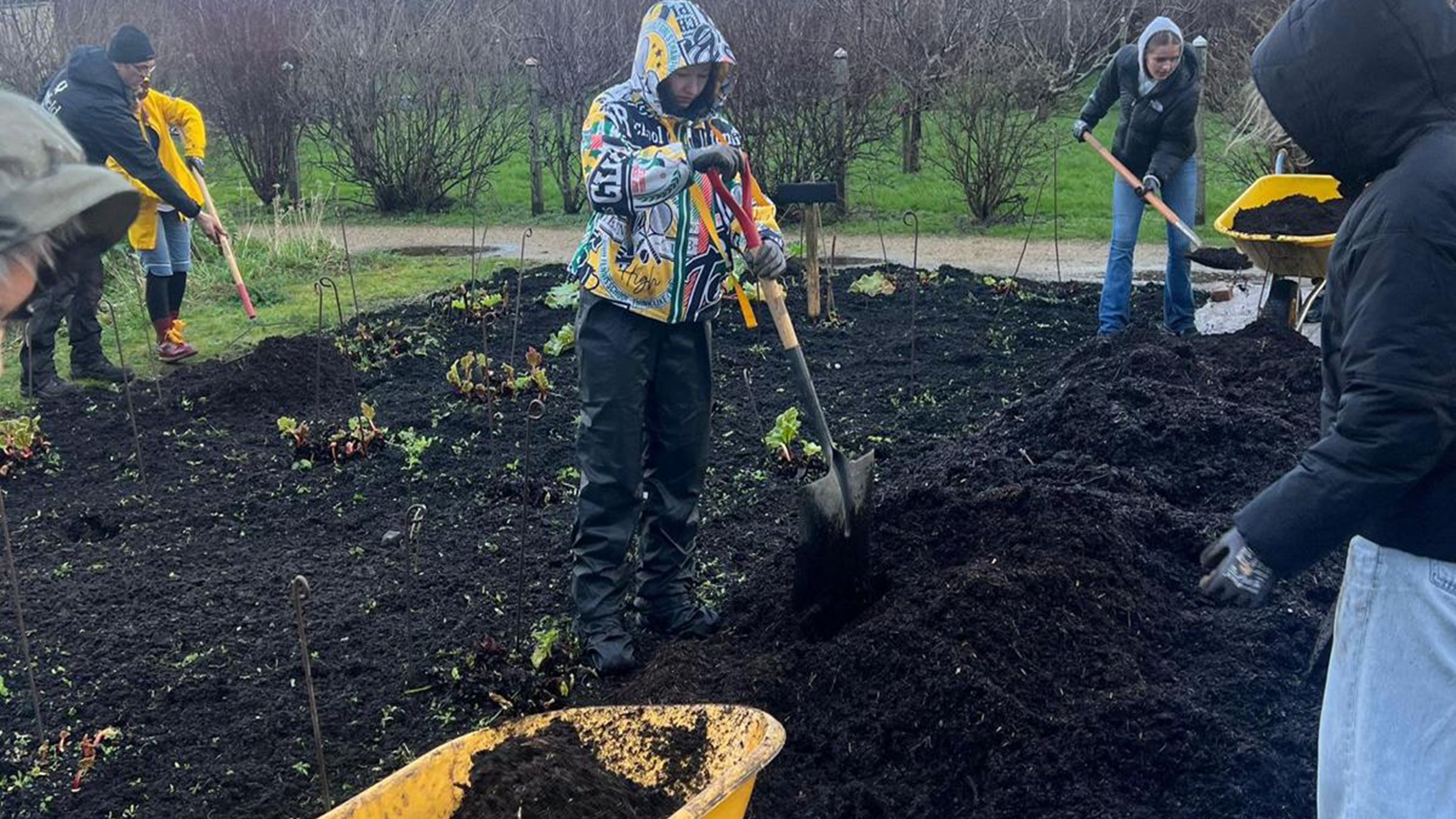
At Airfield Estate, the concept of food literacy is not taught as a standalone topic but experienced as part of a wider system of knowledge, delivered via the living classroom pedagogy. A typical visit to Airfield involves students rotating through a series of experiential learning stations across the Estate. Learners may spend time in the gardens identifying seasonal crops and discussing pollinators, participate in planting or harvesting activities, visit the dairy and poultry areas to learn about animal care and food production, and engage in workshops focused on nutrition, sustainability, or cooking. Produce grown on the Estate is also used within Airfield’s restaurant and educational cooking activities, helping learners understand the relationship between food production, preparation, and consumption. For example, children may make butter using milk produced onsite or prepare simple meals using seasonal produce harvested from the gardens. Rather than treating food as an abstract topic, the living classroom model encourages students to learn through direct participation, observation, and sensory engagement.
Through its working farm, gardens, and education programs, the Estate offers a living example of how food, environment, and society are interconnected. Activities available to visitors are designed not simply as recreational experiences but as structured educational engagements that encourage observation, participation, and reflection. For example, during tours of the site, students are prompted to consider where food comes from, how farming practices affect biodiversity and climate, and how consumer choices influence wider food systems. During tours, frequent discussions with educators, farmers, and gardeners further connect practical activities to broader themes such as sustainability, nutrition, waste, and environmental responsibility. Through this process, learners are encouraged to move beyond passive consumption towards a more active and critical understanding of food and its wider social and ecological implications. Young people engaging with Airfield’s programs do not just learn about food, they encounter it. They see how it grows as they walk through its gardens, how it changes with the seasons when they make return visits, and what is required to produce it when they partake in discussions with the farmers and gardeners. They engage with and learn about soil, biodiversity, and climate in ways that move beyond abstract concepts and into lived experience (O’Keeffe 2026). This type of engagement is significant. Experiential learning has been shown to deepen understanding and support longer-term behavioral change, particularly in relation to food and sustainability (Vidgen and Gallegos 2014). By situating learning within real-world contexts, the living classroom approach allows learners to build practical knowledge alongside a sense of connection and responsibility (Chawla 2007).
Alongside its education programs, Airfield is also contributing to growing an evidence base on food literacy through ongoing research exploring knowledge of food production and consumption of children aged 10-12 years who visit the site. Through its engagement with local academia and industry, the Estate hopes that the insights it gains will help inform the design of future food literacy programs, ensuring they are grounded not only in theory, but in the lived realities of children and families today. Furthermore, Airfield is involved in various large-scale EU Commission funded Horizon research projects that investigate sustainable agriculture, biodiversity, and the future of food production and consumption (Airfield Estate 2025). Food literacy research, via the intrinsic living classroom, has the potential to make a deep and lasting impact on real world policy and practice around the world.
Implications for Education and Policy
The growing recognition of the necessity for food literacy raises important questions for both education systems and policy frameworks in Ireland. In many cases, elements of food literacy already exist within curricula, whether through science, health education, or environmental studies. However, these elements are often fragmented and may not fully capture the interconnected nature of food systems (Geraghty 2021). There is an opportunity to take a more integrated approach, one that recognizes food literacy as a cross-cutting theme linking health, sustainability, culture, and practical life skills. Experiential learning models, such as the living classroom, can play a key role in this pursuit by providing contexts in which these connections can be explored in a meaningful way (Institute for Experiential Leaning 2024).
Current policy initiatives, such as the expansion of school meal programs and breakfast clubs in various countries in Europe, further highlight the role of the food environment in shaping children’s experiences of food. The rollout of Hot School Meals Programme across primary schools in Ireland represents a significant shift in how food is integrated into the school day. While primarily designed to address food access and equity, such programs can also create opportunities for learning—from exposure to different foods, to wider conversations around nutrition, culture, and sustainability in the public sphere (Hotschooolmeals.ie 2025). Ensuring that these initiatives are aligned with broader food literacy goals presents an important opportunity for both education and policy.
From a policy perspective, supporting food literacy may involve not only curriculum development (for example the inclusion of learning points around diets and nutrition in the Irish primary school Social, Personal and Health Education curriculum), but also investment in infrastructure, partnerships, and community-based initiatives that connect schools with the wider food environments around them. This could include access to school gardens, cooking and nutrition education, composting and food waste initiatives, farm visits, and collaborations between schools, farms, community organizations, and educational spaces such as Airfield Estate. Such initiatives can help students connect classroom learning with lived experience by engaging them directly with food growing, seasonal production, biodiversity, and sustainable consumption practices. Ultimately, advancing food literacy requires a systems-level approach that recognizes not only the role of education but also the influence of wider social, economic, and food environments in shaping behaviors, opportunities, and outcomes.
Towards a More Food-Literate Future
In an era shaped by climate instability, biodiversity loss, rising diet-related illness, and growing social inequality, food education can no longer be viewed as a secondary or optional aspect of learning. For example, a 2023 study in Ireland found a 59 percent rise in malnutrition among hospital patients, with over 222,000 individuals suffering from nutritional issues (INDI 2023). This worrying trend is just one example of how food sits at the center of many of the defining challenges of the twenty-first century, linking human health, environmental sustainability, culture, economy, and community. Yet despite their importance, many people remain deeply disconnected from the systems that produce, distribute, and shape the food they consume. Addressing this disconnect requires more than information alone; it requires educational experiences that are practical, participatory, and rooted in the realities of everyday life.
The living classroom offers one such approach. By embedding learning within working food systems and real-world environments, it creates opportunities for learners to engage with food not as an abstract concept but as something ecological, cultural, and deeply interconnected with global sustainability challenges. In doing so, food literacy becomes more than nutritional awareness. It becomes a form of ecological and civic literacy that encourages critical thinking, responsibility, and informed participation in shaping more sustainable futures.
At Airfield Estate, this model is already being put into practice. Through direct engagement with farming, biodiversity, seasonal production, and sustainable food systems, learners are encouraged to develop not only knowledge but also a deeper sense of connection to the natural world and to the wider social and environmental implications of food. Importantly, this approach demonstrates that meaningful food education does not need to occur solely within traditional classroom settings. Rather, it can emerge through lived experience, curiosity, participation, and community engagement.
As societies continue to confront increasingly complex food and environmental challenges, the need for innovative educational models will only grow. Embedding food literacy within living classroom environments offers a powerful pathway towards fostering healthier lifestyles, stronger environmental awareness, and, hopefully, more resilient communities. Ultimately, educating people about food is not simply about improving diets; it is about cultivating a generation capable of understanding the relationship between people, place, and planet, and empowered to contribute to a more sustainable and equitable world.
Paul O’Keeffe, PhD, is Head of Education and Research at Airfield Estate and has a background in education for sustainable development.
Ada Freaney is a Research Officer at Airfield Estate.
References
Airfield Estate. 2025. “Research – Airfield Estate.” Airfield Estate. July 29, 2025. https://www.airfield.ie/research/.
Ares, Gastón. 2023. “Development of Food Literacy in Children and Adolescents: Implications for the Design of Strategies to Promote Healthier and More Sustainable Diets.” Nutrition Reviews 82 (4). https://doi.org/10.1093/nutrit/nuad072.
Concern. 2022. “World Hunger Facts: What You Need to Know in 2022.” Concern Worldwide. November 17, 2022. https://www.concern.net/news/world-hunger-facts-figures.
FAO. 2015. “Reducting Poverty and Hunger: The Critical Role of Financing for Food, Agriculture and Rural Development.” Fao.org. 2015. https://www.fao.org/4/y6265e/y6265e03.htm.
———. 2025. “Better Land, Soil and Water Management Key to Feeding 10 Billion People, FAO Warns.” Newsroom. FAO. January 12, 2025. https://www.fao.org/newsroom/detail/better-land–soil-and-water-management-key-to-feeding-10-billion-people–fao-warns/en.
Geraghty, Aisling. 2021. “Home Economics and Food Literacy: An Investigation into the Factors Influencing the Effective Delivery of Food Literacy Curricula in Irish Post Primary Schools as Perceived by Key Stakeholders.” MA Thesis, Technological University Dublin. https://arrow.tudublin.ie/cgi/viewcontent.cgi?params=/context/tfschcafdis/article/1016/&path_info=Aisling_Geraghty_MA_Thesis.pdf.
“Hotschoolmeals.” 2025. Hotschoolmeals.ie. 2025. https://hotschoolmeals.ie/.
Institute for Experiential Learning. 2024. “What Is Experiential Learning?” Institute for Experiential Learning. 2024. https://experientiallearninginstitute.org/what-is-experiential-learning/.
Irish Nutrition and Dietetic Institute. 2023. “Increase in Malnutrition among Patients Entering Hospital – INDI.” Indi.ie. 2023. https://www.indi.ie/men-s-health/1789-increase-in-malnutrition-among-patients-entering-hospital.html.
Małachowska, Aleksandra, Jerzy Gębski, and Marzena Jeżewska-Zychowicz. 2023. “Childhood Food Experiences and Selected Eating Styles as Determinants of Diet Quality in Adulthood—a Cross-Sectional Study.” Nutrients 15 (10): 2256–56. https://doi.org/10.3390/nu15102256.
O’Keeffe, Paul. 2026. “The Living Classroom: Reconnecting with Land, Food, and Culture.” Permaculture. March 29, 2026. https://www.permaculture.co.uk/articles/the-living-classroom-reconnecting-with-land-food-and-culture/.
O’Keeffe, Paul, and Claire MacEvilly. 2025. “Cultivating Sustainable Futures: The Living Classroom Model at Airfield Estate.” GlobalEurope. December 26, 2025. https://globaleuropejournal.org/2025/12/cultivating-sustainable-futures-the-living-classroom-model-at-airfield-estate/.
Seferidi, Paraskevi, Gyorgy Scrinis, Inge Huybrechts, Jeremy Woods, Paolo Vineis, and Christopher Millett. 2020. “The Neglected Environmental Impacts of Ultra-Processed Foods.” The Lancet Planetary Health 4 (10): e437–38. https://doi.org/10.1016/s2542-5196(20)30177-7.
Silva, Paula, Rita Araújo, Felisbela Lopes, and Sumantra Ray. 2023. “Nutrition and Food Literacy: Framing the Challenges to Health Communication.” Nutrients 15 (22): 4708. https://doi.org/10.3390/nu15224708.
Tuomisto, Hanna L., Pauline F.D. Scheelbeek, Zaid Chalabi, Rosemary Green, Richard D. Smith, Andy Haines, and Alan D. Dangour. 2017. “Effects of Environmental Change on Agriculture, Nutrition and Health: A Framework with a Focus on Fruits and Vegetables.” Wellcome Open Research 2 (October): 21. https://doi.org/10.12688/wellcomeopenres.11190.2.
Vargas, Melissa, Cristina Álvarez Sánchez, Vilma Tyler, and Fatima Hachem. 2025. “Putting Food at the Centre of Learning: An Evidence-Based and Practice-Informed Model of Holistic Food Education in Schools.” The Lancet Planetary Health, May. https://doi.org/10.1016/s2542-5196(25)00033-6.
Vidgen, Helen Anna, and Danielle Gallegos. 2014. “Defining Food Literacy and Its Components.” Appetite 76 (1): 50–59. https://doi.org/10.1016/j.appet.2014.01.010
Photo: Courtesy of Airfield Estate.
