
By Edina Paleviq
An Introduction to the Roundtable, “The Unmaking of Illiberal Power in Hungary.”


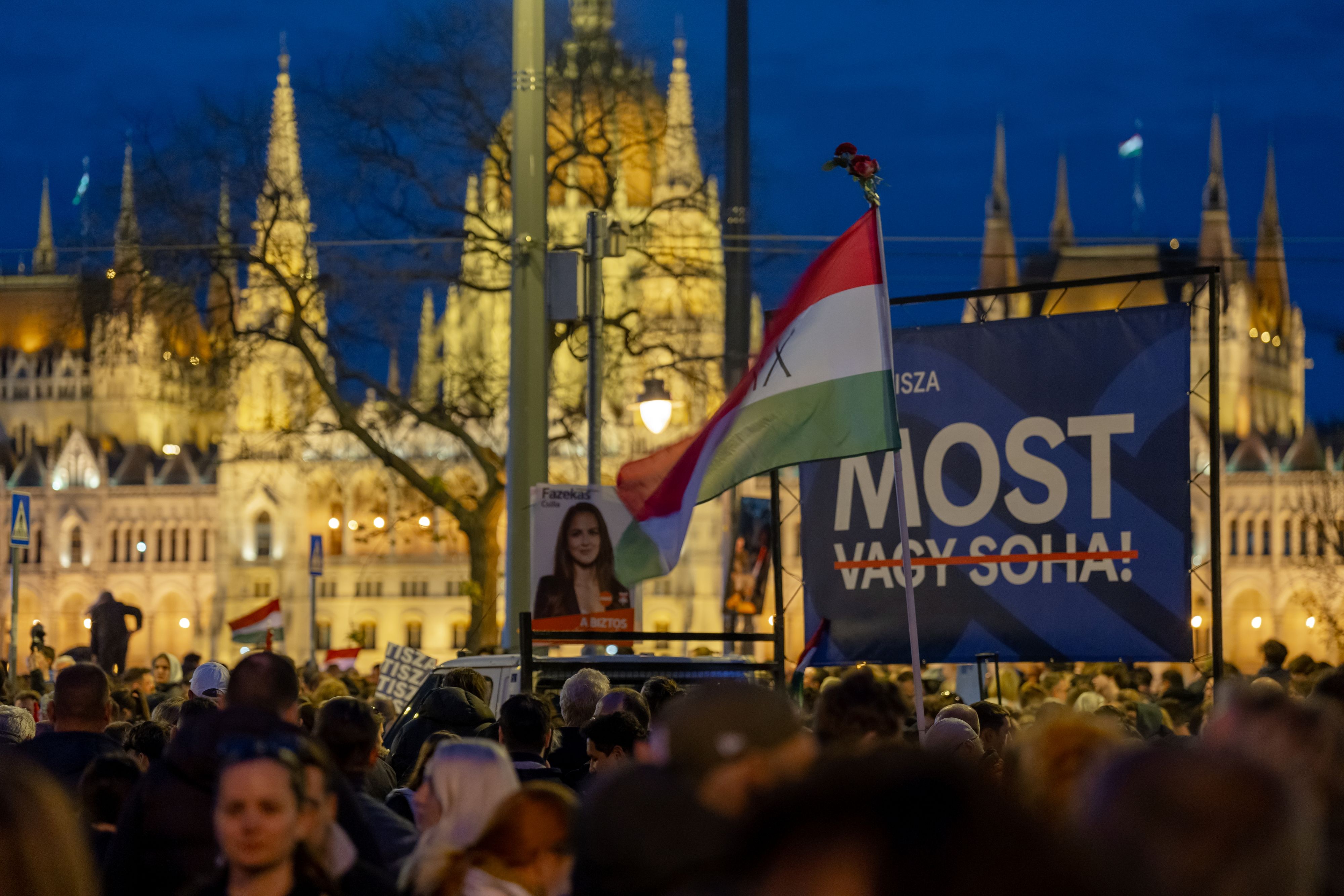
The 2026 Hungarian parliamentary elections marked a turning point in European politics. They brought an end to one of the most durable dominant‑party systems in the European Union. After sixteen years of Fidesz rule, the victory of Péter Magyar’s TISZA Party challenged long‑standing assumptions about the stability of electoral authoritarianism in Europe. Yet the significance of this moment extends beyond the election result. As the contributions to this roundtable show, the Hungarian case is best understood not as a simple alternation of power but as a broader process of political transformation unfolding across institutional, discursive, and supranational dimensions.
Building on this perspective, the roundtable uses the 2026 elections in Hungary as a lens through which to examine the dynamics of democratic erosion and renewal. Rather than focusing on individual political actors, the contributions shift attention to the underlying mechanisms that made this transformation possible: the internal decay of an illiberal regime, the reconfiguration of political discourse, and the strategic use of institutional leverage within the European Union (EU). At the structural level, Martina Plantak’s contribution provides the analytical foundation for understanding the decline of Orbánism. Moving beyond narratives of sudden political rupture, Plantak traces the gradual erosion of the regime’s core pillars. Economic stagnation, declining legitimacy, and elite fragmentation combined to undermine the stability of Hungary’s National System of Cooperation, revealing the limits of a model long reliant on centralized control and asymmetrical political competition. From this perspective, the 2026 election appears not as an external shock imposed on a stable system but as the outcome of accumulated internal contradictions. In demonstrating these limits, Plantak challenges the assumption that dominant‑party regimes, once consolidated, are inherently durable, highlighting instead their dependence on sustained performance and elite cohesion.
Complementing this structural perspective, Jessica Storey‑Nagy shifts attention to the discursive dimension of regime decline. Her analysis highlights how language, symbols, and historical references shaped the opposition’s capacity to mobilize in the run-up to the elections. By examining practices such as “mouth‑karate” and the reappropriation of historically resonant slogans, she shows that political discourse did not merely reflect social discontent but actively helped to produce it. Through what she conceptualizes as chronopolitics, contemporary grievances are embedded within a broader narrative of national struggle, thereby expanding the horizon of political imagination. The Hungarian case thus points to a wider insight: democratic change is not only institutional but also linguistic, requiring a redefinition of the symbolic frameworks through which political reality is understood.
Moving beyond domestic dynamics, Edina Paleviq moves the focus to the level of European governance. Introducing the concept of institutional amplification, she shows how Hungary, despite its limited material resources, has been able, notably under Viktor Orbán, to exert disproportionate influence within the European Union. Through the strategic use of unanimity‑based decision rules and veto threats, successive Hungarian governments increased the costs of collective action and shaped key policy outcomes. From this perspective, the significance of the 2026 elections extends well beyond Hungary itself, with implications for the functioning of EU decision‑making more broadly. More generally, Paleviq’s analysis points to a structural tension at the core of the European project: institutional arrangements designed to ensure equality among member states can also enable obstruction and strategic leverage.
What unites these three perspectives is a shared recognition that the end of illiberal rule is a process rather than a single event. Hungary’s (expected) transformation illustrates how democratic renewal emerges from the interplay of structural pressures, discursive shifts, and institutional constraints. Yet the unmaking of Orbánism does not resolve the legacies it leaves behind. The institutional architecture of centralized governance, the political language of nationalism, and the structural features of EU decision‑making that enabled Hungary’s strategic leverage all persist. Rather than marking the resolution of a political crisis, the 2026 elections signal the beginning of a new and uncertain phase of democratic reconstruction. For scholars and policymakers alike, the Hungarian case thus serves as a reminder that, while illiberal dominance can be challenged, the path toward democratic renewal remains complex and ongoing.
Roundtable Table of Content
- The 2026 Hungarian Parliamentary Elections and the Crisis of Orbánism, by Martina Plantak
- Institutional Amplification and Small-State Influence: Explaining International Concern over Hungary’s 2026 Election, by Edina Paleviq
- On the Words of Change: From Revolutionary Poetry to Mouth-Karate in the Hungarian Opposition, by Jessica Storey-Nagy
Edina Paleviq is a political scientist whose research focuses on the intersection of democratization, civil society, and European integration. Her research explores the interplay between grassroots mobilization and institutional Europeanization. By bridging democratic theory with the complexities of digital society, her work offers critical insights into the evolving dynamics of civic participation and nationalism in contemporary Europe.
