
By Martina Plantak
This is part of a roundtable: The Unmaking of Illiberal Power in Hungary.
This article examines the 2026 Hungarian parliamentary elections as a critical turning point in the trajectory of Viktor Orbán’s illiberal political system. After sixteen years of Fidesz rule in Hungary, the victory of Péter Magyar’s TISZA Party challenged assumptions about the durability of dominant-party regimes and electoral authoritarianism in Europe. The article explores the political, economic, and institutional factors behind the decline of Orbánism, including economic stagnation, weakening legitimacy, elite fragmentation, and growing dissatisfaction with centralized governance. It argues that Magyar’s success resulted from his ability to construct a broader political alternative that combined demands for institutional renewal with appeals to conservative voters previously aligned with Fidesz. While the election demonstrated the possibility of democratic change under conditions of institutional imbalance, the legacy of Orbánism continues to pose significant challenges for democratic reconstruction and political transformation in Hungary. The Hungarian case therefore offers broader insights into the resilience and limitations of illiberal governance, as well as into the conditions under which democratic renewal may emerge.
The Hungarian parliamentary elections of 2026 represented one of the most consequential political events in contemporary European politics. After sixteen years of uninterrupted rule, Viktor Orbán and the Fidesz–KDNP alliance were defeated by Péter Magyar and the TISZA Party, bringing an end to one of the most durable dominant-party systems within the European Union. The election did not merely yield a routine democratic alternation of power; rather, it constituted a broader political and institutional rupture that challenged prevailing assumptions regarding the stability of illiberal governance in Central Europe. Orbán’s Hungary had long been considered a paradigmatic case of democratic backsliding, electoral authoritarianism, and gradual erosion of liberal constitutionalism from within democratic institutions. Consequently, the 2026 elections attracted significant scholarly and political attention because they raised a central question about whether an entrenched illiberal system could be electorally dismantled through democratic procedures despite years of institutional asymmetry and concentrated political power.
Since returning to office in 2010, Orbán had systematically transformed Hungary’s political system through constitutional reforms, media centralization, judicial restructuring, and the expansion of executive authority. The Fidesz government repeatedly justified these measures through the language of national sovereignty, democratic majoritarianism, and cultural self-defense against perceived liberal and cosmopolitan pressures from the European Union (Bozóki and Benedek 2024). Orbán openly articulated the concept of an “illiberal state,” arguing that liberal democracy had failed to provide social stability, national cohesion, or effective political leadership in the context of globalization, migration, and economic insecurity. Under this model, democratic legitimacy became increasingly identified with electoral victory and centralized leadership rather than with institutional pluralism or constitutional limitations on power.
Political scientists increasingly described Hungary as an “electoral autocracy” or “competitive authoritarian” regime in which elections remained formally competitive but the governing party benefited from overwhelming structural advantages (Ilonszki and Lengyel 2025; Ágh 2022; Krekó 2022). These advantages included the transformation of electoral laws, concentration of media ownership, extensive state patronage networks, and the politicization of public institutions (Bánkuti, Halmai, and Scheppele 2012; Kornai 2015). Importantly, Orbán’s political system did not abolish democratic procedures outright. Opposition parties continued to exist, elections were regularly organized, and formal political pluralism survived. Yet the cumulative concentration of economic, informational, and institutional resources significantly reduced the fairness of political competition (Bozóki and Hegedűs 2018). The Hungarian case therefore became central to broader debates concerning democratic erosion within consolidated democratic frameworks.
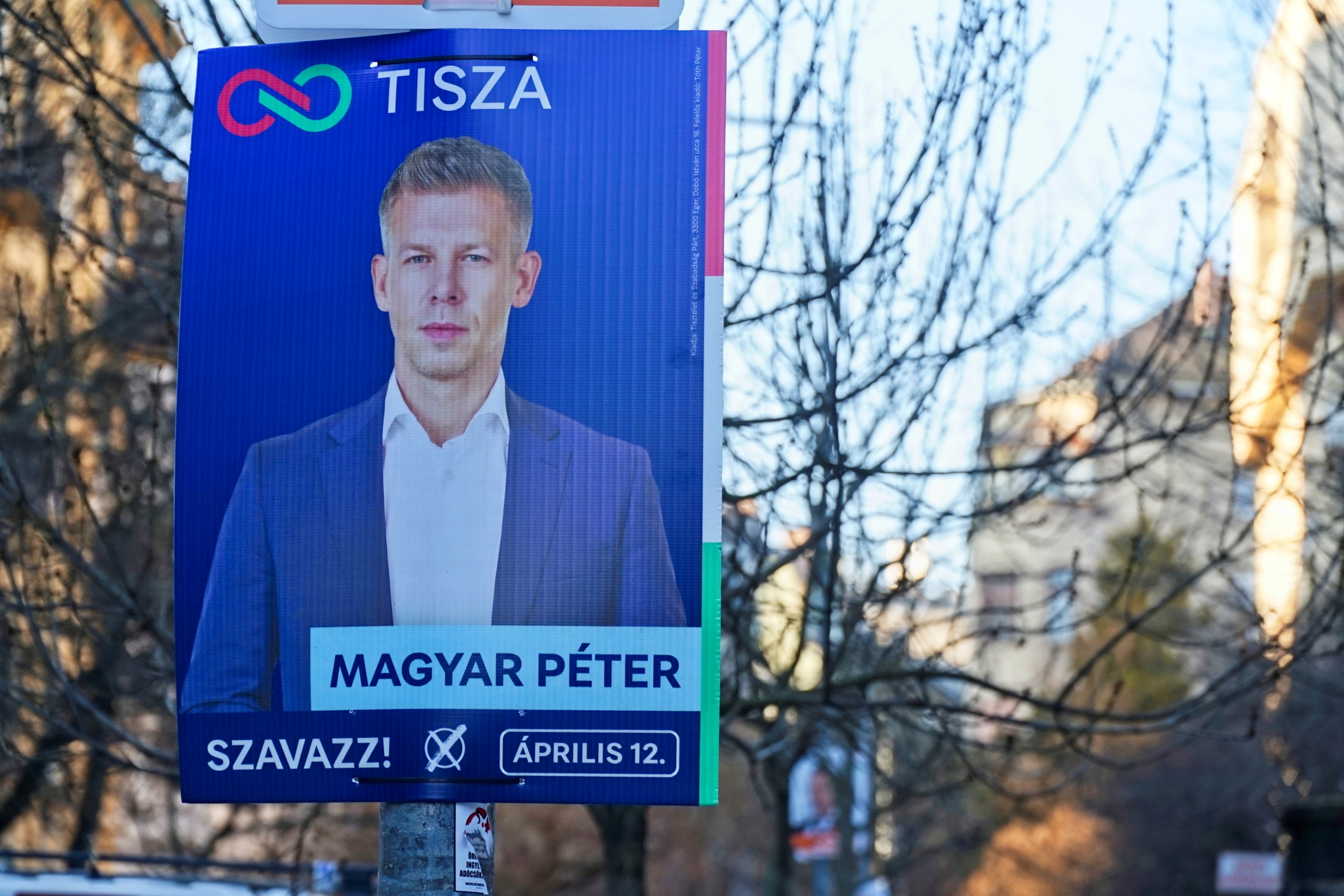
Against this background, the emergence of Péter Magyar as the central opposition figure fundamentally altered the dynamics of Hungarian politics. Earlier attempts to challenge Orbán, particularly the broad opposition coalition defeated in 2022, were weakened by ideological fragmentation and strategic incoherence. Liberals, social democrats, greens, and the formerly radical-right Jobbik movement united primarily through their anti-Orbán sentiment rather than through a coherent governing vision (Mikola and Santos 2025). Orbán successfully exploited these contradictions by portraying the opposition as an unstable and externally influenced alliance disconnected from Hungarian national interests. The 2022 campaign demonstrated the limitations of purely negative coalition-building strategies in hybrid political systems characterized by strong incumbency advantages.
Magyar’s rise differed fundamentally from previous opposition characters’ trajectories because he emerged from within the broader Fidesz-associated political and institutional elite. Before entering opposition politics, Magyar had been connected to circles closely associated with the Hungarian state apparatus. His former marriage to Judit Varga, one of the most internationally prominent ministers in the Orbán government, reinforced his image as an insider with direct knowledge of the regime’s internal operations. This biographical dimension became politically decisive. Unlike previous opposition leaders, Magyar could not easily be dismissed as a representative of liberal cosmopolitanism, post-communist political networks, or foreign interests. Instead, he presented himself as a conservative patriot disillusioned with what he increasingly described as the corruption, arrogance, and moral exhaustion of Orbán’s political system.
This distinction significantly weakened one of the central pillars of Fidesz’s hegemonic strategy. Since 2010, Orbán had repeatedly framed Hungarian politics as a civilizational conflict between national sovereignty and external liberal influence. Opposition actors were frequently portrayed as agents of Brussels defending international financial interests or cosmopolitan elites hostile to Hungarian identity (Bozóki and Benedek 2024). Magyar complicated this narrative because his criticism emerged from within the conservative-national political tradition itself. Rather than rejecting nationalism or conservative values, he argued that Orbánism had betrayed these values through corruption, oligarchic clientelism, and the personalization of political power. Consequently, Magyar was able to attract voters who remained culturally conservative but had become increasingly dissatisfied with the direction of the regime.
Earlier electoral support for Fidesz was reinforced by economic stabilization, expansionary fiscal policies, family-oriented redistribution, and extensive state intervention, particularly during the COVID-19 crisis and the run-up to the 2022 election (Ádám and Csaba 2022). During the migration crisis of 2015 and the COVID-19 pandemic, Orbán consistently presented himself as the guarantor of national stability against external chaos. He continued to employ this narrative in the context of the war in Ukraine, framing his leadership as a source of security amid geopolitical uncertainty. Yet by 2026, the material foundations of this political strategy had weakened considerably. During Orbán’s time in office, Hungary experienced persistent inflation, slowing economic growth, declining public services, and increasing fiscal constraints. Simultaneously, conflicts with the European Union over rule-of-law issues led to the freezing of significant financial resources, intensifying domestic economic pressures.
During this period, scholars increasingly argued that political centralization under Orbán was accompanied by the emergence of a patronal political-economic system structured around Fidesz loyalists, clientelist redistribution, and state-dependent business networks (Madlovics and Magyar 2023). Public procurement processes, media ownership structures, and state contracts often appeared concentrated within networks loyal to the governing party. Although corruption allegations had existed for years, they became politically more damaging during times of economic stagnation and declining living standards. In this context, Magyar’s campaign effectively connected everyday economic frustrations with broader critiques of institutional decay, as he argued that Hungary’s problems were not simply economic but systemic. He portrayed Orbánism as a regime that increasingly served the interests of a narrow political-economic elite rather than those of Hungarian society as a whole.
The media environment nevertheless remained heavily asymmetrical throughout the campaign. Over the previous decade, pro-government actors acquired extensive control over public broadcasting and substantial segments of the private media sector, contributing to the erosion of media pluralism in Hungary (Bozóki and Benedek 2024). Independent journalism survived primarily in Budapest and several urban centers, while much of rural Hungary remained dominated by government-aligned narratives. This informational asymmetry constituted one of the central mechanisms through which Fidesz maintained political hegemony. Government communication consistently framed Orbán as the defender of national sovereignty, stability, and Christian civilization, while opposition figures were often depicted as irresponsible, foreign-controlled, or politically dangerous.
Despite Fidesz’ advantages in the political arena, the 2026 elections demonstrated that dominant-party systems remain vulnerable when legitimacy erodes simultaneously across multiple dimensions. One of the most significant aspects of Magyar’s success was his ability to penetrate rural constituencies that previous opposition movements had failed to reach. Earlier opposition parties were frequently perceived as urban, liberal, and socially detached from provincial Hungary. However, Magyar’s political style differed substantially from this expectation. Instead, his rhetoric emphasized dignity, national renewal, institutional accountability, and political normality rather than ideological confrontation. He consciously avoided direct attacks on conservative cultural values, thereby reducing the effectiveness of Fidesz’s traditional polarization strategies.
This development in the stance of opposition leaders also reflected broader sociological changes within Hungarian society. After sixteen years of uninterrupted rule, elements of political fatigue became increasingly visible. Orbán’s leadership style, once associated with stability and national resurgence, began to appear stagnant to portions of the electorate. Generational shifts further weakened the emotional mobilization capacity of earlier nationalist narratives. Indeed, younger voters, particularly outside Budapest, appeared increasingly concerned with economic opportunity, institutional fairness, and corruption rather than with the symbolic conflicts that had previously dominated Fidesz campaigns.
From a comparative political perspective, the Hungarian case offers important insights into the dynamics of democratic backsliding and regime resilience. Rather than occurring through abrupt institutional collapse, democratic erosion in Hungary proceeded incrementally through executive aggrandizement, weakening checks and balances, and increasing political influence over the media and state institutions (Holesch and Kyriazi 2022). Hungary under Orbán became one of the clearest European examples of this erosion process. Yet the 2026 elections also demonstrated that democratic decline is not necessarily irreversible. They demonstrated that even under asymmetrical institutional conditions, political alternation remained possible once opposition forces succeeded in constructing a socially broader and ideologically coherent alternative.
Nevertheless, Orbán’s electoral defeat does not automatically imply democratic consolidation. The institutional legacy of the Fidesz era remains deeply embedded within the Hungarian political system. Constitutional reforms, judicial restructuring, media concentration, and administrative centralization have been widely interpreted as mechanisms designed to entrench long-term governing dominance beyond ordinary electoral cycles (Bozóki and Fleck 2024). Consequently, Magyar’s government faces the complex challenge of governing within institutions still shaped by the logic of Orbánism. Attempts to reverse democratic backsliding may therefore encounter both legal and political constraints, particularly if reforms are interpreted as partisan revenge rather than democratic reconstruction.
The international implications of the election are equally substantial. Orbán had become a symbolic figure for nationalist and populist movements across Europe and North America. His political model combined conservative cultural politics, anti-migration rhetoric, centralized executive leadership, and selective democratic legitimacy. For supporters, Hungary represented proof that liberal constitutionalism was not the only viable form of democratic governance. For critics, however, Orbánism symbolized the erosion of democratic norms from within democratic institutions themselves. The 2026 election therefore reverberated beyond Hungary because it challenged assumptions regarding the permanence and invulnerability of illiberal political systems within the European Union.
At the same time, the Hungarian case demonstrates that dominant-party regimes often decline less through ideological collapse than through cumulative institutional exhaustion and elite fragmentation. Magyar’s rise has exemplified a broader pattern observable in hybrid political systems: regimes based heavily on personal loyalty and centralized power become particularly vulnerable when internal defections emerge from within the governing elite itself. Magyar’s insider status enabled him to criticize the regime with greater legitimacy than previous opposition actors. His political success thus has reflected not merely the strength of the opposition but also the internal crisis of Orbánism as a governing model.
Another important dimension concerns the relationship between Hungary and the European Union after the election. Throughout Orbán’s rule, tensions between Budapest and Brussels intensified over questions of judicial independence, media freedom, migration policy, and rule-of-law conditionality. Orbán frequently used these conflicts domestically to reinforce nationalist narratives and portray himself as the defender of Hungarian sovereignty against external interference (Holesch and Kyriazi 2022). Magyar’s victory may therefore alter Hungary’s position within the EU, potentially leading to greater institutional cooperation and renewed access to European funding. However, the durability of such changes remains uncertain because nationalist skepticism toward Brussels extends beyond Fidesz itself and remains embedded within sections of Hungarian political culture.
The elections also raise broader theoretical questions regarding the resilience of democratic institutions under conditions of prolonged illiberal governance. Hungary demonstrates that democratic erosion can coexist with electoral legitimacy for extended periods. Orbán repeatedly won elections through procedures that remained formally democratic while simultaneously reshaping the institutional environment in ways favorable to incumbency. Yet the 2026 elections indicate that electoral authoritarian systems remain dependent on political legitimacy, economic performance, and elite cohesion. Once these elements weaken simultaneously, even highly centralized systems can become vulnerable to democratic alternation.
Ultimately, the 2026 Hungarian parliamentary elections represented not simply the defeat of Viktor Orbán but the beginning of a broader political transition whose long-term consequences remain uncertain. Péter Magyar’s victory symbolizes the fragmentation of a political system that for years appeared structurally unassailable. At the same time, the institutional legacy of Orbánism continues to shape Hungarian politics profoundly. Whether Hungary experiences genuine democratic renewal or merely a reconfiguration of elite power will depend on the capacity of the new government to reconstruct institutional trust, strengthen political pluralism, and address the economic and social grievances that contributed to Orbán’s original rise.
The Hungarian elections of 2026 will therefore remain a crucial case study for scholars of democratic backsliding, populism, and hybrid regimes. They demonstrate both the durability and the limitations of illiberal governance within democratic frameworks. Most importantly, they reveal that even highly consolidated dominant-party systems remain vulnerable when political legitimacy, economic stability, and elite unity begin to erode simultaneously. In this sense, the elections represent not only a national political transformation but also a broader moment of reckoning for the future of illiberal democracy in Europe.
Martina Plantak is a political scientist whose research focuses on nationalism, identity formation, and the transformation of social and political dynamics in the digital age. Her work examines how national and cultural identities are constructed, communicated, and reshaped through media, digital technologies, and emerging forms of online interaction.
References
Ádám, Zoltán, and Iván Csaba. 2022. “Populism Unrestrained: Policy Responses of the Orbán Regime to the Pandemic in 2020–2021.” European Policy Analysis 8, no. 3: 277–296.
Ágh, Attila. 2022. “The Orbán Regime as the ‘Perfect Autocracy’: The Emergence of the ‘Zombie Democracy’ in Hungary.” Journal of Central and East European Studies 18, no. 1: 1–25.
Bozóki, András, and István Benedek. 2024. “Politics in Hungary: Two Critical Junctures.” In Civic and Uncivic Values in Hungary, 17–42. London: Routledge.
Bozóki, András, and Zoltán Fleck. 2024. “Inclusive Autocratization: The Destruction of Democracy in Hungary.” Taiwan Journal of Democracy 20, no. 1.
Holesch, Anna, and Anna Kyriazi. 2022. “Democratic Backsliding in the European Union: The Role of the Hungarian-Polish Coalition.” East European Politics 38, no. 1: 1–20.
Ilonszki, Gabriella, and György Lengyel. 2025. “From Democracy to Personalist Electoral Autocracy: The Case of Hungary.” Politics & Policy 53, no. 4: e70057.
Kornai, János. 2015. “Hungary’s U-Turn: Retreating from Democracy.” Journal of Democracy 26, no. 3: 34–48.
Krekó, Péter. 2022. “The Birth of an Illiberal Informational Autocracy in Europe: A Case Study on Hungary.” The Journal of Illiberalism Studies 2, no. 1: 55–72.
Madlovics, Bálint, and Bálint Magyar. 2023. “Hungary’s Dubious Loyalty: Orbán’s Regime Strategy in the Russia–Ukraine War.” In Russia’s Imperial Endeavour and Its Geopolitical Consequences: The Russia–Ukraine War, edited by Bálint Madlovics and Bálint Magyar, vol. 2, 255–286.
Mikola, Bence, and Francisco G. Santos. 2025. “Opposition Electoral Strategies Against Democratic Backsliding: The United for Hungary Coalition and Its 2022 Primaries.” Democratization, 1–25.
Photo: csikiphoto / Shutterstock
