
By Oksana Ermolaeva
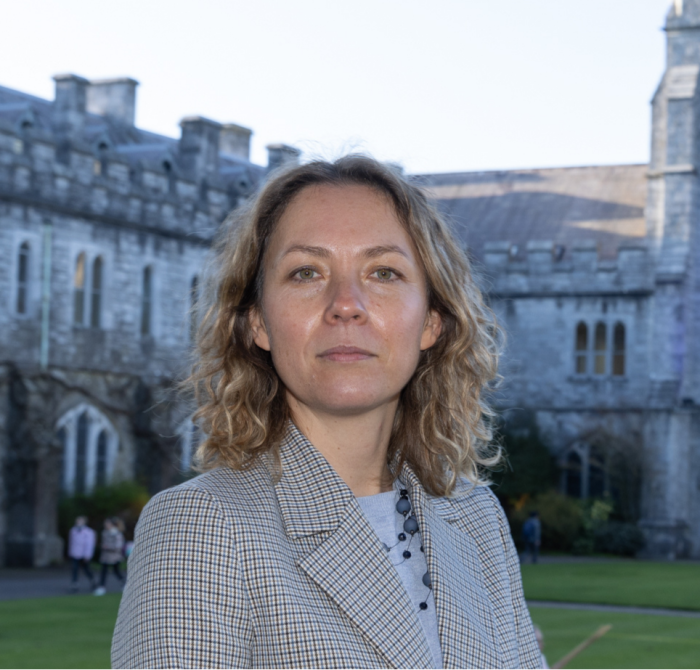
Artificial intelligence (AI) made its way into the humanities with remarkable speed, with generative AI and large language models (LLMs) becoming particularly visible only in the last few years. The impact of AI has already been profound: it has accelerated the growth of computational approaches to humanistic inquiry, triggered tectonic shifts in the labor market, and dissolved obstacles that once stood in the way of scholarly research—geographical distance, closed borders, and even conflicting political ideologies. Artificial intelligence amounts to a new twenty-first century technological revolution. At the same time, it has introduced new risks into scholars’ lives—some we have already experienced firsthand, others we are only beginning to recognize. So far, relatively few humanities scholars have managed to forge new research methodologies at the intersection of the humanities and the exact sciences. Tatiana Vagramenko, a Ramón y Cajal Fellow at the Barcelona Supercomputing Centre, is one of them. We spoke with her about the challenges and perils of the latest—though certainly not the last—technological revolution reshaping the humanities and social sciences
Can you explain what computational humanities consists of and why it is a useful tool in research? Further, what kind of topics or settings is it especially useful for?
Computational humanities begins from a provocative premise: culture, art, history, and human experience can be rendered as data (textual, visual, or sonic), not to reduce their complexity but to uncover patterns, connections, and structures that conventional reading alone may never bring into view. What if computers could help us see history or art differently, not by replacing interpretation, but by tracing relationships hidden across thousands of texts, images, objects, and records?
Computational humanities should not be confused with the broader field of digital humanities, although the boundary between them is fluid. Digital humanities encompasses activities such as creating digital editions, archives, databases, maps, and exhibitions. Computational humanities takes a further methodological step: it uses computational and quantitative approaches to analyze these materials, model complex cultural phenomena, detect networks and recurrences, and generate questions that might otherwise remain impossible to ask. This is why computational humanities is not simply about “using AI.” It draws on methods ranging from text mining, network analysis, GIS, and computer vision to machine learning, knowledge graphs, and computational modelling. Large-scale and supercomputing infrastructures have dramatically expanded what is possible, allowing us to work with cultural materials that are too vast, fragmented, or interconnected to analyze systematically by conventional means alone.
At its core, computational humanities is still humanities research. I believe its starting point is not technology, but the question asked. The aim is not to replace close reading and interpretation with algorithms but to add another mode of seeing—one that can move between the individual and the aggregate, the close and the distant, the qualitative and the quantitative. So, the real transformation is not simply that we can analyze more material; nor is computational humanities necessarily quantitative. It can support deeply qualitative inquiry by helping researchers unpack coded language, trace shifting meanings, move between corpus-level analysis and close reading of individual narratives, develop and refine qualitative categories from interviews and fieldnotes, and uncover rhetorical, conceptual, and representational structures that require detailed interpretation. Computation here is not about turning meaning into numbers; it becomes part of the interpretive process, while the scholar remains at its intellectual center.
But more importantly, computation can change the questions we are able to ask. Statistical analysis of seemingly insignificant linguistic habits helped resolve the disputed authorship of the Federalist Papers. Computational stylistics has offered new evidence of collaboration and multiple authorship in Shakespearean drama. In archaeology, AI-assisted analysis of aerial imagery has revealed hundreds of previously unknown Nazca geoglyphs, while LiDAR has exposed vast Maya settlements and monumental landscapes hidden beneath dense jungle. In each case, computation did more than speed up an existing research process: it made visible evidence and relationships that were difficult, or sometimes impossible, to perceive through conventional approaches alone. That, for me, is the promise of computational humanities. Computers do not necessarily read the past better than humans; they help us read it differently. They can reveal relationships, structures, and long-term transformations across thousands or millions of sources, while historians, literary scholars, archaeologists, and art historians still have to explain what those findings mean. Interpretation remains human, but computation expands the field of what can be seen, and therefore what can be asked.
Would you define computational humanities as a method, a tool, an approach, or a discipline in its own right? Why?
I would define computational humanities primarily as an approach, rather than a single method, tool, or fully separate discipline. In fact, I would go further: if computational humanities develops into a separate discipline with technology at its center, practiced primarily by computer engineers, I think it has very little future. The humanities question has to come first. Otherwise, we risk producing technically sophisticated analyses that are intellectually empty—models in search of a problem.
For me, the strongest computational humanities research is fundamentally collaborative. A historian, archaeologist, literary scholar, or anthropologist brings the deep knowledge of the sources, the historiography, the categories, the ambiguities, and, most importantly, the research inquiry. A computer scientist or engineer brings methods that can extend what is technically possible: processing material at scale, modelling complex relationships, detecting recurrences, or building new forms of access and analysis. But the technology should serve the humanities problem, not define it. In a historical project, for example, the historian must remain at the intellectual center of the work, because only the historian can decide whether a computationally detected pattern is historically meaningful, misleading, or simply an artefact of the data.
Computational humanities therefore brings together methods from computer science, statistics, and data science, but its defining feature is not the technology itself: it is how those methods are mobilized to answer humanities questions. It should expand what historians, archaeologists, literary scholars, and other humanists can see and ask, not become an end in itself. The moment computation becomes the end rather than the means, we stop doing computational humanities and start doing computer science with humanities data.
How different or similar is the emergence of computational humanities compared to the rise of quantitative history several decades ago?
There are clear parallels between computational humanities today and the rise of quantitative history in the 1960s and 1970s. Quantitative historians also used statistics and formal models to move beyond individual cases and identify broader historical patterns. But the criticism of quantitative history is still highly relevant, because what can be counted is not necessarily what matters most. Numbers can create an illusion of objectivity while stripping evidence of context, ambiguity, language, and meaning. A model can reveal a pattern, but it cannot explain that pattern on its own.
Computational humanities is broader than the earlier quantitative turn because it can work not only with numerical data but also with texts, images, sound, maps, networks, and fragmented archival collections. For me, however, the real promise of computational humanities is not quantification itself, but the ability to move continuously between distant and close reading, i.e., to move between scales. A computational analysis may reveal a pattern across 100,000 documents; the historian can then return to individual files to understand what produced that pattern and move back to the larger corpus to test whether that interpretation holds. Unlike earlier quantitative approaches, the scale of analysis is no longer fixed; it becomes something we can move through.
Which computational methods—natural language processing, network analysis, GIS, computer vision, or agent-based modelling—do you believe have the greatest transformative potential for researchers in the humanities and social sciences and why? Are computational humanities changing not only the methods but also the very questions that humanists ask? In what ways?
I would hesitate to single out one method, because the greatest transformative potential probably lies in combining them. Natural language processing (and increasingly large language models (LLMs)) can turn vast amounts of unstructured text into material that can be searched, compared, and analyzed in new ways. Network analysis and knowledge graphs can reconstruct relationships scattered across thousands of documents and institutions; GIS reveals spatial patterns and movement; computer vision opens similarly large-scale possibilities for images and visual culture.
What interests me most, however, is not any individual technology but the kinds of complexity computation allows us to approach. As mentioned earlier, one is scale. But equally important is relational complexity, i.e., reconstructing networks of people, institutions, places, events, and documents that researchers could not hold in their heads simultaneously. Another is long-duration historical change, which involves tracing how concepts, categories, representations, or relationships evolve across decades or even centuries. And with methods such as computer vision and GIS, we can extend this beyond text to visual and spatial evidence as well.
This is why computational humanities can change the questions we ask. Instead of asking what one institution said about a particular community, we can ask how that language changed across forty years, thousands of documents, and several institutions. Instead of tracing one person’s connections, we can reconstruct an entire network and identify unexpected actors or structures within it. Again, the real transformation is not simply that we can analyze more, but that we can move across different forms of complexity, from document to corpus, from individual to network, and from a single moment to long-duration historical change.
Which research tasks can already be delegated to large language models, and which still require the historian’s expertise and interpretation?
I would draw the line between assistance and interpretation. LLMs are already very useful for many repetitive and exploratory tasks: summarizing, extracting names and dates, generating metadata, comparing documents, translating, clustering materials, and supporting semantic search across large collections. But the division of labor has to remain clear. The machine can help find and organize evidence; the scholar decides what counts as evidence, which categories are historically meaningful, how results should be validated, and what they mean.
A model may detect a signal, but it cannot reliably determine whether that signal reflects genuine historical change, bureaucratic language, institutional bias, archival silences or gaps in the surviving record. This is where human understanding and humanities expertise become more, not less, important. I would say more: the more powerful computational tools become, the more they demand—not replace—scholarly expertise and deep knowledge of the sources and historical context.
The rule is simple: garbage in, garbage out. Poor data, weak categories, or flawed assumptions will only produce poor results at greater speed and scale. Running an algorithm on a collection does not, by itself, constitute computational humanities. The real intellectual work lies in framing the question, defining the evidence, choosing meaningful categories, validating the output, and interpreting what the results actually tell us.
What do you see as the greatest risks of using generative AI in historical and anthropological research? Does it, in a way, remove human agency from the writing of history, advancing the idea of utopia Roland Barthes developed? Is there a risk that computational approaches privilege only those historical phenomena that can be quantified, leaving other aspects of human experience underexplored? Or can everything now be quantified in one way or another?
For me, the greatest risk of generative AI is that we start attributing to it an intellectual authority it does not possess. At its core, an LLM is essentially a system trained to predict what is most likely to come next in a sequence of text, through what is known as next-token prediction. It generates plausible continuations from patterns in its training data; it cannot independently establish what happened, understand historical context in the way a historian does, or know whether an interpretation is true. The danger begins when we forget this and quietly transfer scholarly judgement to the model.
This risk is particularly serious in history and anthropology, where evidence is fragmentary, categories are contested, archives are biased, and silence can be as meaningful as what is recorded. An LLM can produce a wonderfully coherent historical narrative from deeply problematic evidence. But coherence is not truth. And fluency is not interpretation. In that sense, generative AI raises a provocative question in relation to Barthes (1977). I would argue that the real danger is not the death of the author, but the death of the accountable scholar. If interpretation is increasingly delegated to an opaque model, who is responsible for the categories it uses, the voices it excludes, the causal connections it invents, or the historical meaning it assigns? The same applies to quantification. Today we can operationalize almost anything: language, emotions, relationships, images, mobility, even memory. But the fact that something can be turned into a variable does not mean that the variable captures the phenomenon. What is measurable is not necessarily what is meaningful. The methodological danger begins when our computational tools start determining what we consider historically or anthropologically important.
How has the concept of “the field” changed in the era of digital anthropology? How can the growing digitalization and internationalization of online communities reshape legitimate forms of ethnographic fieldwork?
Indeed, digital anthropology has changed what we mean by “the field.” Traditionally, ethnographic fieldwork implied physical presence in a relatively bounded place or community. We were trained around the golden rule of participant observation, where bodily presence and embodied experience were central. Today, however, communities may be dispersed across countries while their relationships, identities, conflicts, religious practices, or political activities unfold simultaneously through Telegram, WhatsApp, YouTube, TikTok, and face-to-face encounters. The field is becoming less a place and more a network of relationships and practices that the ethnographer follows.
There is a certain irony here, because anthropology began with armchair anthropologists and, in the digital age, seems to be returning to the armchair, except that now the field itself may be on the screen. This is particularly important with the growth of born-digital cultures and communities. If significant parts of social life happen online, insisting that legitimate ethnography requires physical co-presence would exclude an increasingly important part of contemporary human experience. At the same time, I would resist separating the “digital” from the “real” too sharply. Online and offline life are increasingly intertwined.
So, the criteria for legitimate ethnographic fieldwork are also changing. Presence should not be measured only through physical presence, but through sustained engagement, contextual knowledge, relationships with participants, and reflexivity. Digitalization has not abolished the ethnographic field; it has made its boundaries more fluid. The anthropologist no longer simply goes to the field—the task is increasingly to follow where the field itself goes.
For researchers studying societies for which archives are inaccessible and subjected to restrictions in fieldwork, to what extent can OSINT, satellite imagery, digital archives, and social media analysis compensate for the absence of traditional historical sources? Can traditional source criticism survive in an age of AI-generated texts and synthetic media?
Yes, these tools can compensate enormously when archives are closed or fieldwork is impossible, but I would resist calling them replacements. A digital archive is not simply a physical archive transferred onto a screen. It is another archive, and it produces a different kind of historical evidence. Something happens when a document is digitized. The gain is extraordinary, by way of access across borders, full-text search, computational comparison, and the possibility of connecting thousands of documents. But we also lose information. In a physical archive, we encounter the file as an object. We experience its thickness, the order of papers, different inks and handwriting, marginal notes, stamps, photographs inserted in an envelope, or damaged pages. We can touch the paper and sometimes smell it. A page that is crumbling around one particular section may tell us that it was repeatedly handled by the officials who produced the file. A folded corner, an annotation in the margin, or the position of a photograph inside a dossier can itself become historical evidence. A scan can preserve some of this, but it inevitably flattens the archival object into an image.
This material and sensory dimension has long been central to thinking about archives. Arlette Farge’s (2013) beautiful work The Allure of the Archives emphasizes the tactile, bodily, and even olfactory experience of archival research. Ann Laura Stoler (2019) asks us to read not only archival content but the archival grain, i.e., the forms, classifications, and practices through which states produced knowledge. And in the context of socialist secret police archives, Cristina Vatulescu (2024) and Katherine Verdery (2018) show particularly powerfully that a police file is not a neutral container of facts, as it is itself a constructed object, produced through surveillance, institutional biases and categories, relationships, and practices of writing. In this sense, the archive is not only text, but also a material and sensory world of ageing paper, boxes, shelves, dust, and smell, where each of these material traces can itself become historical evidence.
So, digitization gives us unprecedented access, but it also changes the source. The digital copy does not simply reproduce historical evidence; it remediates it. This is precisely why physical and digital archives should be understood as complementary rather than interchangeable. The same principle applies to AI-generated texts and synthetic media. Traditional source criticism will certainly survive, but it has to expand. We still ask who produced a source, when, for whom, and why. But now we must also ask how it was digitized, transformed, generated, circulated, and algorithmically mediated. In that sense, the digital age does not make source criticism obsolete. It makes source criticism more necessary and more complicated than ever.
In your own research on Soviet secret services archives, what kinds of questions would have been impossible to investigate without the help of computational methods?
I have been doing anthropological and historical research in Soviet secret police archives for a number of years. My initial aim was very much anthropological: to produce a kind of thick description of the police file, to reconstruct the life stories contained in dossiers, and to study the emotions, silences, relationships, and everyday practices of secret agents and informers. The archive was my field, and the people appearing in the files were, in a sense, my research participants.
At some point, however, I realized that this close, file-by-file approach (which could involve nearly a year of meticulous reading, cross-referencing, and reconstructing of the people, events, and relationships contained in a single two-volume file) could reveal only part of the picture. The socialist secret police system functioned like an octopus, with its center in Moscow and its arms reaching across the Soviet republics and the wider socialist bloc. Officers traveled between agencies, methods circulated, information and documents were exchanged, and surveillance operated through a highly interconnected transnational structure. My hypothesis is that the archives should preserve traces of those connections.
This raises questions that would be almost impossible to investigate through conventional archival reading alone: How did surveillance practices circulate across the socialist bloc? Which institutions and officers acted as key connectors? How did operational categories, methods, and information travel between Moscow, the Soviet republics, and other socialist states, and how did they change over time? And can we reconstruct a transnational architecture of surveillance from archives that are now fragmented across different countries?
But computational methods also allow me to work with the archive visually and spatially. In The Underground virtual exhibition, we used 3D modelling, virtual environments, and digital storytelling to reconstruct clandestine places of worship and underground monasteries in Ukraine and Moldova that had been raided and destroyed by Soviet security services. In some cases, the only surviving visual evidence consisted of poor-quality photographs taken by NKVD officers during raids and later inserted into criminal or surveillance files as evidence. Digital reconstruction allowed us to ask questions that the photographs alone could not answer: How were these spaces organized? How did people move and worship within them? And what might their material environment have looked like? At the same time, it required us to treat the photographs critically, not as neutral representations of the past but as police-produced evidence shaped by the practices and categories of surveillance.
This is where computational methods become essential. Natural language processing (NLP) can extract names, places, institutions, and recurring categories from large bodies of files; knowledge graphs and network analysis can reconnect fragments scattered across archives and reveal relationships among actors and institutions; temporal and comparative analysis can trace change across countries and over time. Meanwhile, visual and spatial methods can help reconstruct environments that have disappeared and analyze doctored photographs produced by the KGB. Together, these approaches allow me to move across very different scales and forms of historical evidence, from a photograph or a single police file to the larger architecture of surveillance reconstructed across multiple archives. The goal is not to replace thick description or close archival reading but to extend them, so we can move from the fragment to the system, and then back again.
Note: This interview was conducted within the framework of the ‘Transnational Encounters in a Global Campus: Academic Displacement (20th–21st Centuries)” project, Spanish Ministry of Science, Innovation and Universities. PID2024-159800NB-I00.
Tatiana Vagramenko is a Ramón y Cajal Researcher at the Barcelona Supercomputing Center and affiliated researcher at University College Cork. Her interdisciplinary work combines anthropology, history, archival studies, and computational humanities to investigate Cold War secret police archives, religion, surveillance, and the legacies of authoritarianism in Europe. Focusing particularly on Soviet-era KGB records, she uses ethnographic, oral historical, visual, and computational methods to study archival practices and the production of historical knowledge. She is co-author of The Lives of Soviet Secret Agents: Religion and Police Surveillance in the USSR (Lexington Books, 2025) and Hidden Galleries: Material Religion in the Secret Police Archives in Central and Eastern Europe (Lit Verlag, 2020), and author of Indigenous Christianity: Missionary, Modernity and Marginality in the Nenets Tundra (Central European University Press, 2026, open access).
Oksana Ermolaeva holds a PhD in the history of Central and Eastern Europe from the Central European University (Budapest, Hungary). She is a part of the “Transnational Encounters on a Global Campus: Academic Mobility (20th–21st Centuries)” project (Transcampus), led by the Ministry of Science, Spain. She has also been a visiting researcher at the Complutense University of Madrid (Spain), supported by the Scholars-at-Risk Program (2023–2025) and the Gerda Henkel Stiftung (Düsseldorf, Germany). Her research interests include the history of Communist regimes and the history of borders and borderlands. Her latest publications appear in the European Review of History Journal (Revue Européenne d’Histoire) as “Combating Smuggling in Post-Revolutionary Russia: Strategies, Specificities, and Enduring Legacies (2026) and in Decentering European Studies: Perspectives on Europe From its Beyond (Ducros et al., UNESP, 2025).
References
Barthes, Roland. 1977. “The Death of the Author.” In Image, Music, Text, translated by Stephen Heath, 142–148. New York: Hill and Wang.
Farge, Arlette. 2013. The Allure of the Archives. Translated by Thomas Scott-Railton. New Haven: Yale University Press
Stoler, Ann Laura. 2009. Along the Archival Grain: Epistemic Anxieties and Colonial Common Sense. Princeton: Princeton University Press.
Vatulescu, Cristina. 2024. Reading the Archival Revolution: Declassified Stories and Their Challenges. Stanford: Stanford University Press.
Verdery, Katherine. 2018. My Life as a Spy: Investigations in a Secret Police File. Durham: Duke University Press.
