
By Julia Khrebtan-Hörhager
This is part of a special issue sponsored by the World Society Foundation: A Role for Europe in the Global Arena.
Film festivals are political institutions that shape cultural prestige, national identity, and international influence. Tracing their development from Fascist-era Venice to Cannes to the Berlinale and contemporary human-rights festivals, this article examines how festivals can serve both authoritarian power and cinematic resistance. It argues that their political significance lies not only in the films they screen but also in how they organize visibility, circulate narratives, and bring publics together. Situating European festivals within debates about Europe’s role in the world, the article explores their dual function as instruments of cultural diplomacy and soft power and as spaces for challenging dominant narratives. Examples ranging from Olympia (1938) to Fiume o Morte! (2025) demonstrate that festivals are neither inherently authoritarian nor inherently emancipatory: their political effects depend on how cultural authority is organized, exercised, and contested.
The Black feminist writer, poet, and activist Audre Lorde once famously warned that “the master’s tools will never dismantle the master’s house.”[1] Film festivals, often assumed to be just another tool of the powerful,[2] prove that assumption wrong. From earliest ruthless, propagandistic spectacles to today’s human rights-focused programs, festivals have had the unsettling power to not only showcase films but challenge authority, disrupt narratives, and remake the social and political world through the lens of collective viewing.
Yet it is important to distinguish between cinema and the festival as an institution. Films may carry political meanings wherever they are screened, but a festival does something more, significantly more: it selects, organizes, ranks, circulates, contextualizes, and publicly legitimizes films. As a result, a film festival is a temporary but highly structured cultural institution. Many individuals and entities are involved in the various stages of organizing a festival, from its establishment and financing to programming, jury and awards selection, invitations for speakers, or decisions about venue and audience. Audiences, critics, distributors, filmmakers, sponsors, governments, various cultural institutions, and local authorities all become part of this temporary configuration. The festival is therefore not simply a container for films. It is an active and creative site of cultural mediation, economic exchange, political negotiation, and production of value. As scholars of festival studies have emphasized, festivals bring together art and commerce, cinephilia and industry, local interests and transnational networks, while helping determine which films become visible and how they are understood.[3]
The multilayered complexity of film festivals as a cultural phenomenon matters politically because the power of a festival does not depend only on whether the films it screens are explicitly political. A festival can exercise political power through its institutional structure: location, sources of funding, partnerships, programming decisions, prizes, invited guests, media strategies, and relationships with public authorities. The same film may acquire a different political meaning depending on whether it appears at a state-sponsored international showcase, a glamorous commercial festival, a university-based human-rights event, or a small community festival. Festivals can therefore function simultaneously as instruments of cultural diplomacy, engines of national and urban branding, commercial marketplaces, spaces of cinephilia, and even forums for dissent.[4]
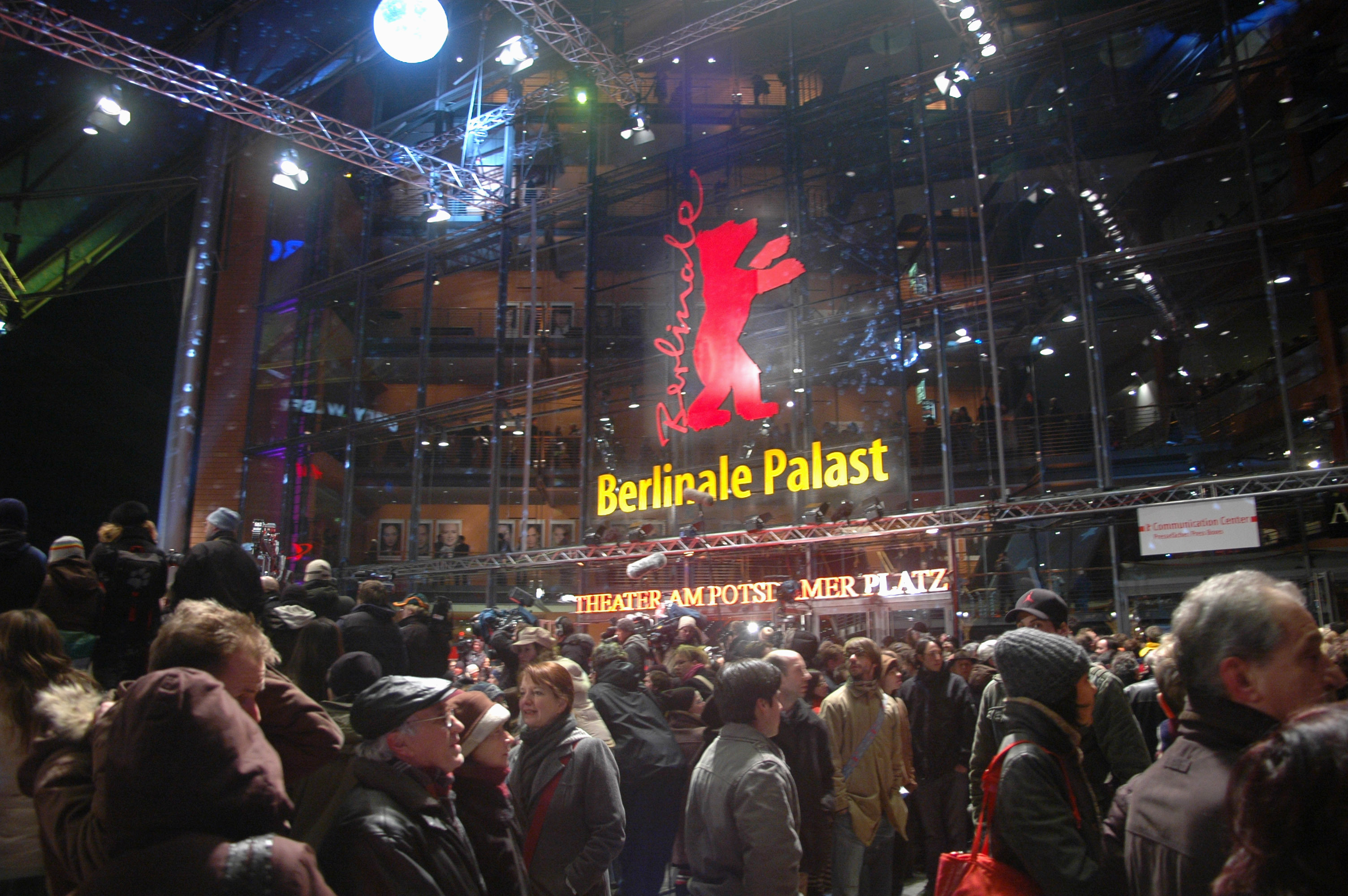
This institutional power of film festivals also connects them to the broader question of Europe’s role in the world. Prestigious European festivals such as the Venice International Film Festiva, the Cannes Film Festival, and the Berlin International Film Festival (Berlinale) project cultural influence internationally, shaping which films, national cinemas, and political narratives gain visibility. Yet this soft power is never neutral, as festivals can reinforce national prestige and geopolitical hierarchies while also creating spaces in which dominant narratives are questioned and alternative perspectives circulated across borders.
The Birth of the Film Festival, or Fashionable Fascism
The history of film festivals is not merely historic and cultural; it is profoundly political. The first international film festival, the Venice International Film Festival, was founded in 1932 as part of the Venice Biennale. Its emergence was inseparable from the political and economic ambitions of interwar Italy. The festival did not arise in a cultural vacuum. It appeared in a country where cinema had already become an increasingly important mass medium and where the Fascist regime had developed an elaborate understanding of film’s political and social potential.[5] Italy was, in fact, an especially logical location for the emergence of such an institution. By the early 1930s, the Italian film industry had developed substantial production and exhibition infrastructures, while the Fascist state had begun to intervene systematically in the sector. The Istituto Luce, brought under Fascist control in the 1920s, became a major instrument of audiovisual propaganda, and its newsreels were eventually shown compulsorily in Italian cinemas. In 1937, Cinecittà was inaugurated in Rome as a major studio complex promoted by Benito Mussolini and Luigi Freddi (an Italian journalist, politician, and Fascist official, famous for founding the Cinecittà film studios and shaping Italian cinema under Mussolini’s regime). The regime’s ambition was not simply to produce propaganda films in the narrow sense; cinema was also understood as an instrument for constructing modernity, national identity, prestige, and an attractive image of Italy at home and abroad.[6]
The Venice festival consequently needs to be understood within this larger political economy of Fascist cinema. It was established by figures closely connected to the political, economic, and cultural establishment, including Giuseppe Volpi, President of the Venice Biennale and a prominent fascist political and business figure. Its location in Venice was itself significant: the festival linked cinema to a city already functioning as an international cultural and tourist showcase. The event could simultaneously promote Italian cinema, attract foreign filmmakers and audiences, enhance Venice’s international reputation, and provide the regime with a highly visible stage on which Italy could present itself as a modern cultural power.[7]
The first festival opened on 6 August 1932 with Rouben Mamoulian’s Dr. Jekyll and Mr. Hyde (1931). It was held on the terrace of the Hotel Excelsior at the Lido, and nine countries participated. There were initially no official awards; instead, an audience referendum selected the winners.[8] The informality of the first edition should not obscure the larger institutional significance of the experiment. For the first time, a festival created a concentrated international audience around cinema. It transformed individual screenings into an event and turned the selection and reception of films into a public performance of cultural prestige.
Under Mussolini, cinema did not merely entertain, it performed loyalty. Applause was political, images were curated, and even beauty was weaponized, as film transformed fascist power into something to be admired rather than questioned. State-sponsored productions—from the carefully staged newsreels of the Istituto Luce to historical epics like Scipione l’Africano (1937)[9]—blurred the line between past and present, recasting fascist expansionism as the natural heir to Roman imperial greatness.
The festival itself became part of this spectacle. Beginning in 1934, the competition introduced the Coppa Mussolini for the best Italian and foreign films. The award, named directly after the dictator, made the relationship between cinematic distinction and political authority unusually explicit. Yet the political significance of Venice was not that every film screened there constituted fascist propaganda or that every participant simply followed the regime’s ideological line. The festival could still provide access to foreign cinema and create encounters that exceeded the regime’s intentions. This is precisely what makes festivals politically interesting: institutional control and cultural reception are never identical from one festival to another.[10]
This trajectory reached one of its most chilling expressions in the work of Nazi filmmaker Leni Riefenstahl, whose Triumph of the Will (1935) and Olympia (1938) did not simply document reality but engineered it, transforming propaganda into visual myth and normalizing the aesthetics of domination. In Triumph of the Will, Adolf Hitler appears not as a politician but as a quasi-divine presence. The film’s sweeping aerial shots and meticulously choreographed crowds erase dissent, replacing it with a vision of total unity. In Olympia, the camera aestheticizes the human body, subtly encoding racial hierarchy and idealized physical perfection. Both films circulated internationally, with Olympia receiving recognition at Venice, demonstrating how aesthetic innovation could obscure ideological function.[11]
The 1938 Venice festival made the political stakes impossible to ignore. Under pressure from Hitler and Mussolini, the awards were altered in favor of Leni Riefenstahl’s Olympia and Goffredo Alessandrini’s Luciano Serra, Pilota (1938). The latter film follows a former World War I pilot who, after years of personal hardship abroad, returns to fight in Italy’s 1935-1936 war against Ethiopia. He ultimately sacrifices his life to rescue his son, a military aviator, presenting self-sacrifice, filial duty, and service to the nation as supreme virtues. Produced under the supervision of Vittorio Mussolini, the dictator’s son, the film celebrated Italian aviation and the regime’s colonial ambitions. Luciano Serra, Pilota, therefore, was not simply an Italian adventure film but a work that aligned with Fascist Italy’s promotion of military heroism, patriotism, and national prestige. Its recognition at Venice in 1938 therefore carried significance beyond its cinematic merits, particularly given the political climate and the regime’s use of cinema as a vehicle for propaganda.
Riefenstahl’s Olympia—a documentary depicting the 1936 Berlin Olympic Games—was celebrated for its innovative cinematography, editing, and stylized portrayal of athletic bodies and physical prowess. Commissioned in the context of Nazi Germany, the film transformed the Olympics into a spectacle of national prestige, projecting ideals of physical perfection and collective strength that resonated with Nazi aesthetics. Its award at the 1938 Venice Film Festival, alongside that of Luciano Serra, Pilota, underscored the festival’s entanglement with the political agendas of Fascist Italy and Nazi Germany. Importantly, the controversy was not simply about two films or two prizes. It demonstrated that the festival’s supposedly aesthetic mechanisms—jury deliberation, competition, prizes, prestige—could themselves be appropriated as instruments of international politics. France, the United States, and other democratic participants protested, and the episode became one of the immediate political origins of the Cannes project.[12] Film, in other words, did not just reflect authoritarianism: it helped make it imaginable, desirable, even beautiful.
At the same time, the history of Venice also reveals something more complicated: festivals are not inherently authoritarian or democratic. They are institutional technologies whose political effects depend on who controls them, how they are funded, what networks sustain them, and how participants and audiences use them. The same institutional form that could be appropriated by a dictatorship could subsequently be reimagined as an instrument of cultural freedom. And, histories of media are never fixed. They are contested terrains. Today, that legacy is being actively rewritten: not by abandoning cinema, but by reclaiming it.
Cannes and the Reinvention of the Festival
If the Italian Venice Festival represented the convergence of cinema and fascist power, the French Cannes Film Festival emerged as its counterpoint. Conceived in 1939 as a democratic, and above all, antifascist alternative, Cannes was meant to resist political interference in film culture. Its launch was interrupted by World War II, and it officially began only in 1946.[13]
The origins of Cannes are especially revealing because the festival was itself conceived through political action. Following the 1938 Venice controversy, Philippe Erlanger, a French diplomat and government official involved with cinema, proposed creating an international festival in France. Jean Zay, then France’s Minister of Education and Fine Arts, supported the project, as did other members of the French government. The initiative was explicitly understood as both a cultural and geopolitical project: France wanted to provide an alternative to the fascist-controlled Venice festival, but it also wanted to strengthen French cinema, attract international attention, and increase France’s cultural influence.[14] In other words, Cannes did not escape politics by opposing Fascism. It simply entered politics in a different way. Its claim to artistic freedom that extends beyond border and underlying ideologies was itself supported by state institutions and connected to national cultural and economic interests. This is an important distinction. A festival can be politically oppositional while simultaneously serving national cultural diplomacy. Indeed, these two functions can coexist.
The first Cannes Film Festival was scheduled to open on 1 September 1939, but the outbreak of World War II forced its cancellation before the screenings could begin, despite the arrival of a handful of films. The festival finally opened in 1946. Its institutional history therefore began with an explicitly political ambition: to create a space in which international cinema could circulate without the kind of direct political manipulation that had discredited Venice.[15]
From the outset, Cannes positioned itself as a space that aspired to transcend ideology, even if it could never fully escape it. During the Cold War, it became a rare space where films from opposing political systems (capitalism versus communism) shared a stage. Italian neorealism, emerging from the ruins of Fascism, gained global recognition through immortal works like Roberto Rossellini’s Rome, Open City (1945), a raw portrayal of resistance and occupation.[16] At the same time, gradually, Soviet cinema reached international audiences at Cannes with films such as The Cranes Are Flying (1957), which won the Palme d’Or in 1958.[17] Cannes thus became a site not of political neutrality, but of cultural and artistic encounter—a place where competing ideologies could be expressed through art rather than propaganda.
This is why the distinction between Cannes and Venice should not be reduced to an opposition between a “political festival” and an “apolitical festival.” Cannes developed a different model of political engagement. Its intentional internationalism across ideologies became part of its institutional identity, while its location in France and its relationships with French cultural institutions also made it an important instrument of national cultural diplomacy. The festival thus could celebrate global cinema while simultaneously enhancing the visibility of French cinema and the cultural prestige of France.
That dual function remains visible today. Cannes is still a spectacular global media event, now more than ever a professional marketplace, a site of artistic judgment, and a major promotional platform for national cinemas. In 2026, for example, the French Centre national du cinéma (CNC) reported that 69 French or French co-produced films it supported were represented at Cannes and its parallel sections.[18] This does not make Cannes a state propaganda festival; rather, it demonstrates how public cultural support, national cinema, international prestige, and festival programming can all be enhanced within the same institutional ecosystem.
The distinction between large international festivals and smaller thematic festivals is therefore crucial. Cannes operates on a scale at which cinema, celebrity, tourism, business, national branding, and geopolitical visibility converge. A thematic human-rights festival, for example, works differently: it may have fewer resources and a smaller audience, but it can devote more of its institutional structure to particular political or ethical questions. The political effects of festivals should consequently be assessed not only by what films they screen but by the scale, infrastructure, funding, audiences, and networks through which those films circulate.
Over time, Cannes helped establish the modern festival circuit, inspiring and connecting with other major festivals such as the Berlin International Film Festival and the International Documentary Film Festival Amsterdam. Together, these institutions transformed festivals into global platforms for artistic exchange, political dialogue, and cultural diplomacy.
From Spectacle to Subversion: A Global Festival Landscape
Today, a multitude of film festivals around the world actively defy the original purpose of Venice’s fascist spectacle. Festivals now serve as platforms for dissent, memory, and critique. Events such as the Sundance Film Festival in the US, the International Documentary Film Festival Amsterdam, and human-rights-oriented festivals foreground stories that challenge dominant narratives and expose structural injustice. Yet it would be misleading to suggest that the contemporary festival circuit simply represents a linear progression from authoritarian propaganda to democratic resistance. Contemporary festivals often remain embedded in structures of money, prestige, cultural capital, and geopolitical inequality. What has changed is that the festival form has proliferated.[19] Alongside the giant international festivals are hundreds of smaller festivals focused on specific genres, such as documentaries, or on specific themes, such as the environment, migration, LGBTQ+ contexts, Indigenous stories, feminist approaches, regional conditions, and human-rights. These festivals’ institutional arrangements differ enormously, and so do their political impacts.
These smaller festivals not only showcase films but actively shape regional, national, and international discourse. They amplify marginalized voices, support politically engaged filmmaking, and create transnational publics around shared concerns, from migration and climate change to racial injustice and state violence. In doing so, they invert the logic of early festivals: instead of consolidating power, they distribute it, although the language of “distribution” needs qualification. Someone or a specific group still decides which marginalized voices become visible, pays the screening fees, rents the venue, pays filmmakers, invites speakers, chooses the panelists, advertises the event, and determines what counts as a film fitting of the particular theme at stake. Institutional structure therefore matters. A festival’s politics are partly located in its programming but also in its material organization.
A particularly revealing contemporary example I would like to address here is Fiume o Morte! (2025), a widely celebrated documentary that has circulated across European and international festivals. The film revisits the occupation of the city of Fiume (today’s Rijeka, in Croatia) led by Gabriele D’Annunzio, whose theatrical nationalism prefigured fascist aesthetics.[20] Beginning in September 1919, D’Annunzio and several hundred soldiers occupied the city for sixteen months in an attempt to annex it to Italy, turning the occupation into a spectacular political performance of nationalism, ritual, propaganda, and mass mobilization. Blending archival footage with contemporary reflection, award-winning Fiume o Morte! interrogates the relationship between politics and spectacle. It reveals how performance, ritual, and mythmaking can construct political authority, yet it also exposes these mechanisms, turning spectacle into critique. In contrast to early propaganda films, it does not seduce the viewer into submission but invites critical distance and reflection. Its festival trajectory is itself significant. After winning the Tiger Award and International Federation of Film Critic (FIPRESCI) awards at the International Film Festival Rotterdam in 2025, the film moved through an extensive international festival network, including the Pula Film Festival (Croatia), the Copenhagen International Documentary Film Festival, the International Film Festival, and numerous other documentary and international or national festivals.[21] The film therefore provides an almost perfect contemporary counter-image to the fascist festival through the repeated circulation of a work about D’Annunzio’s theatrical proto-fascist politics that is then debated and rewarded within transnational cultural institutions, inviting audiences to reconsider precisely the relationship between nationalism, spectacle, and political myth.
Reclaiming Cinema: Festivals of Engagement
Within this broader historic and cultural landscape, human rights festivals represent a particularly important development. Rather than focusing solely on aesthetics or industry recognition, they foreground ethical engagement. Before its closure in 2024, the Human Rights Watch Film Festival, for instance, combined screenings with advocacy campaigns and public discussion. The history of this festival offers an important corrective to overly celebratory accounts of political festivals. Founded in 1988 by Human Rights Watch and presented through partnerships with cinemas and cultural institutions in cities around the world, the festival had become an important platform for human-rights-oriented film programming, using documentary and feature films to foster public discussion, education, and engagement with pressing social and political issues. [22] Its closure was announced as part of a broader organizational restructuring prompted by financial constraints. While the organization emphasized the festival’s long-standing contribution to human-rights education, conversation, and action, the event’s closure also demonstrated the basic institutional truth that political commitment does not eliminate economic vulnerability and that even highly established festivals remain dependent on the financial and organizational structures that sustain them.[23] A festival may be ideologically committed to resistance and still depend on organizational resources, donors, partnerships, venues, staff, and audiences. This vulnerability can actually illuminate the politics of festivals more clearly than the spectacular success of Cannes. A festival’s ability to resist dominant narratives depends partly on whether it can sustain an institutional infrastructure capable of supporting that resistance. The politics of programming cannot be separated entirely from the politics of survival.
The ACT Human Rights Film Festival in Colorado offers a smaller-scale but particularly revealing example. Guided by the ethos “Awaken, Connect, Transform,” it prioritizes stories that illuminate injustice while fostering dialogue between filmmakers, scholars, and audiences. Unlike Cannes, ACT is produced within an educational institution, Colorado State University, and it operates through a dense network of university, municipal, philanthropic, community, and individual support. Its programming is thus embedded in a particular civic and educational environment. Its funding and organization are therefore visible parts of its political identity. ACT also pays screening fees for every film it programs, and programming decisions are made by an advisory committee to encourage a great diversity of perspectives and democratic approach.[24] This institutional arrangement produces a very different kind of festival politics from Cannes’. ACT does not possess the same international glamour, celebrity economy, or national promotional function. Its scale is smaller and its audience more localized, which is precisely why the festival can bring screening, discussion, education, and community action closer.
What distinguishes small festivals from prestigious festivals such as Cannes is not simply their programming but their mode of address. They transform spectatorship into participation. Post-screening discussions, educational initiatives, and community partnerships extend the life of films beyond the screen, embedding them in civic and political contexts. Here the difference between a large international festival and a smaller thematic festival becomes particularly productive. Cannes can mobilize enormous visibility through its famous red carpet, the press corps present at the event, the implicated industry market, the invited stars, the prizes awarded, and the national delegations attending the viewings, which all turn the festival into a global communications platform. But a festival such as ACT operates within a different economy of attention, since its political effectiveness may depend less on global visibility than on the intensity of relationships it creates among filmmakers, scholars, activists, students, and local audiences. Neither form of festival is necessarily more political than the other. Both simply exercise political power differently.
No Thrones, No Masters, Just ACTion
The contrast between contemporary film festivals with early cinematic power structures remains stark. Where fascist festivals aestheticized obedience and glorified authority, contemporary festivals increasingly mobilize film to question and destabilize it. Images no longer function primarily as instruments of ideological control; they become sites of contestation. However, the comparison should not be understood as a simple historical victory. The festival remains a technology of selection. It creates hierarchies through decisions about which films are worthy of competition, which filmmakers are invited, which political causes receive attention, which cities become cultural destinations, and which national cinemas acquire international visibility. Cannes, Venice, Berlin, and other major festivals continue to operate within global inequalities in film production and distribution. Smaller festivals can challenge these hierarchies, but they too must negotiate funding, institutional capacity, audiences’ expectations, and access to films. In an era marked by resurgent authoritarianism and fragmented attention, film festivals offer a counter-model, as they constitute spaces for sustained engagement, critical reflection, and collective witnessing. They remind us that cinema is not merely a mirror of reality but a force that can shape it. More importantly, festivals remind us that political meaning is produced not only inside films but around them. A film screened in isolation plays a different role than if introduced by a filmmaker, discussed with activists, debated by a jury, reviewed by journalists, awarded a prize, or circulated through an international festival network. Such a film becomes part of a much larger process of meaning-making. Festivals are therefore political not simply because they show political films, but because they organize publics around these films.
If early festivals demonstrated how cinema could be weaponized for domination, today’s global festival network demonstrates its capacity for resistance. This transformation is neither complete nor uncontested. Festivals remain embedded in systems of funding, politics, and power. Yet within these constraints, they continue to create openings and spaces where alternative narratives can emerge and circulate. The most useful lesson of festival history may therefore be less that festivals, while born out of fascism, have come to signify resistance and rather that the institutional form they represent can serve radically different political projects. Historically, Venice demonstrated how cultural prestige could be mobilized for authoritarian spectacle, and Cannes demonstrated how a festival could be founded as a response to that spectacle while simultaneously advancing national cultural interests. Human-rights and more generally thematic festivals demonstrate how the form can be repurposed toward advocacy, education, and collective action. The festival is neither inherently emancipatory nor inherently authoritarian. Its political meaning emerges from the relationship among its organizers, funders, programmers, participants, audiences, and the wider structures in which it operates.
This history also illuminates the contradictions of Europe’s cultural role in the world. European festivals have helped project national prestige and establish international cultural authority, but their significance cannot be measured by influence alone. Their contribution to a more open transnational cultural sphere depends on whether they merely reproduce existing hierarchies or enable films and perspectives that challenge them. The question, then, is not simply how Europe exercises cultural power but how its cultural institutions make that power visible, accountable, and open to contestation.
Cinema, once enlisted in the service of spectacle, becomes a medium of critique. And perhaps, in this transformation, Audre Lorde’s provocation finds a more complicated answer: the master’s tools may not dismantle the master’s house unchanged, but in being repurposed, recontextualized, and collectively reimagined, these tools can begin to unsettle the house’s foundations.[25] Film festivals, at their best, do precisely this. They take a cultural form originally capable of concentrating power and turn it into a site where power can be made visible, questioned, and contested. They cannot guarantee resistance. They cannot escape the power of money, institutions, prestige, or politics. But they can refuse to let these forces determine the terms of spectatorship entirely. Unlike authoritarian spectacle that fundamentally seeks to eliminate an audience in which the public is invited to question and disagree about the meaning of what it sees, film festivals create democratic citizens who may opt to ACT.
Julia Khrebtan-Hörhager is Professor of Communication Studies at Colorado State University (USA). She is Director and Leader of Education Abroad Programs in Rome (Italy) and Vienna (Austria).
Notes
[1] Audre Lorde, Sister Outsider: Essays and Speeches. Berkeley: Crossing Press, 1984.
[2] Forgacs, David. “Fascism and Italian cinema.” The Italian cinema book (2014): 42-49.
[3] Marijke de Valck, Film Festivals: From European Geopolitics to Global Cinephilia (Amsterdam: Amsterdam University Press, 2007).
[4] Marijke de Valck and Skadi Loist, “Film Festival Studies: An Overview of a Burgeoning Field,” in The Festival Circuit, ed. Dina Iordanova and Ragan Rhyne, Film Festival Yearbook 1 (St Andrews: St Andrews Film Studies, 2009), 179–215.
[5] Steven Ricci, Cinema and Fascism: Italian Film and Society, 1922–1943 (Berkeley: University of California Press, 2008).
[6] Ruth Ben-Ghiat, Fascist Modernities: Italy, 1922–1945 (Berkeley: University of California Press, 2001); Federico Lussana, “Cinema ‘educatore’. Luciano De Feo direttore dell’Istituto Luce,” Studi Storici 57, no. 4 (2016): 935–961. The Istituto Luce was established under Mussolini and its newsreels became compulsory in Italian cinemas; Cinecittà was inaugurated in 1937 as a major Fascist investment in film production.
[7] R. J. B. Bosworth, “Venice Between Volpi and Mussolini, 1930–1940,” in Italian Venice: A History (New Haven: Yale University Press, 2014).
[8] La Biennale di Venezia, “History of the Venice Film Festival.”
[9] Carmine Gallone, dir. Scipione l’Africano. 1937. ENIC / Istituto Luce.
[10] La Biennale di Venezia.
[11] Leni Riefenstahl, dir. Olympia. 1938. Olympia-Film GmbH; Riefenstahl, Leni, dir. Triumph of the Will. 1935. Reichsparteitag-Film.
[12] Festival de Cannes, “The History of the Festival” and “Birth of a Festival.”
[13] Ibid.
[14] Ibid.
[15] Ibid.
[16] Roberto Rossellini, dir., Roma città aperta (Rome, Open City) (1945).
[17] Mikhail Kalatozov, dir., The Cranes Are Flying (1957).
[18] Centre national du cinéma et de l’image animée (CNC), “69 films soutenus par le CNC, la France fortement représentée au Festival de Cannes 2026,” 11 May 2026.
[19] Marijke de Valck, Film Festivals.
[20] Igor Bezinović, dir., Fiume o Morte! (Croatia/Italy/Slovenia, 2025).
[21] Fiume o Morte! won the Tiger Award and FIPRESCI Award at the International Film Festival Rotterdam in 2025 and subsequently circulated through a substantial international festival network.
[22] Human Rights Watch, “Human Rights Watch to End Its Celebrated Film Festival,” 13 March 2024.
[23] Ibid.
[24] ACT Human Rights Film Festival, “Information for Filmmakers” and festival materials. ACT is produced by Colorado State University’s Department of Communication Studies, with university and community support.
[25] Lorde, Sister Outsider.
Photo: 360b | Shutterstock.com
