
By Jessica Storey-Nagy
This is part of a roundtable: The Unmaking of Illiberal Power in Hungary.
The Hungarian election outcome in favor of Péter Magyar’s Tisza party that led to the ousting of the autocratic Viktor Orbán in April 2026 was fueled by the creative discursive work of politicians and citizens. The Hungarian opposition utilized specific, well-known historical texts— “Now or never!” a clause from an 1848 poem by Sándor Petőfi, and two political sayings from 1989, “Russians, go home!” and “System change!”—as tools to influence political change toward a more democratic state. In utilizing Petőfi’s lines in 2026, Tisza revived the memory of the large-scale revolutionary action of 1848 and encouraged civic participation among Hungarian citizens for Magyar’s benefit. The two texts reappropriated by citizens from the time of transition from Soviet rule in 1989 acted as patriotic space-time configurations, or “chronotopes,” expressing that Orbán’s corrupted state governance created a puppet government controlled by the Russians, much like the Soviets had created. This work furthers broader conversations on chronopolitics, resistance, and the contribution of political rhetoric to system change and democratic action.
On April 24, 2025, inspired by March Madness brackets in American basketball, the editorial staff at Telex, one of the few independent media outlets in Hungary with a wide readership in Viktor Orbán’s era, started a bracket of its own. Over the course of four weeks, Telex polled its readers to select which among 32 public statements previously made by Fidesz party members best symbolized the fifteen years of rule by Prime Minister Orbán’s Fidesz party and in particular its National System of Cooperation (NER),[1] understood by many Hungarian citizens and scholars in opposition to be “the symbol of Orbán’s entire crony system.”[2] Telex readers had increasingly come to believe that Hungary was no longer a democracy under autocratic Orbán and wished for a state guided by democratic values. The poll was meant to unveil the phrase most iconic of the NER system and those sardonically labeled NER-lovagok, Orbán’s “NER knights.” Every day, two of the 32 statements went head-to-head for readers to vote on, until only one remained. Telex called the game “mouth-karate,” in recognition that words can pack a punch and cause real-world change.
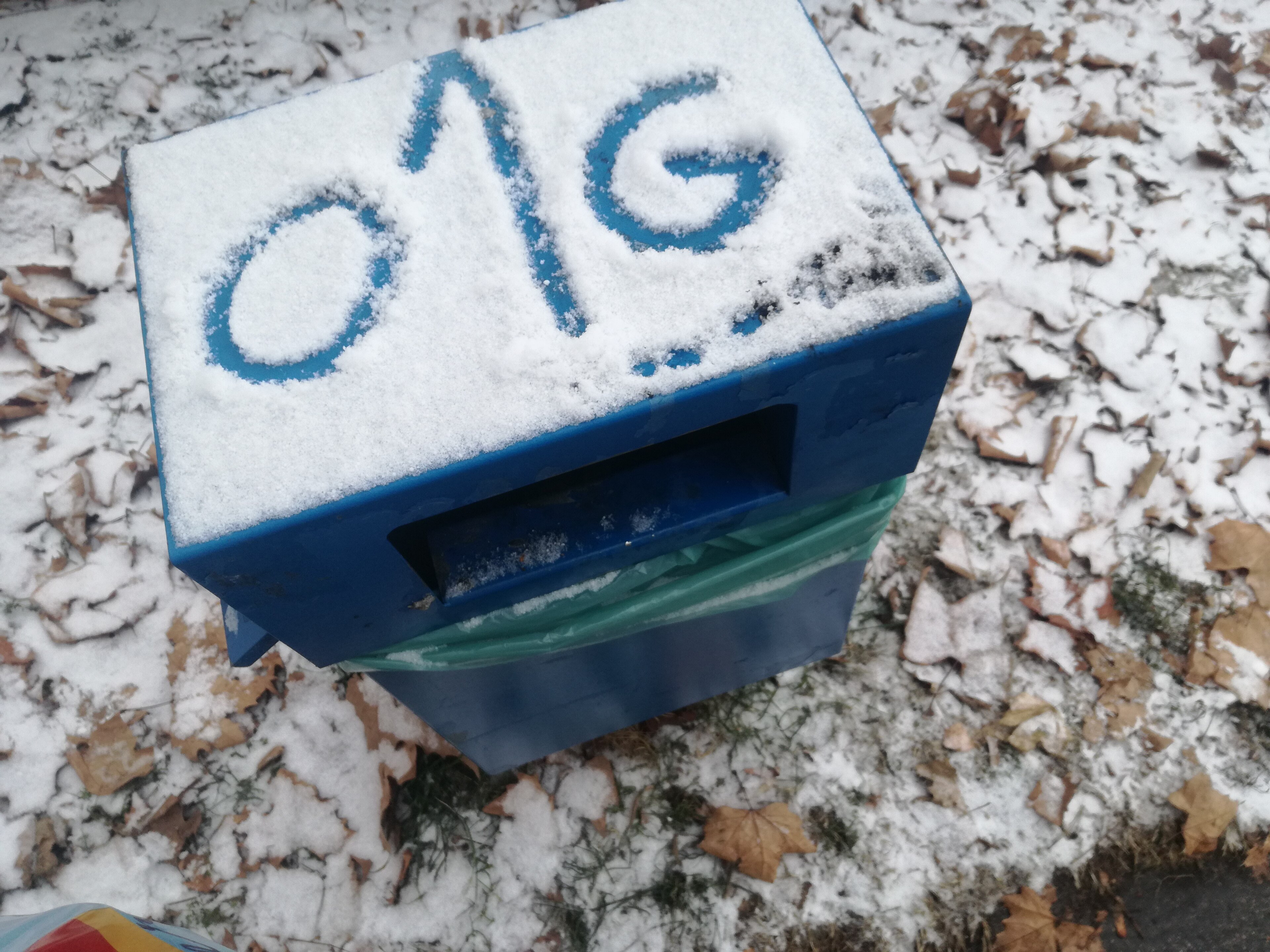
On May 26, the winning sentence was revealed: Orbán egy geci, literally, “Orbán is a sperm.”[3] This sentence, utilizing “one of the strongest expressions one can wield to humiliate a male opponent in Hungary” because it describes “a man who is dishonest, backstabbing, immoral, and petty,”[4] had been uttered by an oligarch, Lajos Simicska, some time before. Once Orbán’s friend and ally, on February 6, 2015, Simicska fell out with the prime minister. He then phoned a number of Hungarian journalists to slander Orbán, bringing the sordid sentence into widespread circulation. Later, in 2017, Simicska spraypainted those words over Fidesz’s political ads, which happened to be posted on billboards he owned.[5] His actions started a multi-mediated political movement among opposition-minded citizens. Simicska’s words, along with an abbreviated form, O1G, became a long-lasting symbol of activist defiance in the fight against state corruption. The sentence appeared graffitied on sidewalks, billboards, fences, political ads, and online in creative memes.[6] It is still part of political discourse today, illustrating how political rhetoric can be reappropriated and how texts, or bits of culture expressed in speech or writing, can develop polysemy when circulated for years in public and private spaces.
In a second round of mouth-karate, Telex readers were asked to choose a phrase representative of public life in the year 2025. They selected Átteleltek a poloskák, “The bugs survived the winter.” Orbán animated the text in a speech earlier that year on March 15, a national holiday commemorating the Hungarian Revolution of 1848, to refer to his political opponents, journalists, and citizens in Hungary (and abroad) who disagreed with or did not support him politically. In a grotesque show of dehumanizing rhetoric, Orbán likened them to pests, following with, “If there is justice, and there is, a special pit awaits them in hell.”[7] Many Hungarians expressed shock and sadness upon hearing Orbán’s words—a speech act that threatened domestic and international actors by suggesting they should be eliminated if the world be just—and immediately likened his speech to Nazi rhetoric. This was not a leap of logic. Indeed, in 1942, Ferenc Szálasi, leader of Hungary’s Nazi-aligned Arrow Cross Party, used poloskák, “bugs,” to refer to Jewish people, adding that they should be poisoned and destroyed.[8] Pointing to this history, the Hungarian National Association of Journalists (MÚOSZ) demanded an apology from Orbán for using such foul words and for “evoking the darkest periods of history,” also noting that “[h]ate speech is a crime.”[9] At least one scholar—who identified himself as a proud “bug”—cited Orbán for constitutionalizing hate speech.[10] In short, Hungarians in opposition to Fidesz publicly recognized, again and again, the ability of the party’s political discourse to manipulate, misinform, and harm populations at home and abroad. However, over time, Hungary’s opposition started to use discourse as a tool to enact significant political change toward a more democratic state.
Time After Time
The phrases Telex readers nominated as winners of mouth-karate were far from the only political texts fueling widespread recognition of Orbán’s corrupt practices and his eventual fall. Many such texts helped to drive Péter Magyar’s Tisza party to victory over Fidesz in April 2026.[11] In fact, Magyar’s campaign consistently altered well-known patriotic phrases and repurposed them for political gain.[12] Prominent among these campaign slogans was Most, vagy soha! “Now or never!” The line first had surfaced on March 15, 1848, the day the Hungarian Revolution against Habsburg rule began. That morning, a young revolutionary poet, Sándor Petőfi, read his poem “National Song” at the Pilvax Café in Budapest to his fellow revolutionaries, sparking action. The entire poem, and especially the second line, Itt az idő, most vagy soha! “Now is the time, now or never!”[13] sits with proverbial status in Hungary. Not only is the poem taught in schools alongside the heroic and tragic story of Petőfi—as a Hungarian national hero who died defending his homeland on the battlefield at the age of twenty-six, only two weeks before the Revolution’s end[14]—but the phrase is frequently uttered in the everyday by citizens who want to encourage instant action from their interlocutors; akin to the English-language idiom, “There’s no time like the present!” Petőfi’s “National Song” is, in fact, so well-known that it has become a seminal part of the historical narrative of the Hungarian nation and even famously played a part in 1956, when it was read by Hungarian revolutionaries to inspire bravery and action on the streets of Budapest as Soviet tanks rolled in.
However, the way Magyar utilized Most, vagy soha! as a campaign slogan in 2026 signaled that he and his party would not just speak of revolution, but enact it. In displaying the phrase, Magyar’s campaign used sous rature, an “under erasure” technique, striking through the last two words of the phrase—“or never”—thusly: Most, vagy soha! Discussed in detail by Jacques Derrida in an analysis on the semiotics of writing, sous rature denotes both the presence and absence of meaning in one temporally bound moment, i.e., the words are there, with (imperfect) purpose, but have suffered erasure at the same time.[15] Seeing words struck through allows a reader to question what is only liminally present and contemplate traces left by texts. For example, if Magyar’s campaign slogan read simply Most!, his audience would be unsure of Petőfi’s influence and the slogan would lose its referential power. But with the presence of words under erasure—vagy soha!—the meaning is altered, and Petőfi’s influence is made clear, with the trace of referential power remaining. Most, vagy soha! was readily visible and often appeared on Magyar’s podium or behind him onstage as he campaigned. Moreover, the phrase was the title of his country-wide tour that began in February before the election in April.[16] It also appeared on posters held by Tisza supporters and installed in citizens’ windows, signaling to ambivalent voters a broadening Tisza base, potential comrades in arms, and the possibility of regime change.[17] Magyar’s message to voters in the slogan was one of action and urgency, encouraging them to act (Now!) at the very moment they read his text, also urging them to recognize the power of civic participation in the voting booth. Speaking to his supporters in February before election day, he reiterated his want to lead and his need for voter participation by uttering, “[It’s] now or never, but we’re not familiar with the word never.”[18]
To be sure, Magyar’s campaign was reliant on what, in an analysis of political discourse in Spain, sociolinguist David Divita calls the “strategy of chronopolitics,” or “the discursive configuration of time or history to advance political projects in the present.”[19] As Petőfi’s lines were reappropriated, the memory of revolutionary action in 1848 helped to encourage civic action among Hungarian citizens for Magyar’s benefit in 2026. The principles revolutionaries fought for in 1848—“freedom of the press,” “abolition of censorship,” “equality of civic and religious rights,” and a fair judiciary, among others[20]—were likened to the principles Magyar’s supporters upheld in demanding the end of the Orbán regime, the reinstallation of press freedom, the end of censorship and corruption at all levels of government, and a return to foundational democratic values outlined by the European Union (EU). As Tisza offered to enact revolution in parliament, in using Petőfi’s line it simultaneously fueled citizen participation.
Listen to Your Heart
In 2026, the words of 1848 revolutionaries were accompanied by the revival of other chronotopic texts, their use inspired by a stream of jarring events. In March, audio from a call between Hungarian Minister of Foreign Affairs Péter Szijjártó and his Russian counterpart, Sergei Lavrov, revealed that the two ministers were likely colluding.[21] That the Hungarian state was cooperating with the Russian state became undeniable, and even Szijjártó openly admitted the talks, although claiming all his conversations with foreign leaders to be in the interests of both the EU and Hungary.[22] With journalists speculating as to the severity of the collusion in a context of elevated electoral tensions, Tisza held a rally during which it was revealed that a Russian journalist from the Russian newspaper Izvestia was in the crowd. After Magyar, who was on stage, welcomed the “Russian propagandist,” the crowd began to chant, Ruszkik haza! Ruszkik haza! “Russians, go home!”[23] A few days later, the transcript of a call between Orbán and Russian President Vladimir Putin revealed Fidesz’s unquestionable subservience to the Kremlin. In his conversation with Putin, Orbán spoke of himself as a “mouse” and of Putin as a “lion,” also telling the Russian president, “in any matter where I can be of assistance, I am at your service.”[24]
Whether written or chanted, Ruszkik haza! was used often during Hungary’s Revolution—the Freedom Fight of 1956—and again in 1989, when Hungarians held roundtable talks and negotiated the terms of a free democratic government as the USSR fell. In both 1956 and 1989, the text indexed forced rule by the Soviet government and a desire for meaningful citizen engagement. In 1956, Hungarians painted the slogan on shop windows and chanted it in Budapest’s streets before fighting began to help fuel a revolutionary attempt to push the Soviets from Hungary.[25] The spirit of the slogan was resurrected with gusto on June 16, 1989, quite ironically, by a young Viktor Orbán, speaking on stage to thousands of citizens in Budapest’s Heroes’ Square and calling for the election of a government that “immediately [would start] the negotiation of the removal of Russian troops.” This speech became pivotal in Hungarian political history,[26] and today, many Hungarians reference it in casual conversation as the moment the young, aspiring politician “told Russians to go home,” often using the text Ruszkik haza to summarize Orbán’s sentiment at the time. The sentence even manifests in a song released in 2025 by the entertainer and singer Majka, in which he criticizes corrupt rule in Hungary.[27] In this way, Ruszkik haza! has functioned as a patriotic chronotope, “a familiar formation of time and space that embeds recognizable social types…and a plotline in which ordinary people must do extraordinary things to defend their homeland and values from both outside aggressors and internal enemies.”[28] In other words, the use of Ruszkik haza! in 2026 by Tisza supporters suggests that Orbán was thought to have corrupted modes of Hungarian governance, in the same way the Soviets had, by creating a puppet government controlled by the Russians. Hungarian citizens in opposition to Fidesz were then cast in the role of oppressed revolutionaries, and the need to push out their cruel, corrupt government was made evident.
News outlets and social media users referenced Péter Magyar’s win and the Tisza victory as rendszerváltás, “system change,” a phrase utilized by Tisza early on as a campaign slogan that came charged with revolutionary hope.[29] Before 2026, “system change” was used in everyday conversation to refer to the years 1989-1990, when Hungary shifted from socialist governance to a free, democratic system. The era was full of capitalist hope and positivity, well-illustrated by a television commercial that aired in 1990, in which Orbán and other prominent Fidesz party members ask Hungarians to vote for Fidesz. In the ad, the red star of Communism is made of dominos that fall to the ground while “Listen to your Heart” by the 90s Swedish rock duo Roxette plays in the background. Then, Orbán and three other budding Fidesz politicians appear on screen, claiming to be different from their socialist contemporaries and vouching to govern from a clean slate, maintain a “young” democracy, and create a new Hungary—all claims that resonate with Magyar’s own campaign promises in 2026.[30]
Fueled by Tisza’s claims that the party would free Hungary of its corrupt Fidesz handlers, a week before Magyar’s election the meaning of rendszerváltas expanded. Using rendszerváltas and Ruszkik haza! together to fight Orbán’s authoritarian system, politicians and citizens in the opposition developed “counterspeech,” a type of speech that has the ability to contest Orbán’s political propaganda by undermining it and can, in many cases, discourage violence while encouraging productive action, helping citizens to stand against Fidesz for a freer Hungary.[31] In 1956, citizens of Budapest painted Ruszkik haza! on the sides of buildings and on shop windows to incite bravery and action and to inspire fighting. As in 1989, citizens in 2026 voiced those same words (semantically speaking) to provide a liminal space for change, advocating for a peaceful, democratic transition at the polls. In other words, the opposition’s use of patriotic chronotopes during election time—and the general practice of chronopolitics in Hungary in 2026—had what the English philosopher of language John Langshaw Austin called perlocutionary force, i.e., an emotional impact on audiences, one that serves as fertile ground for sparking action.[32] In 1848, 1956, and 1989, Hungarian citizens took action with intent to change their system of governance and make it more democratic and fair. These were hopeful times.
Hence, Magyar and his followers fostered emotional conditions that pushed Hungary closer to a free and fair democratic system and away from Orbán’s authoritarian modes of governance. Texts reappropriated by Tisza took on the perlocutionary force of change-for-the-better, progress, and democratic possibility. The texts changed conditions for truth-making and truth-telling among citizens—conditions that Orbán and his party Fidesz had spent decades altering with conspiracy theory-laced lies and the aid of transnational allies[33]—by helping citizens to recognize that they had a valuable political voice. The hope that the texts inspired in citizens was communicated to me on the night of Magyar’s election. Just when it became clear that Tisza had won, one of my interlocutors near Budapest sent me a stream of Facebook messages and photos as he celebrated the election outcome with friends and family. With two children in their twenties, he was deeply emotional, teary-eyed with elation. “This is the same experience when we fought for our freedom under the Russian invasion. We, Tisza supporters, are crying with our children.” Then, on the day Tisza was inaugurated into parliament, he sent a link to a reel with seminal moments from the ceremony and followed with, “It’s great to be Hungarian again. I’m so proud of the younger generation.”[34]
Something to Talk About
Investigation of texts utilized for political gain in the 2026 Hungarian electoral process can aid scholars in understanding the relevance of political rhetoric and its contribution to political violence, system change, and the development of democratic principles in other states. This investigation can also speak to the effects of disinformation on a given populace and teach lessons about when authoritarian political discourse becomes untenable and absurd. In the third and most recent round of mouth-karate, Telex journalists emphasized the absurdity of living in a system that insisted on cutting voters out of meaningful political discussion. Again, the news outlet asked its readers to vote, this time on the most bizarre events of the 2026 campaign. The text Orbán színészi pályája, “Orbán’s acting career,” won.[35] Readers believed that in consistently claiming that Hungary was under existential threat from powerful outside forces and in danger of being invaded by Ukraine (a state otherwise occupied),[36] Orbán no longer held promise as a politician and was labeled a shoddy actor. In frequently engaging the absurd, Orbán’s discourse had become incoherent with basic narratives of international happenings. His bizarre tales, increasingly removed from real events and facts, further assured those who never supported him in the first place of their pre-existing convictions and encouraged others to action. In this way, Orbán himself contributed to the development of a more democratic system, and to his own political demise.
It remains to be seen how Magyar and other Tisza party members will enact the new democratically-minded policies they have written. However, one can be sure that patriotic chronotopes will continue to bring change to modes of Hungarian politicking through the national narratives Magyar weaves. In his victory speech, the then prime minister-elect vowed that Hungary would “never again [be] a country without consequences” and promised to found a national asset recovery office to retroactively combat Fidesz’s corruption—claiming that Tisza had just revived the country.[37] Echoing the Fidesz of 1990, he asserted, “Hungary lives again!”[38] Yet, the health of Magyar’s budding party and office still depends on the ability of the new prime minister, as well as that of Hungary’s citizens, to negotiate texts of the past and the present, and on citizens continuing to utilize talk to enact democracy. After all, in the world of Hungarian politics, it is almost always now or never.
Jessica Storey-Nagy, PhD, is a Research Associate and Adjunct Faculty in the Department of Anthropology and the Byrnes Institute, respectively, at Indiana University Bloomington. A political and linguistic anthropologist, she studies political discourse in Hungary, Eastern Europe, and the European Union. Broadly, she is interested in multimodal political communication, disinformation, semiotics, nationalism, and how political talk affects processes of identification and belonging. Her current book manuscript is titled Political Realities, Personal Truths: Multiplicities of Meaning in Orbán Era Hungary.
Notes
[1] Hanula, Zsolt and Dávid Klág. “Szájkarate: a NER 15 évének legikonikusabb mondatát keressük” [“Mouth-Karate: We’re searching for the most iconic saying of NER’s 15 years”] Telex.hu. April 24, 2025. https://telex.hu/belfold/2025/04/24/szajkarate-a-ner-15-evenek-legikonikusabb-mondatat-keressuk.
[2] Jancsics, David. 2024. Sociology of Corruption: Patterns of Illegal Association in Hungary. Ithaca: Cornell University Press. 26.
[3] Hanula, Zsolt and Dávid Klág. “A tizenöt éves NER legikonikusabb mondata a következő,” [“The most iconic sentence of fifteen-year-old NER is the following.]. Telex.hu. May 26, 2025. https://telex.hu/belfold/2025/05/26/szajkarate-donto-orban-egy-geci-mi-sohasem-vetemednenk-arra-eredmeny.
[4] Lukács, Gabriella. 2021. “Internet Memes as Protest Media in Populist Hungary.” Visual Anthropology Review 37(1): 52–76; 55. The text can be abbreviated “O1G,” as egy functions both as an indefinite article and the number “one.”
[5] Magyari, Péter. “Simicska Lajos személyesen festette az utcára: Orbán egy geci,” [Lajos Simicska panted “Orbán is a sperm” on the street in person]. 444.hu, October 3, 2017. https://444.hu/2017/10/03/simicska-lajos-szemelyesen-festette-az-utcara-orban-egy-geci.
[6] Lukács, Gabriella. 2021.
[7] Klág, Dávid. “A tavalyi év legikonikusabb mondata a következő,” [The most iconic from last year is the following”]. Telex.hu, December 31, 2025. https://telex.hu/belfold/2025/12/31/szajkarate-eredmeny-atteleltek-a-poloskak-nem-mi-szultuk-oket-orban-viktor-pinter-sandor-idezet. To note, poloska can be translated as bug; pest; stinkbug; or bedbug. Its connotation is most often negative.
[8] Nagy, Nikoletta. “Poloskák, csótányok, férgek – így készíti elő a terepet a dehumanizáló propaganda.” [“Bugs, cockroaches, and worms – this is how dehumanizing propaganda paves the way”]. Telex.hu. March 16, 2025. https://telex.hu/techtud/2025/03/16/poloska-orban-viktor-ujsagirok-birok-civil-szervezetek-dehumanizalas.
[9]“MÚOSZ – állásfoglalás: Alszabadulhat a kommunikációs pokol,” [MÚOSZ’s position: Communication Hell could break loose”]. Muosz.hu, March 17, 2025. https://muosz.hu/2025/03/17/muosz-allasfoglalas-elszabadulhat-a-kommunikacios-pokol/.
[10] Mészáros, Gábor. “We the Bugs: Constitutionalizing ‘Enemies.’” Verfassungsblog. May 23, 2025. https://verfassungsblog.de/we-the-bugs-hungary-orban-lgbtq/.
[11] For a quick synopsis of events surrounding Orbán’s defeat, see: Müller, Jan-Werner. 2026. “Orbán’s Fall.” London review of Books 48 (8). https://www.lrb.co.uk/the-paper/v48/n08/jan-werner-mueller/short-cuts?fbclid=IwY2xjawRkgRNleHRuA2FlbQIxMABicmlkETFuWXNmSlRPTkF5MzBjOUpIc3J0YwZhcHBfaWQQMjIyMDM5MTc4ODIwMDg5MgABHuXjHrLbTahwvtyVBpnE04GmDmbO77GpTuzlVKFqQzplhLEK3qN2lJdo1tsO_aem_JTAZSjz90C76VZlY3Iu6VA.
[12] There is not space here to conduct a full analysis of all the significant discourses employed in Magyar’s 2026 campaign. Rather, I touch on a few essential texts used at election time and their contributions to political change.
[13] Petőfi, Sándor. 1848. Nemzeti Dal [National Song]. Arcanum. https://www.arcanum.com/hu/online-kiadvanyok/Verstar-verstar-otven-kolto-osszes-verse-2/petofi-sandor-DFB2/1848-F625/nemzeti-dal-F78E/. A more literal translation of the first clause could read, “The time is here.”
[14] Molnár, Miklos. 2001. A Concise History of Hungary. Cambridge: Cambridge University Press, 199.
[15] Derrida, Jacques. 2016 [1974]. Of Grammatology. Baltimore: Johns Hopkins University Press. To note, the concept was originally introduced by Martin Heidegger in a discussion on nihilism and the state of Being, but Derrida’s analysis is the relevant one here.
[16] “Most vagy soha! – Az országjárás, amely új reményt hoz Magyarországra,” [Now or never! The tour which brings new hope to Hungary”]. March 6, 2026. https://magyartisza.hu/hirek/ujsag/most-vagy-soha—az-orszagjaras-ami-uj-remenyt-hoz-magyarorszagra.
[17] Ésik, Sándor. 2026. “How Péter Magyar Defeated Viktor Orbán.” Journal of Democracy. Online. https://www.journalofdemocracy.org/online-exclusive/how-peter-magyar-defeated-viktor-orban/.
[18] Szántó-Nagy, Bálint. “Magyar Péter: Most vagy soha, de mi a soha szót nem ismerjük,” [“Péter Magyar: It’s now or never, but we’re not familiar with the word never”]. Telex.hu. February 15, 2026. https://telex.hu/belfold/2026/02/15/magyar-peter-most-vagy-soha-de-a-mi-a-soha-szot-nem-ismerjuk.
[19] Divita, David. 2022. “Radical-right populism in Spain and the strategy of chronopolitics.” Language in Society 52, 757–781, 758.
[20] Molnár, Miklos. 2001,185.
[21] Komuves, Anita. “Hungary foreign minister discussed EU sanctions with Russia in leaked audio.” Reuters. March 31, 2026. https://www.reuters.com/business/media-telecom/hungary-foreign-minister-discussed-eu-sanctions-with-russia-leaked-audio-2026-03-31/.
[22] Griera, Max. “Hungary’s Szijjártó admits he liaised with Moscow as EU discussed Russia sanctions.” Politico. March 31, 2026. https://www.politico.eu/article/hungary-foreign-minister-admits-he-liaised-kremlin-eu-discussed-sanctions-on-russia/.
[23] Szily, László. “Magyar Péter beszéd közben kóstolta be az orosz propagandistát Lacházán, a tömeg pedig, “ruszkik, haza!” skandálásban tort ki,” [“Péter Magyar slammed the Russian propagandist during his speech in Lacháza, and the crown broke out in a “Russians, go home!” chant”]. 444.hu. April 8, 2026. https://444.hu/2026/04/08/magyar-peter-beszed-kozben-kostolta-be-az-orosz-propagandistat-lachazan-a-tomeg-pedig-ruszkik-haza-skandalasban-tort-ki.
[24] “Orban likens himself to a ‘mouse’ helping Russian ‘lion’ during phone call with Putin.” InsightHungary. April 11, 2026. https://insighthungary.444.hu/2026/04/11/orban-likens-himself-to-a-mouse-helping-russian-lion-during-phone-call-with-putin.
[25] Gati, Charles. 2008. Failed Illusions: Moscow, Washington, Budapest and the 1956 Hungarian Revolt. Stanford University Press. The slogan was also used in 2023 by a small Facebook group, supported by the American Embassy, that wanted to encourage sympathy for the Ukrainians in their war with Russia. Szalma Baksi, Ferenc. “‘Ruszkik, haza!’ – ellenplakátkampányt indított a Nyugati Pályán nevű csoport amerikai pénzből,” [“‘Russians go home!’ – A group called On the Path Westward launched an opposition-poster campaign using American money”]. Telex.hu. April 11, 2023. https://telex.hu/belfold/2023/04/11/plakatkampany-nyugati-palyan-amerikai-nagykovetseg-orosz-ukran-haboru.
[26] Orbán, Viktor. 2018 [1989]. “Orbán Viktor beszéde a Hősök terén 1989. Június 16-án, Nagy Imre és mártírtársai temetésén,” [“Viktor Orbán’s speech at Heroes’ Square on June 16, 1989, at the funeral of Imre Nagy and his fellow martyrs”]. In Rendszerváltás [System Change] edited by András Mink. Budapest: Osiris Kiadó. 397–399, 399.
[27] Majka official. 2025. “Majka – Csurran cseppen,” [Majka–A drop here, a drop there.] Posted January 17, 2025. YouTube. 5:55. https://www.youtube.com/watch?v=f2iQfEcO39A. Majka never admitted to the song being about Orbán, but many in Hungary understand that to be the case.
[28] Jones, Deborah. 2023. “The ‘fascist’ and the ‘potato beetle:’ Patriotic chronotopes and dehumanizing language in wartime Ukraine.” American Ethnologist. 1–13, 9. https://doi.org/10.1111/amet.13131.
[29] “Rendszerváltás 2026,” [“System Change 2026”]. 444.hu. https://444.hu/tag/rendszervaltas-2026. In reference to how Hungary is transitioning from Orbán’s system to a seemingly more transparent government under Magyar, the news site 444.hu uses the tag, “Rendszerváltás 2026. Magyar Péter Hivatalos [Péter Magyar Official]. “Rendszerváltás [rövid összefoglaló],” [“System change [short summary”] Posted July 9, 2024. YouTube. https://www.youtube.com/watch?v=e4fubz5ImrM&t=24s. Tisza, too, used the text as a campaign slogan years before their victory.
[30] Bmeister. “Fidesz kampányfilm 1990,” [“Fidesz Campaign Film 1990”]. Posted March 19, 2011. YouTube. https://www.youtube.com/watch?v=6lxACdpb9u0. The orange that knocks down the red star of communism in the commercial is a reference to a Hungarian political satire, The Witness (1969), in which a Communist Party apparatchik asks a man to grow an orange in impossible conditions. The man grows one but it is accidently eaten by a child, and so he presents a party head with a lemon instead, calling it a “Hungarian orange.” The orange, as it appears in the Fidesz ad, is a symbol of joining the West: leaving the world of lemons, the Communist bloc, for one of oranges, the free market where the fruit is readily available. The orange also inspired Fidesz’s party color.
[31] Kiper, Jordan. 2025. “The Anthropology of Propaganda: Threats, Priorities, and Limits.” General Anthropology. 28–33, 32. https://anthrosource.onlinelibrary.wiley.com/doi/full/10.1111/gena.12132.
[32] Austin, J.L. 1962. How To Do Things With Words. Cambridge, MA: Harvard University Press. 101.
[33] For more on Orbán’s discursive style, see: Sik, Endre, and Péter Krekó. 2025. “Hungary as an Ideological Information Autocracy (IA) and the Moral Panic Button (MPB) as its Basic institution.” Central and Eastern European Migration Review. 1–17. https://openarchive.tk.mta.hu/652/1/Sik_Kreko_2025_Hungary%20as%20an%20Ideological%20Informational%20Autocracy.pdf. Wodak, Ruth. 2021. The Politics of Fear: The Shameless Normalization of Far-Right Discourse, 2nd Edition. London: Sage.
[34] Personal communication to author. Facebook Messenger, April 12, 2026, and May 10, 2026.
[35] Hanula, Zsolt, and Dávid Klág. “A választási kampány legbizarrabb eseménye a következő,” [“The most bizarre event of the electoral campaign is the following”]. Telex.hu. May 26, 2026. https://telex.hu/belfold/2026/05/26/szajkarate-valasztasi-kampany-eredmenyhirdetes.
[36] “Hungary’s Orbán orders extra security, alleges Ukraine attacks plot.” Aljazeera. February 25, 2026. https://www.aljazeera.com/news/2026/2/25/hungarys-orban-orders-extra-security-alleges-ukraine-attacks-plot.
[37] Hungary Media. “Magyar Péter Victory Celebration Speech 12/04/1016 [English subtitles].” Posted April 14, 2026. YouTube. https://www.youtube.com/watch?v=SjJbYLnImO8.
[38] Ibid.
Photo: Inritter, CC BY-SA 4.0 <https://creativecommons.org/licenses/by-sa/4.0>, via Wikimedia Commons.
