
By Elizabeth B. Jones
Concerns about social isolation and fragmentation have deepened in recent decades, especially in western industrial societies where social media is ubiquitous. Policymakers across the globe have implemented or are considering bans on its use as a means of fostering a revival of face-to-face spaces for social interaction and learning. Following Australia’s lead, Denmark enacted a ban on certain social media platforms for children under fifteen earlier this year. Denmark is also home to longstanding models of community-building in the form of folk high schools, or Højskolerne. These are non-formal residential schools for students between 16 and 24 where the emphasis is on learning without exams, mandatory classes, and formal grades. One of the most innovative of these schools is the International People’s College (IPC) in Elsinore, near Copenhagen, the only one of its kind. Nelima Lassen, the school’s president, describes here IPC’s approach to building strong social skills and interpersonal connections between young people from all over the world. The school offers a time-tested model for social and cultural bridge-building and for the development of skills that may have been dismissed as outmoded a decade ago but that policymakers now believe are needed more than ever to address global challenges like climate change, mass migration flows, and forever wars.
Could you tell readers more about Peter Manniche, the founder of the International People’s College, or IPC, and the circumstances of the College’s founding in 1921? Was it part of a broader European conversation about how to foster international peace after World War I?
Peter Manniche, the founder of the International People’s College (IPC), was a Danish visionary and educator who served as IPC’s principal from 1921 until 1954. His vision was simple but, for 1921, unusually ambitious: people who might otherwise regard each other through the lens of nationality should be invited to live, eat, study, and work together, and that way get to know one another as individuals within a Danish folk high school community. Manniche believed that bringing people of different nationalities together could bridge social-class divisions, cultivate a deeper understanding of each other’s values and cultures, and thereby weaken the prejudices that make international conflict possible.
The timing was no coincidence. World War I had left Europe devastated and traumatized. The political response included the creation of the League of Nations in 1920, whose purpose was international cooperation and the preservation of peace. But there was an increasingly influential realization that treaties and diplomatic institutions alone might not be enough. IPC’s founding came at a moment when international cooperation was being reimagined as something that had to happen not only between governments, but among ordinary people. Manniche took the established Danish folk high school model founded on the belief that learning should awaken the individual, strengthen the sense of community, and prepare people for active participation in society and gave it an explicitly international purpose. He believed that if people from countries that had been enemies could live, work, and study together, it could foster mutual respect, acceptance, and peace. In that sense, IPC can be seen as a manifestation of a much larger postwar ecosystem of internationalist experiments.
Conversely, how did IPC emerge from the singularly Danish model of folk schools, and how does IPC fit into the broader network of such institutions that still exists in Denmark today and across the world?
The original focus of N. F. S. Grundtvig, the Danish theologian and educator who inspired the folk high school movement, was to create an educated, engaged population capable of participating in a democratic society. What made Grundtvig’s educational approach unique and unconventional was that there were no examinations or degrees; students and teachers lived together; learning took place through conversation, lectures, singing, discussion, and shared activities; education was aimed at the whole person, rather than simply at acquiring vocational knowledge; and the schools sought to bring people together across social classes. The ultimate goal was public enlightenment and democratic formation. Manniche internationalized this folk high school concept. When he founded IPC in 1921, he did not invent an entirely new educational philosophy. He took something that was already well established in Danish society and turned it outward towards the world.
That makes IPC much more than a school that happens to enroll international students. The international community itself represents the educational method used at IPC. IPC is not simply an international institution that happens to be located in Denmark; it is a Danish folk high school that operates within the Danish folk high school tradition and legal framework, but within an international setting. There are currently around 70 folk high schools in Denmark. They specialize in everything from music, sport, journalism and crafts to politics and sustainability, but whatever the focus they retain the same basic residential philosophy: you go away from home to school, live with other people, eat together, study together, discuss, and become part of a temporary community. IPC takes that same architecture and makes cross-cultural encounters the central subject. As mentioned, the residential educational community was already deeply established in Danish folk-high-school culture when IPC was founded. That said, IPC’s vision overlapped substantially with ideas circulating in American progressive education and the settlement-house and peace movements.
How has IPC grown and changed over time? Has there always been an emphasis, for example, on broad and inclusive curricula? Has the student body changed over time?
Over time, IPC has changed quite substantially in the subjects taught there, its international reach, physical scale, and student population, while the underlying pedagogical idea leading it has remained remarkably stable. The idea that IPC should provide broad education was there from the start. The original 1921 prospectus was eclectic. Peace was the purpose, but broad education was the method. The idea that the classroom and the student community reinforce one another remains to this day. Although the earliest folk high schools primarily served young men, by the time IPC was founded in 1921, the residential, mixed-gender educational community was already well established within Danish folk-high-school culture.
The first course enrolled approximately 30 students, mainly from Europe and the United States. But even before World War II, IPC had become a significant international institution, with more than 100 students. After the war, its international horizon increasingly became global rather than primarily European. Since then, the meaning of “international understanding” has changed as the world itself has changed—from a context focused on postwar European reconciliation to decolonization, development, human rights, globalization, and international relations. Meanwhile, the curriculum has broadened rather than abandoned its original purpose, expanding from subjects such as languages, history, and agriculture to include subjects such as artificial intelligence, media literacy, and queer studies.
How are teachers at IPC recruited, and do they determine the courses that are offered in a particular year? Do students have the chance to offer feedback and request particular courses?
We recruit teachers as folk-high-school teachers rather than as conventional university lecturers. The job descriptions emphasize pedagogical ability, empathy, creativity, and the ability to participate in the wider life of the school as much as subject expertise. IPC teachers are not simply hired to teach one narrowly defined academic subject. They are recruited as participants in the educational community.
The course catalogue changes from term to term according to who the teachers and students are.. Teachers are encouraged to teach what they are passionate about rather than having to follow a fixed curriculum. We currently offer more than 40 possible courses, and the subjects themselves are deliberately broad: international politics, human rights, gender studies, global challenges, etc. We explicitly let applicants know that subjects may change depending on the teachers and students at IPC who will be present when they come. Moreover, students have an institutional channel through which they can propose changes and ideas for new classes. They also organize clubs and activities themselves, including running clubs, movie clubs, language clubs, and compassionate circles.
In several of the videos on the school’s website, IPC is referred to affectionately as “a bubble.” How do you think the fostering of a cocoon-like atmosphere benefits students? Besides the Dining with Danes program, are there other efforts to encourage interactions with the wider community, for example through service-learning components, into IPC classes?
For many IPC students, the school is an extraordinary social experiment: more than 100 people from more than 40 countries living together, eating together, studying together, socializing, and sharing everyday responsibilities. Students wash dishes, clean common spaces, do gardening, and participate in community work. These shared duties are intended to create a sense of belonging, connection, and responsibility for their community and the spaces around them. At its best, the so-called “IPC bubble” creates a safe, unusually concentrated environment in which students can learn how to engage and navigate a complex and globalized world. They can encounter unfamiliar cultural practices, different political opinions and religious perspectives, ask a potentially awkward question, and discover that their assumption was wrong and have a conversation about it.
The residential setting provides repeated opportunities to repair misunderstandings rather than simply walking away from disagreement. At IPC, intercultural learning is not confined to a two-hour class. The person with whom you discuss international politics in the morning class may be the person sitting beside you at lunch, playing volleyball with you in the afternoon, and washing up with you in the evening. Learning occurs across classrooms, meals, fellowships, excursions, and other shared activities. But a bubble can of course become an echo chamber if international students spend time talking only to other international students. This is why we also deliberately try to puncture the bubble by going on excursions, sending students out to have dinner with local people in town, attending cultural or sporting events outside the school, and visiting NGOs.
Manniche’s original insight in 1921 was essentially that people learn international understanding by living alongside people who are different from themselves. The bubble makes that possible at an unusually high intensity. But the bubble is not supposed to be the destination. It is more like a laboratory that allows people to experiment with dialogue and cooperation, practice curiosity, disagreement, and mutual responsibility, and develop confidence and empathy.
How does IPC nurture its network of former students? Are they essential for recruiting new students? How are students selected?
IPC has an alumni organization whose purpose is to connect former and current students, maintain dialogue across cultures, organize activities, and spread knowledge of IPC and its network. The alumni organization has its own board, and organizes annual activities at IPC, including a general meeting, a reunion weekend and a summer camp, which brings former students back to IPC for an intensive week of community work. IPC also has a broad global online community connecting former students internationally. The alumni network may be one of IPC’s most significant achievements over its century of existence. Alumni take their learnings and experiences to another level by bringing something from IPC back into the communities, societies, and networks to which they return.
We recruit new students through our website, social media, and international networks, and alumni are an important part of that recruitment ecosystem. There are no entrance examinations or academic grades required to attend IPC. But we expect applicants to speak English and to come with an open mind, an interest in other people and cultures, and a motivation to participate actively in community life.
How does IPC’s board and faculty manage the current climate in many western nations that opposes initiatives whose mission is to foster diversity, democracy, and equality?
We are quite explicit about what we stand for. Our current 2030 strategy acknowledges the absence of a universally agreed upon international order, but this only makes our mission of promoting lasting, just peace, and active global citizenship more relevant. We continue to be driven by values of non-violence, democratic consultation, respect for diversity, equity, and fairness. These are not new additions designed in response to the current political moment.
IPC is an independent, non-profit institution that does not subscribe to any particular political, religious, or sectarian ideology. Students are not expected to share the same views; rather, they are encouraged to engage with differing perspectives respectfully while recognizing the equal dignity of every member of the community. Misunderstandings and disagreements are inevitable when people with so many different cultural backgrounds and assumptions share a community. Our Code of Conduct, therefore, makes respect for diversity, equality, democracy, and empathy practical expectations of both students and staff. We may disagree about immigration, religion, gender, war, economics, climate policy, or the role of the state, but we still eat dinner together. This brings political disagreements back into the realm of human relationships. We see disagreement as educationally useful. Our definition of peace does not mean avoiding conflict. Differences should be communicated, exchanged, and confronted through non-violent processes, with mutual respect and dialogue.
That said, IPC is not indifferent to values. We explicitly support equality, human rights, and non-violence. Our core commitments are educational and democratic principles, rather than membership in a particular political camp. Manniche was responding to nationalism and xenophobia after World War I. His answer was to put people with those differences into a situation where they had to meet, talk, work together, and recognize one another as human beings. A century later, external political circumstances are different, but the educational proposition is surprisingly similar.
In 1921, the question was: Can people who have been taught to see each other as enemies learn to live together? Today, the question is: Can people whose societies are increasingly polarized learn to disagree without dehumanizing one another? Our answer remains essentially the same: create the community in which that skill can be practiced. I think this is perhaps the most interesting way to understand IPC’s position in the current debate. The aim is not to eliminate disagreement, but to make it compatible with equality, dialogue, and a shared sense of community. The bubble is not meant to shield students from challenging ideas and opinions but to give them a place where they can encounter them -and the people who hold them – without immediately retreating into their respective political camps.
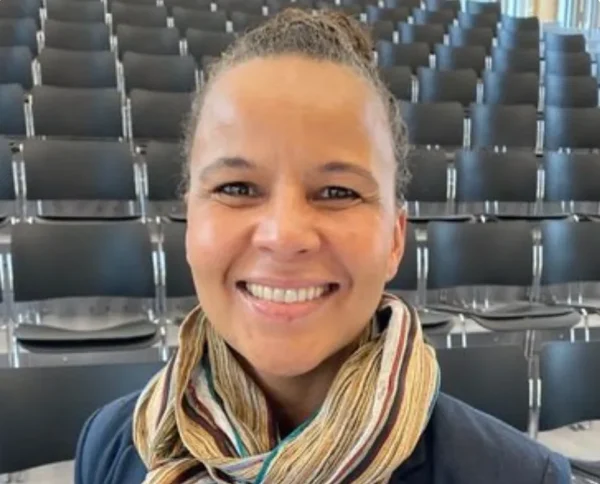
Nelima Lassen is the Principal of The International People’s College, a Danish international folk high school dedicated to global dialogue, democratic engagement, and intercultural understanding. She brings extensive experience in international leadership, education, and humanitarian and development work, having previously held senior leadership positions with the Red Cross in Africa, the Middle East, and Europe. In her work, she focuses on creating educational environments that empower individuals to engage with global challenges and contribute to more democratic, sustainable, and peaceful societies.
Elizabeth B. Jones retired in 2019 from Colorado State University and now lives in Corvallis, Oregon. Her scholarship focused on rural Germany, gender, internal colonization, and the environment and includes articles published in Central European History, Geschichte und Gesellschaft, German History, Agricultural History, and Continuity and Change, among others. Her book, Gender and Rural Modernity: Farm Women and the Politics of Labor in Germany, 1871-1933, appeared in 2009. She lived in eastern Germany between 1993 and 1996, mainly in Leipzig and Dresden, and has made frequent returns since then. In 2021, she began a large oak savanna and meadow restoration project in Corvallis. She joined the research editorial board of Global Europe: A Journal Placing Europe in the World, in 2025.
