
By Edina Paleviq
Migration and integration continue to shape political debates across Europe. In Austria, debates surrounding asylum, language acquisition, labor market participation, citizenship, and social cohesion frequently intersect with questions of integration. Within these discussions, language is often presented not only as a tool of communication but also as a pathway to participation, education, employment, long-term residence, and citizenship. Language therefore sits at the intersection of personal aspiration and public policy. Yet the relationship between language and integration is rarely experienced in the abstract. It unfolds in classrooms, examination centers, workplaces, public institutions, and everyday encounters. It is lived by people attempting to build new lives, navigate unfamiliar systems, access opportunities, and meet requirements that may shape their futures. Political scientists often examine integration through legislation, institutions, indicators, and policy outcomes. Such perspectives are important, but they can leave little room for understanding the experiences through which integration is actually lived. Learning a language entails far more than acquiring vocabulary or grammar. It also involves a sense of uncertainty, achievement, or frustration and triggers adaptation processes and growing confidence in unfamiliar social environments. Understanding integration therefore requires attention not only to policy frameworks but also to the everyday experiences of those who encounter them.
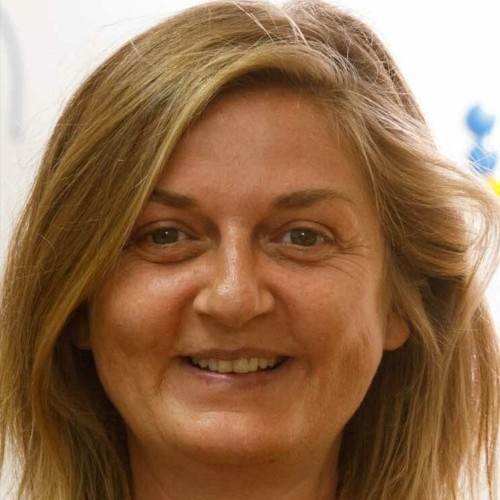
Christine Penz offers a valuable perspective at the intersection of policy and practice. For many years, she has worked in German-language education with migrants and refugees from diverse linguistic, cultural, and educational backgrounds, including people with interrupted educational pathways and limited literacy experience. Her professional trajectory has included both language teaching and language assessment, giving her insight into two closely connected dimensions of integration: the process of learning a language and the formal evaluation of language proficiency. Language can create opportunities for participation, education, and employment, but it can also function as a requirement connected to important life choices. This combination of experiences provides a distinctive vantage point from which to reflect on the relationship between language and integration. As a teacher, she has accompanied migrant learners through the process of acquiring a new language. Through her work in language assessment, she has also participated in the moment at which their language proficiency is formally evaluated and translated into certification. The conversation that follows approaches integration in Austria from the ground up. Rather than beginning with political programs or institutional frameworks, it starts with the experiences of learners and the insights of a practitioner who has accompanied them over many years. Thus, it explores how questions of participation, educational opportunity, belonging, and social inclusion become visible through the everyday realities of language learning.
Public discussions in Austria often present learning German as a prerequisite for successful integration in society. Drawing on your experience working with adult migrants and refugees, what opportunities does language open beyond communication itself?
For people, mastering the language of the country in which they live naturally enables them to get to know its people and culture, while also making social participation possible. Beyond that, language learning opens access to the labor market in more profound ways, ideally leading to financial independence and, more broadly, a greater sense of self-efficacy. Through language, we are not only able to communicate; above all, we are able to participate. For this reason, language is an essential first step towards successful integration.
Based on your experience, what are the most common obstacles adult migrants and refugees encounter when learning German, and how do these challenges affect their ability to participate in society?
As a teacher, simply because of the amount of time I spend with my learners, I gain valuable insights into their backgrounds. As an examiner, by contrast, I have no such insight beyond what candidates choose to share during the examination itself. Since I have primarily taught refugees in literacy and beginner-level German courses, I can only speak from my experience with this particular group. As an examiner, I cover all levels up to upper-intermediate (B2). However, due to their prescribed format, examinations are limited to the specified test content, which does not always reflect the participants’ everyday realities.
In Austria, immigrants, migrants, and refugees are required to navigate a considerable amount of bureaucracy. From asylum applications and other residency permits to various applications submitted to public authorities, the Austrian Health Insurance Fund (ÖGK), and other institutions, people are expected to complete forms, and read and sign documents. This process pays little attention to whether someone has ever held a pen before. With support—or perhaps a bit of luck, but in my opinion also a great deal of courage—people eventually find themselves, after considerable effort, in a German or literacy course, where they begin, step by step, to engage with language and writing. By that point, they have often already signed numerous documents.
When I first began teaching literacy courses, I was struck by this reality. In our own educational experience, we are accustomed to learning to read and write long before we are legally allowed to sign binding documents. Many refugees must first sign registration confirmations in order to enroll in a literacy course. The same applies to tenancy agreements and other documents that they are in fact not yet able to read. The bureaucratic process undoubtedly follows its own internal logic, but this logic is by no means self-evident to those going through the system.
Have you observed situations where learners made significant progress in German, yet still lacked confidence in navigating everyday life? What do these experiences reveal about the challenges of participation and integration?
Language alone is not the determining factor in successfully managing everyday life. It is a pathway, capable of opening doors that might otherwise remain closed, but it cannot heal all the wounds that people carry with them. I have had the privilege of witnessing, on several occasions, how individuals, through the opportunity to learn for the first time in their lives, have discovered strengths they never knew they possessed and have surpassed their own expectations. These are among the most rewarding moments in the teaching profession.
War-related trauma, difficult family circumstances, physical disabilities, and similar challenges require specialized treatment and professional medical care outside of language courses. Nevertheless, the latter—and particularly courses in basic education programs, where participants develop competencies beyond language itself—can provide space for cultivating self-awareness, health literacy, and a greater understanding of one’s own needs and circumstances. When a course is designed thoughtfully, it creates opportunities for personal development on multiple levels, often resulting in increased self-confidence and a stronger sense of self-efficacy. The situation of women deserves particular attention in this context. Depending on their backgrounds, many have experienced significant disadvantages, and they often benefit especially from increased self-efficacy, particularly in terms of achieving greater independence and autonomy.
To what extent does prior educational background shape a person’s opportunities to learn a new language (German)? What differences have you observed among learners with different educational experiences?
As mentioned, I teach refugees in basic education programs, where many participants have never attended school in their countries of origin. In some cases, they were even forbidden to attend school because they were girls; in others, schools were simply inaccessible or unaffordable. The reasons are varied. In Austria, refugees are structurally required to attend courses because access to social benefits is linked to participation. Although this obligation is often perceived as coercive, it opens a new world for many—one they might never otherwise have entered. The realization that, as adults, they cannot read or write, and that this is highly unusual in Austria, is often painful and accompanied by feelings of shame.
As everywhere in the world, a person’s educational opportunities are strongly influenced by their family’s educational background. This is not primarily a question of intelligence but rather of what is discussed within the family and of which educational pathways that family considers normal. Many participants who are unfamiliar with formal learning initially struggle to distinguish between concrete and abstract concepts. However, when these challenges are addressed with thoughtful and appropriate teaching methods, entirely new worlds open for them—worlds they explore with great enthusiasm and which they often quickly learn to navigate independently.
As learners progress in their German language development, what changes do you observe in what they hope to achieve through language learning, whether in relation to work, education, or everyday life?
Among the most inspiring experiences are the many learners who, once they discover the joy of learning, also discover their own sense of self-efficacy, which then grows remarkably. People who had long assumed that life offered them only limited opportunities suddenly begin to recognize an unexpected range of possibilities, both for their professional future and for their participation in society. Witnessing this transformation is one of the most rewarding aspects of my profession. For instance, a participant from Somalia recalled the professions she had wanted to enter as a child—goals she had previously been unable to pursue and had effectively abandoned. Realizing that she could indeed learn new skills—and discovering the virtually limitless possibilities available to her—she embarked on a vocational training path. She first obtained her Austrian compulsory school leaving certificate and subsequently set her sights on completing her secondary school leaving examination (Matura) via evening classes and pursuing university studies.
Integration is often discussed as if it were a linear process. From what you have seen in the classroom, is language learning typically straightforward, or do learners experience setbacks, interruptions, and changing circumstances along the way?
Very few learning journeys are linear or free of obstacles. However, as learners’ self-confidence grows, the path forward often becomes progressively easier. In my view, this is also connected to experiencing hospitality and feeling genuinely welcomed. I believe that some integration journeys are abandoned—or at least become considerably more difficult—when refugees encounter attitudes that are patronizing or condescending. Although I recognize that certain integration measures, even if they appear restrictive, may bring people into environments they might otherwise never have accessed, I nevertheless believe that a respectful approach based on equality is both more welcoming and ultimately more effective. For instance, the highly restrictive requirements for obtaining a language certificate can pose a major challenge for learners with little prior testing experience, particularly because the test format is often not truly aligned with the lived realities of immigrants; learners may be required to memorize structures that seem nonsensical to them or to engage with topics far removed from their own interests, which makes the learning process significantly more difficult. When compounded by other daily challenges—such as the unresolved trauma from flight and the hostility sometimes encountered in government offices or on the street—the testing structure can lead some individuals to abandon their budding dreams, as the obstacles appear insurmountable to them.
Language learning takes place both inside and outside the classroom. What forms of learning happen most effectively in each setting, and how do they complement one another?
In standard language courses, excursions outside the classroom play only a very limited role in the curriculum, because the focus is on test preparation. I find this a great pity, as such test preparation does not always reflect the learners’ actual lives. Things are different in specialized programs—such as basic education, which is funded in part by the European Union—where a large portion of the learning does take place outside the classroom. Vienna, in particular, offers an excellent environment for practicing how to navigate a European city, read and communicate in public spaces, interact with native speakers, and become familiar with administrative offices or school routes. For some participants, these excursions represent their first experiences of travelling independently, without family members, allowing them to gradually gain confidence in moving around on their own. Visits to museums, language cafés, and tourist attractions are complemented by structured activities that focus on navigating and exploring the city and its public transport system. Dialogues are not only practiced through classroom simulations but are also applied in authentic real-life situations. Unfortunately, this degree of flexibility in course design is not permitted in all program formats, even though combining physical movement with the practice of language structures is clearly beneficial from a pedagogical perspective.
Working closely with adult migrants and refugees offers a unique perspective on integration. What aspects of the integration process do you encounter in your everyday work that you feel are often overlooked in public debates?
One aspect that is too often overlooked in the public debate on integration—where discussions frequently revolve around statistics—is that integration is about people. That may sound somewhat idealistic, but it is worth emphasizing. These individuals each have their own story. The vast majority of refugees do not leave their homes for economic reasons. They flee because they simply have no other choice and are trying to save their own lives and those of their families. I will refrain from delving into the often highly dramatic stories of displacement and loss, partly because I do not wish to use them as an excuse to ignore the fact that Austria does face challenges regarding integration. However, these challenges will not be solved through statistics alone but through and engagement with the people at stake. In my view, the objective should not be limited to reducing immigration figures—as is often demanded by xenophobic political agendas—rather, it should be to increase the number of genuinely successful integration outcomes. Achieving this goal requires close attention to the everyday realities of refugees.
In my courses, I have met many refugees who deeply value the Western principles of democracy and freedom, actively promote these values within their communities, and fully understand the importance of human rights and their protection. Contrary to how the issue is often portrayed in public discourse, those who reject these values are by no means the majority. What is missing from the public debate is a greater attention to those who are not only well integrated but also committed to supporting the integration of other refugees. These individuals could serve as important role models and help establish meaningful connections between Austrian society and their communities.
Many public discussions assume that language acquisition leads naturally to integration. Based on your experience, what aspects of integration cannot be achieved through language learning alone?
This depends to a large extent on the degree of flexibility allowed in course design and whether it is possible to adopt a learner-centered pedagogical approach. Standardized course programs focus exclusively on language acquisition and standardized test formats; there is little room for flexibility, and the number of available teaching hours is strictly limited. Consequently, learners are required to master prescribed material within a set time frame. In other programs—such as basic education courses—class schedules, duration, content, and teaching methods can be tailored to the participants’ specific needs and requirements, thereby maximizing outcomes. For instance, instruction may incorporate materials the participants bring themselves—such as their children’s school communication logs or forms for an internship application—or involve simulations of visits to government offices and official interactions. Field trips take participants to places they might otherwise hesitate to visit alone; for an all-female group, this could mean a park typically dominated by men. Basic education programs meet learners at their current level, supporting their individual progress and learning content to help them achieve their personal goals. Naturally, mandatory language tests remain a necessary step toward these goals; there is no way to bypass them.
Fundamentally, the more freedom there is to design a course around the participants, the greater the success achieved. The more participants can incorporate their own needs into the course content, the more likely they are to advance their own integration process. However, it also depends on the instructor whether topics that matter to the participants—areas where they wish to improve their language skills—are given space in the curriculum. But when participants are affected by trauma resulting from war or forced displacement and require psychological support, the framework of a language course only allows for an acknowledgment of the issue; these participants should be referred to appropriate professional services.
The Western values of democracy and freedom are addressed in many language courses and are a compulsory component of official integration courses in Austria. As part of the country’s Integration Agreement, which is linked to access to certain social benefits, refugees are required to complete an eight-hour values course and successfully pass the values component of the language examination. While language courses can provide some space for discussions on political and religious views, deradicalization, or ethical questions, such discussions are necessarily limited in scope and cannot address these complex issues comprehensively.
What common assumptions about migration, integration, or belonging have you seen challenged through your work with language learners?
One aspect that seems particularly noteworthy to me is the extraordinary complexity of this topic, which is difficult to fully appreciate in theory. There is a common assumption that all individuals who come to Austria from Syria, for example, must naturally get along with one another. However, when a former police officer from the Assad regime encounters someone who was once imprisoned for political reasons under this regime, tensions may arise. The label “refugee” is also far too simplistic to capture the full reality of an individual’s experiences and identity. Of course, this is true of every human being, but I find it especially important to emphasize in this context because, as mentioned earlier, public discussions so often focus on statistics, as though reducing people to numbers somehow made the issue easier to understand.
Language assessments and certificates provide one measure of learners’ progress. How do you recognize success beyond examination results?
We assess progress in language learning through targeted exercises and tests on the one hand and through participants’ own accounts of their everyday experiences on the other. Learners often describe situations in which they have successfully managed daily tasks independently—for example, attend a medical appointment without the assistance of an interpreter. As the course progresses, participants increasingly share these achievements with visible pride. I also consider the learning group itself to be an invaluable resource, as its members motivate and support one another throughout the learning process.
In your work with language assessment and examinations, what aspects of language ability are relatively easy to measure and which remain difficult to capture?
The ability to manage everyday situations that can be simulated in the classroom, as well as written language skills, can be assessed relatively easily. More difficult to evaluate are situations that cannot be recreated in a classroom setting, particularly when they become even more challenging because of the stress associated with real-life circumstances. Regular individual conversations with participants therefore play an important role, providing insights into their successes in managing everyday life while also helping to identify any methodological adjustments that may be needed in the teaching process.
Over the years, what have your learners taught you about resilience, adaptation, or belonging that has stayed with you personally?
Regarding resilience, I have learned from my learners that it can manifest itself in very different ways. For some, the classroom environment and the opportunity it provides to focus on something other than the events unfolding back in their home countries distracts them from their daily worries, giving them renewed energy and strength. They discover entirely new aspects of themselves, uncover hidden abilities, and achieve goals they had never even dared to dream of, such as training for a new profession. Others, however, are so exhausted by the hardships of forced displacement and by leaving behind family members and communities that they find it incredibly difficult to engage with new experiences or opportunities.
A sense of belonging cannot be created from the outside; it can only develop if there is an inner willingness to embrace it. Adaptation does occur in certain areas. One example is Ramadan. Some Muslim participants feel constrained by the way religious practices fit into everyday life in Austria. In my courses, we discuss that religion is a personal choice and that religious observances—such as fasting during Ramadan—belong to the private sphere. When Ramadan falls during the hot summer months, I advise participants who begin to feel faint to drink some water if necessary. In more extreme situations, I have even poured water over the head of someone who was on the verge of collapsing. Some participants view these experiences as an opportunity to reconsider their own practices. I have had learners in my classroom who decided not to observe Ramadan after settling in Austria, because they found that staying hydrated made it much easier to cope with the summer heat. For some, this decision led to discussions within their families or communities, and I have been happy to provide space for such conversations in the classroom as well.
The same applies to wearing the headscarf. Some refugee women choose to stop wearing it after arriving in Austria, seeing it as an opportunity to develop a new sense of belonging, even though this decision may also represent a departure from previous religious practices. Many women also discover the concept of women’s rights in Austria and learn that these rights are not only recognized but are also legally protected and enforced. This greater awareness and the legal protections available can contribute to women making different decisions about their personal relationships, including choosing to end abusive or otherwise untenable marriages after their arrival. These developments naturally give rise to many discussions, and I believe it is both important and appropriate that language courses provide the time and space for such conversations.
After years of working both in language teaching and language assessment, what is the most important lesson you have learned about integration in practice?
Through the language learners in my courses, I have come to know parts of Vienna that I would otherwise never have discovered—as they are part of the participants’ own communities— and into which I was warmly invited. I have also learned that leaving one’s homeland often creates a wound that never fully heals, even when a person is fortunate enough to build a new home in his/her host country. A certain inner fracture remains, but it can be approached with compassion and accepted as part of one’s personal history. I have further learned that people who may sometimes appear intimidating in public—particularly when they are in groups—are, in one-to-one encounters, and especially in examination settings, usually not intimidating at all. Instead, they reveal themselves to be kind, approachable, and genuinely warm individuals. Goodwill is reciprocal; someone simply has to take the first step.
If you could change one thing about the way adult language learning is supported in Austria, what would it be and why?
From my perspective, the most important factor would be to grant greater flexibility in course design. As mentioned previously, learners are best supported in managing their everyday lives when both the content and the teaching methods are tailored to their individual needs and circumstances. A certain degree of pressure regarding course attendance and the successful completion of examinations probably encourage some people to take the first step. However, there should be much greater alignment between these requirements and the actual realities of learners’ lives. For example, requiring people who arrived in Austria as refugees when they were children with their parents and who have completed their entire education within the Austrian school system and speak German as their native language to sit integration examinations seems less like a meaningful policy measure than an unnecessary bureaucratic burden.
Ultimately, I would like to see learners treated with respect and as equals, and for learning environments to be created in which the principles of democracy and freedom genuinely apply to everyone involved.
Christine Penz is a specialist in German-language education with professional experience spanning Austria and Southeast Europe. Over the course of her career, she has taught in a wide variety of educational settings, including universities, secondary schools, adult education programs, literacy courses, and German-language courses for speakers of other languages. Her work has brought her into contact with learners from diverse linguistic, cultural, and educational backgrounds, including migrants and refugees navigating new educational and social environments. These experiences have given her a distinctive perspective on language learning not only as an educational process but also as a pathway to participation, opportunity, and integration. She currently works in the field of language assessment and certification.
Edina Paleviq is a political scientist specializing in democratic theory, political legitimacy, and institutional change. Her research examines democracy, civil society, nationalism, and citizen participation, with a growing focus on the implications of digital transformation and artificial intelligence for contemporary governance. She combines political theory with comparative, qualitative, and mixed-methods approaches to explore evolving relationships between technology, power, and political institutions.
