
By Nicholas Ostrum
When Russia invaded Ukraine in February 2022, organizations sprouted across the Atlantic to provide support for Ukraine. In the United States, some organizations, such as the Cleveland Maidan Association, were already active and in a position to intensify their efforts to offer desperately needed humanitarian medical assistance. Now four and a half years later, Cleveland Maidan has expanded its humanitarian operations, promoting Ukraine’s reconstruction and further movement toward Europe while much of the country itself remains a warzone.
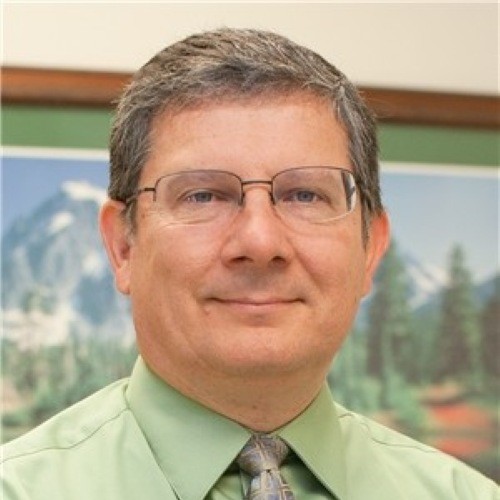
On July 29, GlobalEurope sat down with Taras Mahlay, medical doctor and president of Cleveland Maidan, at the Ukrainian Museum-Archives (UMA) in Cleveland, Ohio. Over the course of a generous hour, we discussed the origins and changing roles of Cleveland Maidan, the ways in which Ukrainians have innovated in medicine since the war started, the transformation of Ukraine’s medical culture, intercommunal solidarity, and the future of Cleveland Maidan after the war ends.
Could you introduce the Cleveland Maidan Association and your role in it?
The Cleveland Maidan Association was formed when people got together here in Cleveland, Ohio, at the time of the Revolution of Dignity, or Maidan Revolution, in 2014. People in the Cleveland community were paying attention to what was taking place in Kyiv and in Ukraine generally, and they wanted to help. Quite a long period went by from the start of the small, student protest in Ukraine against then-President Viktor Yanukovic’s actions. When the government tried to break up the protestors, it caused a disturbance and the people rose up against the ensuing repression. The protests started in December 2013 and lasted until February 2014. What the community here did was watch what was happening in Ukraine, primarily on the internet, and call each other to talk about the situation.
The first thing people in Cleveland did to help was simply to send money, making sure students had food and shelter while in the Kyiv Maidan Central Square. They also demonstrated across the US, supporting the protestors in those indirect ways. But some bought plane tickets and flew directly to Kyiv to take part. They brought whatever they could with them, and they were out there, living on the Maidan. It was wintertime; they made makeshift campfires and barrel fires to keep warm. But everybody stayed there, because they feared that if they left the square at night, they would not be able to get back in and the demonstration would end for lack of people. So they lived there twenty-four-seven for weeks.
As time passed, things became more violent. People started getting shot, marking a turning point in the Maidan movement. People got up in arms and the Parliament eventually turned against Yanukovych, who escaped the country and went to Russia.
At that time, the community here in Cleveland got together at churches, at community centers, again gathering money and telling stories. The international news is always a little delayed, so what people were hearing when talking to friends was not the same as what they heard in the news. The people they were talking to were their cousins and friends who had been present at the Maidan in December and January. Some of the founding members of our organization were also at the Maidan. In February 2014, Yanukovich left. And then quietly Russia deployed its “little green men”[1] in eastern Ukraine. This situation complicated matters but also ensured the continued relevance of our work, which is primarily to provide supplies, training, and other humanitarian aid to Ukraine.
What exactly did Cleveland Maidan do to help during the period when Russia was annexing Crimea and further stoking tensions in Ukraine’s east?
Cleveland Maidan is a humanitarian organization. During the annexation of Crimea it basically provided food and shelter to the tens of thousands displaced people who were forced to move to central and western Ukraine. Who wants to live in a city where there is so much violence, where one group is shooting the other? What family wants to raise kids in downtown Donetsk or downtown Luhansk? How are these children going to go to school in a context where you do not know what is happening or if there is going to be shooting or calm that day? So, many Ukrainians moved out. We helped support families financially as they fled. People in Cleveland became increasingly engaged. But after a few years, most people stopped paying attention. Although the situation in Ukraine had grown a bit quieter by 2015, 2016, or 2017, Cleveland Maidan continued its action. I was personally not as active as others in the organization at the time. I mostly helped with obtaining basic medical supplies that the organization could ship to Ukraine. We were also at that time helping with the provision of clothes and financial assistance. And that was that.
What was your personal involvement in Cleveland Maidan at the time Russia started its full-scale invasion of Ukraine in 2022?
I was not doing much on the organizational side of the association. I worked at University Hospitals in Cleveland, where I had started in 1991. This was my only job until January 1, 2023. After Russia’s full-scale invasion of Ukraine in February 2022, I was at Cleveland Maidan’s warehouse every day gathering supplies, as we were shipping containers every week. By the end of that year, my wife and I sat down and she said, “You cannot be doing both jobs, especially this volunteer work.” So, I quit my position at the hospital and started focusing exclusively on Cleveland Maidan that January. Today, we are not just providing bandages. Through donations from regional partners, we are providing hospitals in Ukraine with monitors, beds, dialysis units, CAT scans, and MRI machines, basically any equipment hospitals need. If a patient gets an MRI in Cleveland, they want to get the MRI from the new unit. So the old MRI machines, which have lower imaging quality than newer ones, are discarded and end up in hospitals’ basements. If they still work, we are able to get them through donations and ship them to Ukrainian hospitals.
How has the Cleveland Maidan Association’s mission changed over the decade-plus during which it has operated?
The mission was and remains to help the people who are suffering during this war, this catastrophe. Take orphanages: There were orphanages in the Donbass region, from which Russia paid people to abduct orphans, many of whom had recently been displaced or orphaned precisely because of Russia’s military actions. So, we funded buses to move the remaining children from these orphanages to others located deeper in Ukraine. A Yale study attests that approximately 20,000 kids are documented to have been stolen from Ukraine. But we actually have no idea how many have really been stolen, certainly many, many more.
The mission of the organization has not changed. Now, however, different obstacles and headaches have emerged. At first, there were few problems with logistics. I do not want to say the borders were porous, but in a way they were, because everybody knew Ukraine needed help. Guards and customs agents would let a lot of those materials slip through without the necessary paperwork. Today, much more paperwork is required. For instance, because the European Union (EU) is currently considering Ukraine for membership, Ukraine needs to comply with EU administrative protocols. Every year, it seems, there are new bureaucratic hoops associated with Ukraine’s candidacy. On the one hand, it is not a problem. We understand Ukraine needs to conform to EU policies. But doing so also makes things more difficult for volunteer organizations like ours.
Cleveland Maidan and you personally have also been involved in the education sector in Ukraine. Can you tell us in what capacity?
For one, we have physicians coming here on exchange programs from Ukraine, and we have physicians from here going there. We have co-sponsored and fully sponsored conferences held in Ukraine for physicians’ training. We also have created visiting training programs. For example, this year we are helping train seventeen Ukrainian trauma surgeons in Oklahoma City.
How different is it working with Ukrainian- and American-trained doctors?
Ukrainian medical training is different from ours. And Ukrainian philosophy of care is also different. As a Soviet republic, Ukraine adopted the Soviet educational system, which was categorically different from the American system. But these differences are getting smaller. After 1991, the youth started turning to Europe. They wanted Europe. They wanted democracy. They wanted a different style of life, and thus a different educational system. But it is difficult to change an educational system. In Ukraine, the young aspiring doctors and nurses in school in the mid-1990s were trained by professors who had only known the Soviet system; as a result they instilled much of that system in their students. It takes the next generation, taught by those professors trained in the 1990s and who have known more than the Soviet system—who are in their prime today—to truly reform the system.
What about the equipment used in treating patients? Is there a difference there, too?
The availability of equipment in hospitals is different from that in the US, and that means the approaches to treatment can be, as well. When I first visited Ukraine with Cleveland Maidan in 2023, I wanted to know what the hospitals needed. I wanted to know whether we should provide millions or billions of dollars to help the Ukrainian health system be efficient. As an example, I wanted to know if another CAT scanner was truly needed, or if it would be better to focus on providing antibiotics or other medication. What I saw was that the medical administration and older physicians, who were my age, were stuck in the old Soviet system, which was cumbersome. But when I last visited Ukraine a month and a half ago, these administrators and doctors were all gone, and all processes had become much faster. Some of this is attributable to smartphones. But administrative procedures have changed, too. Meetings between physicians are now short and concise, as opposed to the old format where people took their time. Everything at the hospital now runs by West European standards.
Another example I can share dates back to when I first started visiting Ukraine. The doctors then knew what was happening on their floor in the hospital, but they did not know what was happening on other floors. They did not communicate across the hospital. I mentioned the issue to the hospital administration, and six months later, what I saw was a multidisciplinary group meeting taking place at 9:00 AM every day—doctors, nurses, pharmacists, and social workers. When I first brought up that idea, the administration thought such meetings would take up time, which they do. But they have also made everything else efficient.
Can you thus say that there has been a real change in medical culture since Maidan?
Yes, but through a give and take process. Through people working shoulder to shoulder —they love using that term in Ukrainian, plich o plich—and getting a sense both of Ukrainian practices and medical culture and how American and Western European practices can complement and improve them, rather than simply replace them. In my experience, the best physicians in America are foreign doctors who retrained in the US when they immigrated. They have a better sense of the patient than American physicians; and their education and technological mastery are as good as those of any American physician. The practice of medicine is not like fixing a car. Medicine is an art, not just a science. Sometimes our technology takes the art out of it, but embracing that artistic dimension is an important part of keeping medicine human, which is something Ukrainian doctors do well.
What other changes have you seen in medical culture? Many people talk about Ukrainian innovations and drone warfare, and changes in Ukrainian military culture, tactics, and strategy through effective adaptation to the war. In the medical field, this adaptation is presumably just as important. You mention the westernization, to put a label on it, of Ukrainian medical culture, a process that has been under way for a while. Where else in Ukraine have you seen real innovation in the medical sphere because of the necessities and restrictions imposed by the war?
Despite our and other aid organizations’ best efforts, Ukraine is experiencing a lack of medical supplies. Right now, the hospitals and medics are dealing with a great number of infections, wounds, and numerous incidences of disabilities, both physical and psychological, resulting from trauma. Ukrainian surgeons are administering many treatments without the supplies they normally need, and they are nonetheless getting great results. But I cannot really say this with too much authority, because I do not have actual data to prove it. As a physician, I believe in standard-of-care- and evidence-based medicine, based on data that show whether something works. Still, it can be said that Ukrainians are indeed innovating. They are still doing transplants, for example. But now, when they need an organ to be delivered, people do not grab a cooler with a heart or a liver or a kidney from an ambulance with a driver and a navigator. Instead, the organ is delivered by drone, more quickly and more cheaply than by road. Although Ukraine is a no-fly zone, drones are everywhere, even used to move an organ from a hospital to another.
Does drones entering the medical field show a significant technical and knowledge transferal between the military front lines and the civilian home front?
Yes. That exchange is incredible. I was recently in Oklahoma City, at a meeting with a military cohort, when someone walked up to me from the Oklahoma Department of Emergency Management (OEM) to ask about the use of drones in Ukraine. The problem he had been trying to solve was that when people in rural Oklahoma get bitten by a rattlesnake and need the antidote, it is difficult for doctors to get it to them. They drive it to them, which can take hours. What he wanted to do was what Ukraine does: put the medicine in a box, install it on a drone, and fly it over to the patient. It would take half the time.
Another series of unique challenges and innovations I have seen in Ukraine comes in treating trauma associated with drone warfare. The challenges are different from those we meet in the US. Our surgeons go to Ukraine to do reconstructive surgery, and they report back that they had never seen before the type of psychological trauma they encountered. It is different from that associated with receiving a bullet or a shell or even with a building falling on you. A drone exploding in the air creates a different wound. Moreover, trauma differs depending on the age and situation of the patient. Once, I was on a Zoom call with a medical facility in Ukraine, and the Ukrainian psychologists present talked about “deprogramming” children The American psychologists on the call did not know what they were talking about. What the Ukrainians were referring to is an organization, Save Ukraine, that brings back the children that were stolen and then has to “deprogram” them from the psychological reconditioning they were subjected to in Russia. Who in the US has a psychological protocol to deprogram kids? This is not something we have even thought about… I get teary thinking about and talking about this situation. I think I keep myself from being sad by working. I just keep going.
It is amazing that you do keep working. But, if I can push on this a little bit, is much of the deprogramming of recovered stolen children happening on site in Ukraine, or do Ukrainian organizations have connections with the US or places in Europe, where they are able to bring kids to remove them from the war zone?
Those kids do not leave the country. I am not a psychologist, but I think there are a couple of reasons for it. There are family issues, and there are issues of continuity. Sending those children somewhere else could induce more trauma.
Ukraine is an active war zone right now, but many other countries—especially Lithuania and Poland—are concerned that they are also in Russian President Vladimir Putin’s designs for military intervention and outright invasion. Because of that, there seems to be deep cooperative or solidarity networks with these countries and their diasporas. Have you seen any of these arrangements develop? Have you been able to work with other groups that have not been previously engaged with Ukraine or the Ukrainian-American community here in the US?
Even before 2014, when the Soviet Union and the Eastern Bloc still existed, people from various diasporas from the Soviet sphere got together to form an organization, and their affinities persist today. People from the Baltic and Polish communities have been especially supportive of our organization, showing up out of the blue at our packing events and at demonstrations and rallies. Every month, I see and talk with members of these groups, especially those from Lithuanian- and Polish-American communities. But a man who used to come to our events all the time was from the Taiwanese community, because the Taiwanese think they are next, too. Not to be attacked by Russia, of course, but by China.
I have seen a lot of support for our organization from the broader Cleveland community, as well. Sometimes I am afraid to even go to the supermarket because somebody might come up to me and start asking about how things are going in Ukraine (some of these people are probably also my old patients, asking me when I am going to come back to my medical practice, but that is a different story). I do not know if you noticed this too, but when people from out of town drive around Cleveland, especially the western part, they are surprised to see rows of houses with Ukrainian flags. I do not think all those are houses of Ukrainians.
So, yes, there is a lot of support. But this is big war, with big geopolitical, ideological complications. It involves a lot of money, a lot of business. What I think we need to really work on is advocacy for Ukraine and for humanity. And our government has to step up. What kind of world do we want to live in? I am of Ukrainian heritage. It is important to me that Ukraine’s people live in freedom, not occupied by a foreign power. But this is not just a Ukrainian issue. We live in a world where we are all interrelated. We cannot have this precedence of the bigger bully taking over the smaller country. Ukraine, against all odds granted it in 2022, is still resisting the bully. Just look at its recent successes in drone attacks. Now Russians are crying because they lost some of their money at their Amazon, their Wildberries storehouse. Do you know how many people, how many civilians in Ukraine have died? Russians were not crying when Ukrainian people were dying. Now, they are worried that their widgets are burning.
This example seems to fit into a pattern, not just of the hypocrisies of the war, but also of Ukraine’s recent military successes and the potential turning of the war from stalemate toward Ukraine’s advantage. And let us take that shift in fortunes as an invitation to anticipate the future. What role do you see for Cleveland Maidan after the war? Or is “after the war” still a naïve construction at this point?
Cleveland Association is not going to do it all, but it will continue medical and humanitarian aid with a focus on education, education, and education. We are probably going to do even more with education in Ukraine than here in the US. The war will be over at some point. Many physical and mental health issues will arise. I also think the focus is going to be on teaching the teachers in Ukraine. But each country, each group of people, has its nuances. We cannot go to a different country and say, this is the way you have to do it. Instead, you give them your knowledge, you give them your resources, you help as much as you can, and then they need to figure out how to reach that next level.
Dr. Taras Mahlay was an internist at University Hospitals of Cleveland for over 30 years. He is now the President of the Cleveland Maidan Association, where he focuses on medical supply procurement and physician and medic training programs in Ukraine. He also serves as the president of the Ukrainian Museum-Archives and is the administrator and an instructor at a musical bandura school.
Nicholas Ostrum is Assistant Professor of History at Kent State University and holds a PhD from Stony Brook University. He has published research and reviews in various fora, including the International History Review, Central European History, Energy Humanities, EuropeNow, Journal of World History, and edited volumes on global Germany. His current project analyzes West Germany’s petroleum, development, and political relations with Syria and Libya from the 1950s through the 1973/4 Oil Crisis.
[1] Editor’s note: Russian-supported and -supplied soldiers in unmarked uniforms deployed to the Crimean Peninsula to justify and enforce Russia’s annexation.
