
By Eleni Kavvatha, Sara Fusco, Léopold Beyaert, Samaneh Koohestani-Soorchani, Oula-Antti Labba, Daria Mishina, Amandine Orsini, and François Thoreau
This is part of a special issue sponsored by the World Society Foundation: A Role for Europe in the Global Arena.
This article examines Sápmi, the traditional homeland of the Sámi Indigenous people across northern Norway, Sweden, Finland, and Russia’s Kola Peninsula, as a site where European green transition and security priorities converge and considers how demands for critical raw materials and renewable energy infrastructure compete there. Drawing on scholarship on epistemic justice, Sámi knowledge, resource development, and Sámi land-use conflicts, the article argues that it is not enough to ask whether these activities create economic opportunities for the Sámi or serve wider European goals. The key question concerns whose knowledge defines policy impacts and whose understanding of territory shapes decisions about mining and renewable energy.
EU Arctic Policy and the Green Transition in Sápmi
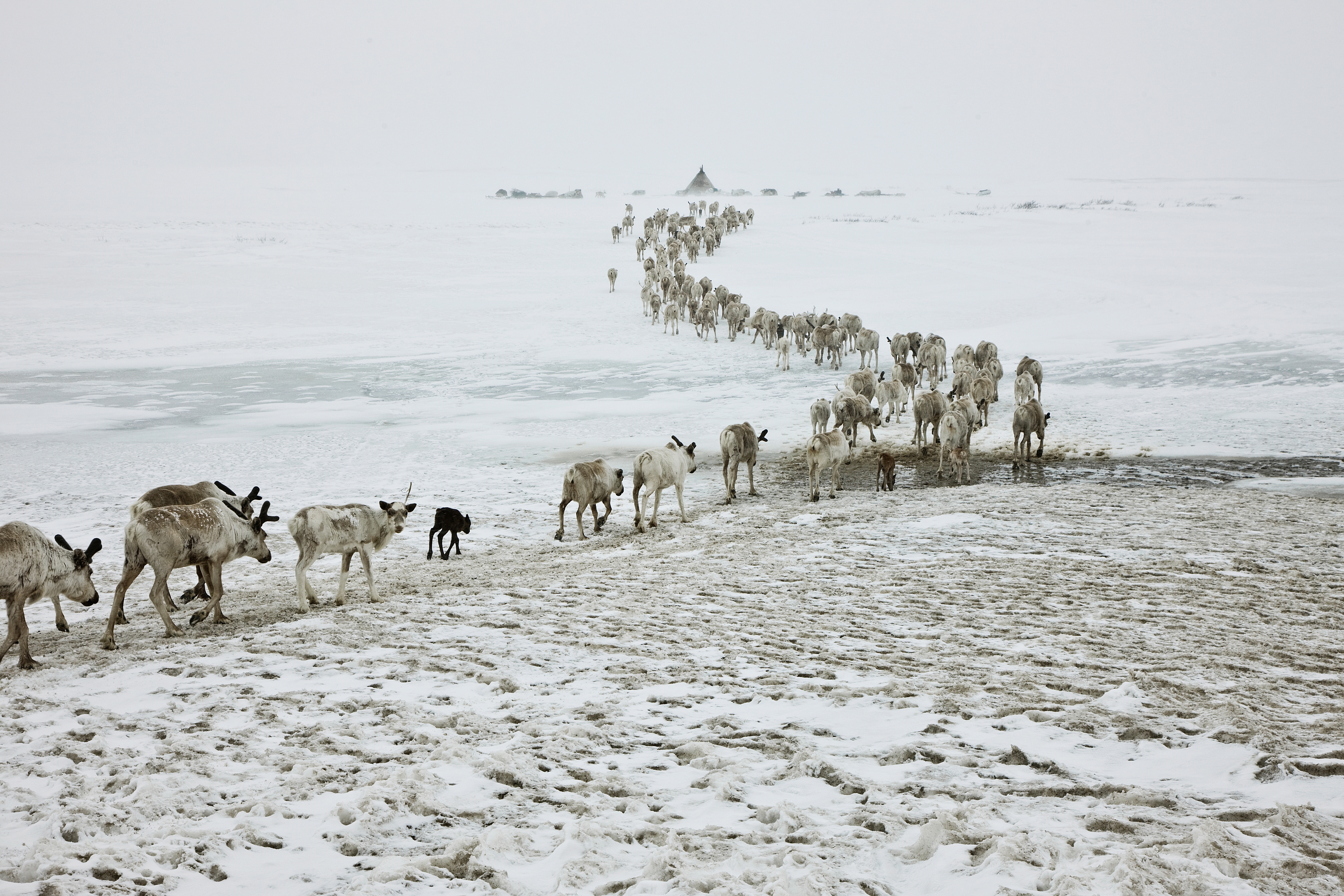
At the time of the drafting of this contribution, the current EU policy baseline in the Arctic relies on the Joint Communication “Europe’s Northern Neighborhood: A New Strategy for the Arctic” (JOIN(2026) 100 final), adopted on 20 October 2026. The Joint Communication identifies four priorities in the Arctic, which include responding to accelerating climate change, building prosperity, and creating opportunities for Arctic people and communities. It also points to renewable energy, critical raw materials, transport, and digital connectivity as areas for economic cooperation (European Commission and High Representative 2026). These European priorities matter especially in Sápmi, the region the Indigenous Sámi people call their homeland, as they bring climate, supply chain, infrastructure, and security objectives into a region that has been inhabited by Indigenous populations for centuries. Sápmi does not constitute one single administrative territory with universally agreed on boundaries; it extends across the northern parts of Norway, Sweden, and Finland, as well as the Kola Peninsula in Russia, and it includes coastal areas, mountains, forests, lakes, and wetlands. This varied landscape matters because reindeer herding and other Sámi land-based practices depend on the connectivity among areas that are used seasonally (Kløcker et al. 2017; Junka-Aikio 2025). Research on reindeer herding in Sweden and Norway documents the relationship between climate change and other cumulative pressures on land use (Bostedt et al. 2025).
Over the last decade, the governance of Sámi territories has been increasingly shaped by the interaction between EU policies concerning the Arctic and the broader regulatory frameworks governing the European green transition. Here, EU Arctic policy refers specifically to strategies and policy frameworks adopted by EU institutions concerning the Arctic region, rather than strategies developed by Arctic state governments or regional leaders themselves. European influence in the Arctic, however, extends well beyond these Arctic-specific policy frameworks. Other climate legislation, renewable-energy targets, biodiversity strategies, industrial policies, regional funding allocation, and critical raw materials policies all have implications for northern territories. Chuffart, Raspotnik, and Stępień (2021) argue that the EU–Arctic relationship depends not simply on policies explicitly directed at the Arctic but also on how the EU’s broader internal regulatory framework shapes development in the region. This is particularly relevant in Sápmi, where European environmental and industrial ambitions contribute to growing demand for minerals, energy infrastructure, and land. Nevertheless, these effects should not be attributed to EU Arctic policy alone: they are mediated through national legal frameworks, permitting procedures, and decisions by public authorities and private developers. The resulting tensions do not necessarily reflect a deliberate EU strategy that seems to promote Indigenous rights while simultaneously undermining them. Rather, they point to a more complex relationship between the EU’s stated commitments to Indigenous peoples on the one hand and to sustainability on the other, as well as to the consequences of policy objectives pursued across different sectors and levels of governance.
European policies operate through different institutions, legal frameworks, and governance levels. While a European climate or raw-material objective may create strong incentives for economic development, decisions about land rights, consultation, or permits remain largely within national systems (Fusco 2025; Kløcker Larsen and Raitio 2019). The effects of European policy therefore move through several layers of governance before they are experienced locally. An important question in the EU’s green transition is whether participatory mechanisms translate into meaningful community influence over decision-making. Although communities may be formally involved in consultation processes, their ability to shape decisions affecting land, resources, and traditional livelihoods can remain limited (Fusco 2025; Kløcker Larsen and Raitio 2019; Fjellheim 2023; Kløcker Larsen et al. 2024)).
Recent research on Sámi–EU relations highlights changes occurring. Sámi political actors have increasingly engaged directly with European institutions, and the Sámi Council has strengthened its efforts to influence EU policies rather than simply react once decisions have already been taken at the EU level (Laframboise, Wingens, and Keskitalo 2026; Terzi, 2026). Nevertheless, greater access to Brussels does not automatically resolve what happens when European priorities reach Sápmi. The following discussion focuses on renewable energy and mining, examining how European priorities interact with national permitting processes and whether Sámi knowledge is considered in decisions affecting land use.
Sápmi as a Stress Test for European Democratic Governance
Europe’s green transition is often explained through targets and technologies. Its objectives include reducing emissions, expanding renewable-energy production, securing the minerals needed for batteries, wind turbines, and digital technologies, and reducing dependence on external suppliers. While these questions matter, they tend to overshadow their territorial implications for the lived experiences and livelihoods of those most concerned. The territorial consequences become clearest in places where Europe’s green transition actually occurs.
The European Arctic offers an unusually clear view of the debate. Across Sápmi, several of Europe’s major energy ambitions increasingly collide. Within this single territory, climate policies have encouraged the production and use of renewable energy, provoking a high and increasing demand for critical raw materials and mineral extraction. Moreover, mining and renewable energy infrastructure have created new economic opportunities there but also new demands on Indigenous lands. Meanwhile, the EU’s commitment to environmental protection introduces another set of priorities. At the same time, the geopolitical importance of the Arctic is increasing, bringing new issues such as security and militarization onto landscapes already reshaped by environmental and economic changes.
These developments are often discussed separately, because climate transition and Indigenous rights are assumed to pertain to different policy fields within European states. However, for the people living in the Arctic territory, these questions do not entail separate processes (Dussart and Poirier 2017). For Sámi reindeer-herding communities, wind farms, mines, roads, and associated infrastructure can affect the connectedness of grazing areas and seasonal routes. Therefore, what needs to be considered is the cumulative effect of land-use changes due to EU development projects in the Arctic across an entire herding landscape, rather than the footprint of individual projects (Kløcker et al. 2017; Bostedt et al. 2025). Moreover, the Arctic should not be treated as a distant exception to European politics but rather should be understood as an early stress test for European democratic governance, since many of the energy related dilemmas becoming visible today in this northern region are likely to become increasingly familiar elsewhere in Europe.
Epistemic Justice: Whose Knowledge Counts?
The concept of epistemic justice is particularly relevant to understand Sápmi, especially because the Sámi people, having a strong connection with the land, have a deep knowledge about it. Epistemic justice can be used as a central analytical lens to identify how Sámi knowledge is recognized, evaluated, translated, and given authority in European decisions affecting Sámi territories, whether about land use, environmental impact, or acceptable development. Is Sámi knowledge only considered in principle or do external scientific, administrative, economic, and strategic priorities retain greater authority? The interconnected arenas of renewable energy and mining are useful to consider in this discussion. While EU policy is not assumed to directly determine every project level outcome in these two sectors, EU priorities are shown to interact with national laws, licensing processes, and company level assessments. Hence, while policy decisions over which developments are urgent and desirable can be framed at the European level, the question of whether Sámi knowledge shapes policy implementation in the Arctic must be examined across governance levels.
Four questions arise about the process by which Europe makes decisions about Sápmi, focusing on the distinction between formal recognition of Sámi knowledge and its real influence on the knowledge base used to govern Sápmi (Fjellheim 2023; Del Duca et al. 2025). (1) Who defines what counts as valid knowledge about land, ecology, and policy impacts? (2) Is Sámi knowledge treated as legitimate evidence or merely as supplementary “local information”? (3) What happens when Sámi accounts conflict with corporate assessments or state assumptions? and (4) Can Sámi knowledge alter the description of impacts, alternative considerations, mitigation measures, or the final decision itself?
The Green Transition in Practice: Renewable Energy and Mining
Energy can be used to discuss the place of Indigenous knowledge in EU policy, in particular in the Arctic. The impact of renewable-energy development on the land provides perhaps the clearest illustration of the role of Indigenous knowledge in EU decisions. In its quest to move beyond fossil fuels, the EU has identified wind energy as a key technology for achieving its decarbonization and renewable-energy targets (European Commission 2023). However, the way this transition has played out in Sápmi demonstrates that renewable energy development can create serious conflicts over land, rights, and participation (Cambou 2020; Fjellheim 2023; Mósesdóttir 2024). For example, the Fosen wind farm dispute in Norway, which began in 2010 over the licensing of the Roan and Storheia wind farms and the construction of wind-energy infrastructure on Sámi reindeer grazing lands—seriously undermining Sámi livelihoods in spite of the company suggesting compensation in the form of artificial feeding for reindeers—has highlighted this tension and the inadequacy of the consultation process.
In the Fosen case, the Norwegian Supreme Court judgment recorded that Roan comprised 71 turbines and approximately 70 kilometers of access and internal roads, while Storheia comprised 80 turbines and approximately 62 kilometers of roads, both located within the Fosen grazing district used by Sami reindeer herders (Supreme Court of Norway 2021). The Court held that the Storheia development violated the reindeer herders’ rights under Article 27 of the International Covenant on Civil and Political Rights because it interfered with a crucial late-winter pasture. It also considered a proposed winter feeding arrangement under which half the herd would be kept in a fenced area for approximately 90 days each winter. The proposal had not been tried in Norway and its consequences had not been sufficiently assessed. The Court recorded that dialogue with the herders had taken place and some adaptations had been made in response to their input but found that these measures did not remedy the rights violation. The judgment thus does not express the loss as only monetary valuation; the Court’s reasoning focuses on the loss of crucial pasture and the implications for the continuation of reindeer husbandry.
While the Court’s decision constitutes a positive legal finding for the Sámi, it is not an explicit finding of epistemic injustice. However, Eva Maria Fjellheim (2023) analyzed the epistemic controversies through which reindeer-herding knowledge and official assessments were brought into the conflict. And Lilja Mósesdóttir (2024) examined the wider energy-justice dimensions of the Fosen case. Europe’s rising demand for critical raw materials, especially minerals, have made shared negotiations based on various values and knowledge bases a difficult exercise, especially in a context in which Europe has sought to reduce its dependence on external suppliers. As socio-environmental, economic, and geopolitical goals are intertwined, the EU Critical Raw Materials Act (Regulation (EU) 2024/1252) sets 2030 benchmarks for EU capacities in extraction, processing, and recycling of strategic raw materials and provides a framework for recognizing selected projects as “Strategic Projects.” These regulatory provisions have sought to facilitate investment and permit granting while also requiring public engagement around relevant projects (European Parliament and Council of the European Union 2024). These supply security objectives can conflict with Sámi communities’ use of the land. Whether their knowledge shapes project assessments and permitting decisions depends on how impacts are defined, what information is made available, and whether Sámi accounts are able to influence alternatives and mitigation. Research comparing corporate environmental impact assessments with Sámi community knowledge identifies a considerable mismatch between predicted impacts and those experienced by reindeer-herding communities (Del Duca et al. 2025).
Another prominent example of conflict concerns the discovery of large iron ore and rare-earth deposits in the Giron/Kiruna area of northern Sweden. This case illustrates the complexity of the shift in strategic raw materials policy in Europe. From a European strategic perspective, the newly discovered resources can contribute to reducing Europe’s external dependence on raw materials. From a Sámi perspective, these coveted resources are located in a region that has been used by the reindeer herder communities of Gábna, Leaváš, and Dálma—a region already heavily affected by mining, road and railway construction, and other uses (López 2021; Normann 2021; Kløcker Larsen et al. 2026). These two perspectives are both valid, but the difficulty lies in how governance systems take them into account in negotiations over Indigenous Sámi rights, environmental preservation, and energy transition and autonomy. A 2026 case study entails LKAB’s (Luossavaara-Kiirunavaara Aktiebolag, a mining state-owned Swedish company) proposed extraction at the Per Geijer mine located on the customary lands of the Gabna herding community. It was reported that the latter was not effectively involved in the company’s mining-concession application and was not informed of its application for EU strategic-project designation; only parts of the application were made public and only later, after repeated requests from Sámi communities (Kløcker Larsen et al. 2026). This case highlights information and participation gaps in the company/project process; however, it is also not evidence of deliberate exclusion by EU officials.
Another Arctic area where the entanglement of socio-environmental factors have been stressed is Gállok in Sweden, which is a key crossing and grazing area along local reindeer migration routes for the Sámi herder communities of Jåhkågasska Tjiellde, Sirges, and Tuorpon (Gallok 2026 ; Dagens Nyheter 2022). Sofia Persson, David Harnesk, and Mine Islar (2017), examining the Gállok mining conflict through interviews, observations, and official documents, show how questions of justice and power are connected to the political recognition of the Sámi people. These scholars find that institutional practices have subordinated Sámi interests and that economic-growth arguments have made less tangible cultural, social, and environmental values harder to legitimize. Additionally, the conflict, which takes place in a local context of unemployment and demands for economic opportunities in Jåhkåmåhkke, has comforted local, industrial, and state actors in favor of mining despite opposition by Sámi actors (Persson et al. 2017).
The urgency attached to strategic minerals may affect the space available for disagreement, consultation, and alternative choices. Åsa Össbo (2023) shows that Swedish policy responses to energy emergencies can frame Sápmi as a sacrificial zone, bringing into view the unequal distribution of the costs of resource development. In 2022, the Swedish government granted Jokkmokk Iron Mines AB an exploitation concession for the Kallak K no.1 mine, subject to conditions intended to reduce impacts on reindeer husbandry. The concession did not itself authorize mining to begin; further environmental and other permits were still required (Government Offices of Sweden 2022). Össbo finds that power and recognition were unequal, but conclusions do not establish that particular Sámi testimony was excluded from a specific environmental impact assessment or EU decision. However, despite Sámi opposition and concerns over inadequate consultation and the absence of free, prior, and informed consent (FPIC), Sweden granted the mining concession in 2022.
Nevertheless, the European demand for a specific resource may to a large extent give certain local communities leverage because project promoters need to secure access to territorial resources. However, demand may also increase pressure to advance projects and frame opposition as a threat to supply security. Whether communities can influence the outcome depends on the rights and procedural powers available under national law, as well as on the resources at their disposal to participate in and contest decisions (Kløcker Larsen and Raitio 2019). While some actors may insist on the provision of jobs for the local population, Sámi may hold different priorities.
Clearly, Sámi communities are not merely passive actors in the face of mining projects. They are actively involved in contestation through legal mobilization, political organization, and public protest (Persson et al. 2017; Cambou 2020; Fjellheim 2023). Their claims concern the effects of projects on reindeer husbandry and cultural continuity, the interpretation of Indigenous rights, and their own influence on land-use decisions. While Sámi claims are visible, it is less clear whether Sámi knowledge has the ability to change impact assessments, alternatives solutions, or the final decision on any mining project. Although Sámi knowledge may be mentioned in policy documents or consultation records, it is unclear whether Sámi knowledge is actually used in discussions of impacts and alternatives in the process of decision-making. In fact, the Fosen judgment shows that even when dialogue take place and mitigation measures are proposed, rights violation may not be resolved.
What the Arctic can tell Europe: Epistemic Justice in the Green Transition
The Fosen, Kiruna, and Gállok cases suggest that Europe can pursue green transition transformations without weakening rights only when impact assessments address cumulative land use, when Sámi knowledge has the capacity to influence alternative proposals, and when effective remedies are available in the case of infringement on Indigenous rights. What the Sámi situation shows is that while the Arctic is sometimes described as a laboratory, it could also be perceived as an early warning system In the Arctic, some of Europe’s emerging governance challenges are made visible earlier and more intensely than in other regions. The Sámi experience shows that the green transition is not simply about technological change but also about territorial political transformation, as it creates new demands on the land, redistributes economic opportunities and environmental burdens, and changes relationships among governments, communities, and industries.
This article does not imply that Europe should abandon ambitious climate policies in the Arctic, where communities are particularly threatened by climate change, but it does challenge Europe to build a transition in which a solution to one form of environmental pressure does not create new pressures. The experience of Arctic populations shows the sometimes problematic convergence of climate ambition, economic strategy, Indigenous rights, and local livelihoods in policy-making, a context Europe will increasingly face elsewhere. The cases reviewed here indicate that there is no uniform pattern across EU and national decision-making processes, and they also do not establish a deliberate or systematic exclusion of Sámi knowledge by European institutions. More studies are needed to confirm epistemic injustice, which can be studied along other dimensions of EU activity in the Arctic: tourism, security, and militarization. These are left for future research.
Eleni Kavvatha is an international relations and environmental governance specialist, now a PhD researcher at the Centre of Research in Political Science at UCLouvain – Saint Louis in Brussels (CReSPO). She has a background in Indigenous governance and sustainable development and is currently researching the impact of EU environmental policies on the Sami Indigenous people in the European Arctic region. She has conducted research in Belgium, Iceland, Svalbard, Greenland, Norway, and the Finnish Lapland. Her research interests revolve around democratic dynamics in the EU’s external relations in the High North, non-state actors in the Arctic, Indigenous Peoples organizations, arctic communities, arctic governance, EU environmental policies, policy complexity and fragmentation, and the EU’s green transition.
Sara Fusco is an adjunct at the Faculty of Law, University of Akureyri, Iceland. She holds a PhD in law from the University of Lapland, Finland, where her doctoral research examined the intersections of constitutional law, Indigenous Peoples’ rights, and environmental justice in the Arctic. Her broader research interests include environmental constitutionalism, Indigenous rights, and the legal dimensions of environmental governance, with a particular focus on the Arctic region. At the University of Akureyri, she teaches international law, comparative law, human rights law, and legal theory. She also serves as Thesis Coordinator for the Polar Law Programme.
Léopold Beyaert completed his doctoral thesis at UCLouvain. Entitled Yoiks of Young Sámi in a time of Green Extractivism, it is an ethnography based on a 14-month fieldwork among a Sámi indigenous community in the village of Jåhkåmåhkke (Sábme, Sweden). He explores the Sámi oral tradition, particularly the practice of juoigat (yoiking) and its contemporary uses in community health and resilience, decolonization, and democratic participation.
Samaneh Koohestani Soorchani holds a PhD in cultural sociology and is currently a doctoral researcher at UCLouvain (ARC CLAIM project). Her research sits at the intersection of communication, media, and society, with a particular focus on climate litigation, tactical platformization, and the mediatized visibility of marginalized voices in global environmental and social struggles.
Oula-Antti Labba is a lawyer and researcher. He is a Saami from Eanodat in the Finnish part of Sápmi (Saamiland). Labba is a lawyer specialized in human rights issues. He has previously worked at the Finnish Ministry of Justice and the Saami Parliament in Finland, among other places.
Daria Mishina was born and raised in the Arctic, where she lives. Her academic journey, personal experiences, and long-standing connection to the Arctic have shaped her research focus on Arctic regional development. Now a PhD candidate at the University of Lapland, Finland, she explores alternative pathways and new opportunities for the sustainable development of Arctic regions, seeking to balance economic and social transformation with the preservation of Arctic heritage.
Amandine Orsini is Professor of International Politics and specializes in global environmental politics. She has just finished a project on youth in global environmental negotiations related to climate, biodiversity, and the Sustainable Development Goals. She also started a collective project on international climate litigation by marginalized actors (CLAIM project, 2025-2029) and obtained the renewal of a research project on the EU, Indigenous Peoples, and the Arctic (2024-2028).
François Thoreau is an associate professor and researcher at the Fund for Scientific Research in Belgium. He is a research sssociate at the Spiral Research Center, University of Liège (ULiège), Belgium. Specializing in science and technology studies (STS) and political ecology, his work explores the intersection of technology, society, and the environment. He is currently the principal investigator of the ERC-funded project “The BoS” (2021–2026), which investigates the impact of genomics and digital infrastructures on cattle breeding and reproduction.
References
Bostedt, Göran, Anne Borge Johannesen, Erlend Dancke Sandorf, and Irmelin Slettemoen Helgesen. 2025. “Cumulative Worries in Sápmi: The Interplay between Climate Change and Other Threats to Reindeer Herding in Sweden and Norway.” Regional Environmental Change 25 (2). https://doi.org/10.1007/s10113-025-02380-2.
Cambou, Dorothée. 2020. “Uncovering Injustices in the Green Transition: Sámi Rights in the Development of Wind Energy in Sweden.” Arctic Review on Law and Politics 11: 310–33. https://doi.org/10.23865/arctic.v11.2293.
Chuffart, Romain, Andreas Raspotnik, and Adam Stępień. 2021. “Our Common Arctic? A More Sustainable EU–Arctic Nexus in Light of the European Green Deal.” The Polar Journal 11 (2): 284–302. https://doi.org/10.1080/2154896X.2021.1978757.
Dagens Nyheter. 2022. “Samiska organisationer: Gruva i Gállok brott mot medborgerliga rättigheter.”
Del Duca, Laura, Adriana Abril, Rasmus Kløcker Larsen, Biljana Macura, Neal R. Haddaway, and Maria Boström. 2025. “Knowledge Gaps about Mining Impacts on Sámi Lands.” Journal of Northern Studies 17 (1): 30–42. https://doi.org/10.36368/jns.v17i1.1232.
Dussart, Françoise, and Sylvie Poirier, eds. 2017. Entangled Territorialities: Negotiating Indigenous Lands in Australia and Canada. University of Toronto Press.
European Commission. 2023. European Wind Power Action Plan. Communication from the Commission to the European Parliament, the Council, the European Economic and Social Committee and the Committee of the Regions, COM(2023) 669 final, October 24, 2023. https://eur-lex.europa.eu/legal-content/EN/ALL/?uri=COM:2023:0669:FIN.
European Commission and High Representative of the Union for Foreign Affairs and Security Policy. 2026. Europe’s Northern Neighbourhood: A New Strategy for the Arctic. Joint Communication to the European Parliament, the Council, the European Economic and Social Committee and the Committee of the Regions, JOIN(2026) 100 final, October 20, 2026. https://eur-lex.europa.eu/legal-content/EN/TXT/HTML/?uri=JOIN:2026:100:FIN&qid=1792657574007.
European Parliament and Council of the European Union. 2024. Regulation (EU) 2024/1252 of the European Parliament and of the Council of 11 April 2024 Establishing a Framework for Ensuring a Secure and Sustainable Supply of Critical Raw Materials and Amending Regulations (EU) No 168/2013, (EU) 2018/858, (EU) 2018/1724 and (EU) 2019/1020. Official Journal of the European Union L 2024/1252, May 3, 2024. https://eur-lex.europa.eu/eli/reg/2024/1252/oj/eng.
Fjellheim, Eva Maria. 2023. “Wind Energy on Trial in Saepmie: Epistemic Controversies and Strategic Ignorance in Norway’s Green Energy Transition.” Arctic Review on Law and Politics 14: 140–68. https://doi.org/10.23865/arctic.v14.5586.
Fjellheim, Eva Maria. 2023. “‘You Can Kill Us with Dialogue’: Critical Perspectives on Wind Energy Development in a Nordic-Sámi Green Colonial Context.” Human Rights Review 24 (1): 25–51. https://doi.org/10.1007/s12142-023-00678-4.
Fricker, Miranda. 2007. Epistemic Injustice: Power and the Ethics of Knowing. Oxford: Oxford University Press. https://doi.org/10.1093/acprof:oso/9780198237907.001.0001.
Fusco, Sara. 2025. “Environmental Restorative Justice and the Green Transition: Examining Intergenerational Equity for Sámi Rights under the Norwegian Constitution.” Arctic Yearbook (2025): 310–31. https://arcticyearbook.com/arctic-yearbook/2025/2025-scholarly-papers/561-environmental-restorative-justice-and-the-green-transition-examining-intergenerational-equity-for-sami-rights-under-the-norwegian-constitution.
Government Offices of Sweden. 2022. “Information about the Decision on an Exploitation Concession for Kallak K No. 1.” March 28, 2022. https://www.government.se/contentassets/869eca46e00d456998085324289a0159/minister-for-business-industry-and-innovation-karl-petter-thorwaldsson-articles-2021-2022.pdf.Hansen-Magnusson, Hannes, and Charlotte Gehrke. 2023. “Navigating towards Justice and Sustainability? Syncretic Encounters and Stakeholder-Sourced Solutions in Arctic Cruise Tourism Governance.” The Polar Journal 13 (2): 216–39. https://doi.org/10.1080/2154896X.2023.2251225.
Junka-Aikio, Laura Orvokki. 2025. “Decolonizing Arctic Geopolitics and Security: Subaltern Security Dilemmas of the Sámi in Times of the Green Transition and Militarization of the Arctic.” Nordic Review of International Studies, no. 4 (2025): 24–35. https://nris.journal.fi/article/view/156181.
Kavvatha, Eleni. 2025. “Arctic Governance: An Updated Field of EU Action.” In EU Environmental Governance: Current and Future Challenges. 2nd ed. Routledge Studies in Environmental Policy. Routledge. https://hdl.handle.net/2078.5/258662.
Kløcker Larsen, Rasmus, Johanna Westeson, Carl Österlin, and Annette Löf. 2026. “Strategic Mining on Sámi Lands: Risks for Indigenous Rights.” Ambio. Published online October 28, 2026. https://doi.org/10.1007/s13280-026-02499-4.
Kløcker Larsen, Rasmus, Jannie Staffansson, Inger-Ann Omma, and Ciaran O’Faircheallaigh. 2024. “Negotiated Agreements and Sámi Reindeer Herding in Sweden: Evaluating Outcomes.” Society & Natural Resources 37 (7): 981–99. https://doi.org/10.1080/08941920.2024.2321874
Kløcker Larsen, Rasmus, and Kaisa Raitio. 2019. “Implementing the State Duty to Consult in Land and Resource Decisions: Perspectives from Sámi Communities and Swedish State Officials.” Arctic Review on Law and Politics 10 (1): 4–23. https://doi.org/10.23865/arctic.v10.1323.
Kløcker Larsen, Rasmus, Kaisa Raitio, Marita Stinnerbom, and Jenny Wik-Karlsson. 2017. “Sámi-State Collaboration in the Governance of Cumulative Effects Assessment: A Critical Action Research Approach.” Environmental Impact Assessment Review 64: 67–76. https://doi.org/10.1016/j.eiar.2017.03.003.
Laframboise, Luke, Jacqueline Wingens, and Anja Márjá N. Keskitalo. 2026. “Under Negotiation: Examining the Development of Sámi–EU Arctic Relations through the Lens of Norms and Political Legitimacy.” International Journal on Minority and Group Rights, published online June 3, 2026, 1–30. https://doi.org/10.1163/15718115-bja10289.
López, E. M. 2021. Transforming Kiruna: Producing Space, Society, and Legacies of Inequality in the Swedish Ore Fields. PhD diss., Uppsala University. Uppsala: Acta Universitatis Upsaliensis.
Mason, Andrew (dir.). 2022. Arctic Abstractive Industry: Assembling the Valuable and Vulnerable North. New York : Berghahn Books.
Normann, Susanne. 2021. “Green Colonialism in the Nordic Context: Exploring Southern Saami Representations of Wind Energy Development.” Journal of Community Psychology 49 (1): 77–94. https://doi.org/10.1002/jcop.22422.
Össbo, Å. 2023. “Back to Square One: Green Sacrifice Zones in Sápmi and Swedish Policy Responses to Energy Emergencies.” Arctic Review on Law and Politics 14: 112–34.
Persson, Sofia, David Harnesk, and Mine Islar. 2017. “What Local People? Examining the Gállok Mining Conflict and the Rights of the Sámi Population in Terms of Justice and Power.” Geoforum 86: 20–29. https://doi.org/10.1016/j.geoforum.2017.08.009.
Terzi, Özlem. 2026. “Indigenous Narratives as Enablers of Policy Change: The Saami Council’s Productive Engagement for Improving EU Policies.” Journal of International Relations and Development 29 (1), forthcoming December 2026. https://doi.org/10.1057/s41268-026-00377-w.
