
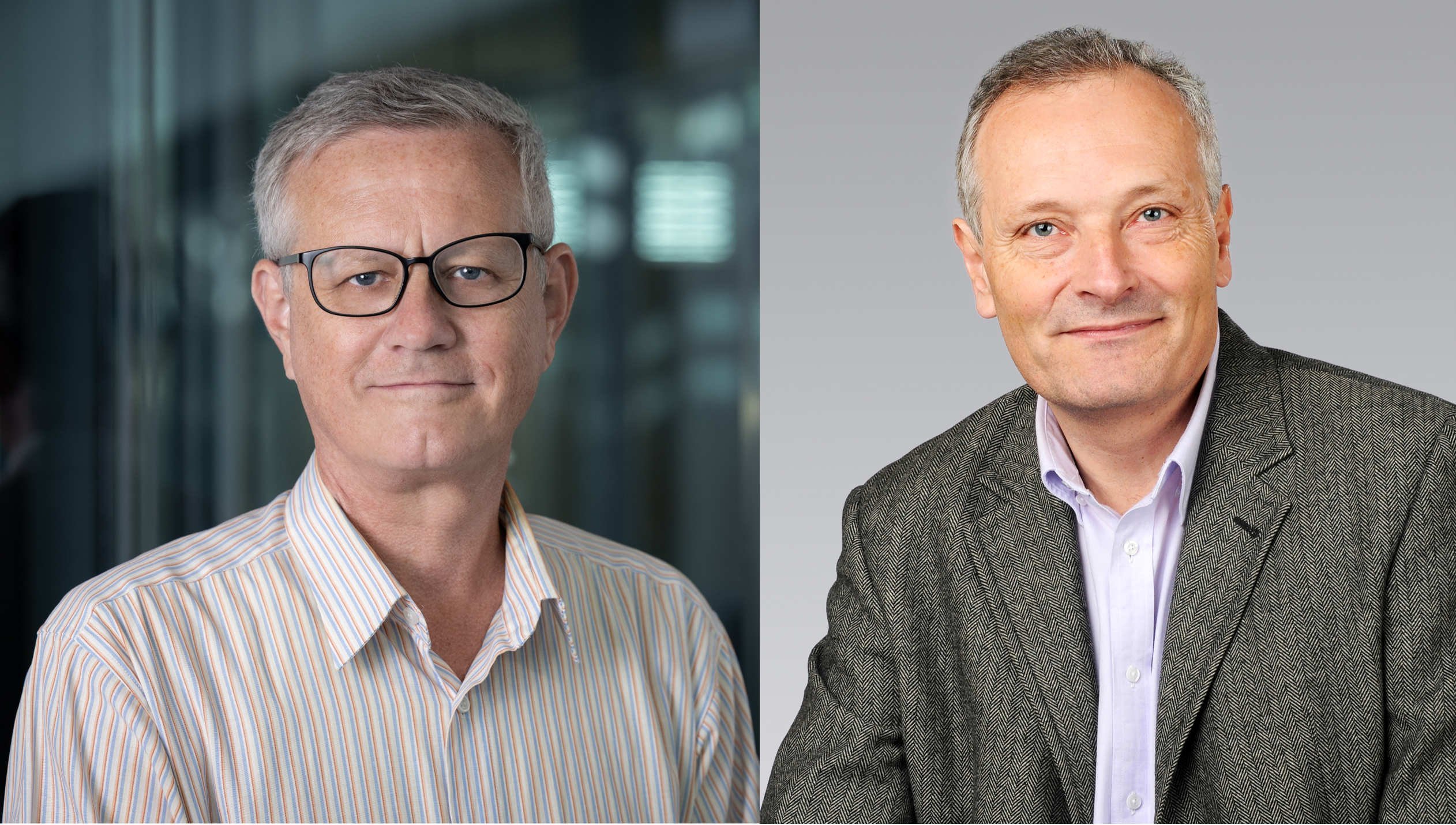
By Hélène B. Ducros
This is part of a special issue sponsored by the World Society Foundation: A Role for Europe in the Global Arena.
In this GlobalEurope one-year anniversary issue sponsored by the World Society Foundation (WSF, hereafter “the Foundation”), I am delighted to sit down with Christian Suter, WSF President, and Patrick Ziltener, to discuss their experience with the organization and learn from their insight about its mission and their vision for its future. After establishing the Sociological Institute at the University of Zurich in the 1960s, sociologist Peter Heintz (1920-1983) created the Foundation in 1982 to strengthen a “world society” approach in social sciences and encourage research focused on the world as a complex society. Since then, the Foundation has never ceased to adapt its instruments of support in the service of this endeavor, which Suter and Ziltener detail in this interview. They also share how the context for the concept of world society has evolved since Heintz first used it in the 1960s/70s and how their personal trajectory as sociology scholars initially led them to the institution. As the WSF approaches its 45th year, it is clear that its foundational tenets and goals are more than ever relevant in a world increasingly fragmented by geoeconomic competition and asymmetries, national security concerns, and sociodigital polarization. At the same time as the world may appear to be splintering into new or renewed rivalries and as global flows are said to be undergoing a certain rewiring—which some associate with a deglobalizing or slowbalizing wave—a return to the basics of a world society view helps understand the current reorganization as a struggle over leading the institutions and social infrastructures of an interconnected world rather than as a retreat to nationalistic imaginaries of boundaries, inclusion, and exclusion.
Has the understanding of “world society” evolved since Peter Heintz founded the World Society Foundation?
Christian Suter. “World society,” as used by Peter Heintz, is not meant to be a theoretical concept. So, we do not offer a core definition for it. Instead, it is concept that may change with the times and may always incur modifications. Our mission is precisely to encourage people to think about it, but we do not think of world society as a fixed concept. Rather, it is an approach. It is also important to recall that at the time Peter Heintz, a sociologist, started bringing this idea to the fore, in the late 60s and the 70s, the context was quite different from today’s. He was one of the first scholars to use this approach, although he was not the only one. However, in his discipline it was particularly new, because at the time sociologists were primarily interested in nation-states and national structures. Instead, he aimed to draw attention to frameworks other than the national state. That was a very important shift in sociology, perhaps more so than in political science for example, where there had been an international systems approach for a while. Peter Heintz thought of the world as a stratified system, with this stratification occurring along different dimensions. For him, the most important of these dimensions in the 60s was development, as well as the concept of core-periphery. Today, other relevant dimensions have emerged.
Moreover, the 60s and 70s is also the time of the first wave of globalization, which was economic. So, the approach was then focused primarily on the economic side of the debate. Then, in the 90s came another robust wave of globalization, when Peter Heintz’s world view became ever more relevant. Today, we have other movements, such as deglobalization, in a context of rising conflicts among big powers and concerns about global warming.
Patrick Ziltener. I agree. The approach of the WSF takes us away from methodological nationalism. We are so used to the concept of nation-state, we simply accept it. But Peter Heintz wanted to explain the world as fragmented instead. There lies his great contribution. There are no long-term linear processes of globalization. In a context of global fragmentation, this restructuring should have come as no surprise. But it is impressive to see how historically the various waves of globalization have lasted. In a fragmented world, the WSF was conceived as a loose network where research agendas are shared. It is not a school of thought nor an organization; it is primarily a network. Today, people can attend conferences online, but at the time of the creation of the Foundation, it was especially important to bring people together, whether in Europe or the Global South, to participate in meetings and conferences. This network aspect of the Foundation is key.
The Foundation published a book about “After Globalization.” For you, what are the most critical issues to research in our era of shifting globalization and regional fragmentation and this post nation-state system? You speak of “development.” The concept has matured since the 60s with scholars thinking in terms of “post-development” and “degrowth.” How does this fit with globalization, deglobalization, or slowbalization today?
CS. One concept that was even more problematic in the 60s and 70s was “modernization.” Peter Heintz spoke of development but not of modernization. I would say that economic growth is always important in society. Growth can be distributed even in a global capitalist structure. In the past, we had critical views of specific types of growth. But with degrowth, there might be less to distribute and other types of conflicts may then arise. For our generation, the new discourse was that development/growth and underdevelopment are internationally related rather than independent globally. Now this idea comes as common sense, but at the time this new message was eye opening. Today, the concept of sustainability has somewhat replaced development. It is a broad concept that allows for multiple perspectives.
PZ. When looking at deglobalization, there are many indicators to observe and the processes themselves can be in conflict and paradoxical.
What about the role of technology, which is usually associated with “global”? For example, how does artificial intelligence (AI) modify the notion of globalization and growth? Is technology today a tool of globalization or does it contribute to fragmentation?
CS. Technology is a very important part of the concept and dynamics in the system. In a capitalist world, the power of technology drives the cycles, with some theories advancing that technology is what leads societies and prompts them to react. In particular, basic innovation changes production systems. In this respect, AI is considered a new industrial revolution, as it is replacing existing economic structures and has important impacts on all parts of society. For these reasons, technology—and AI— are very important aspects of world society thinking.
PZ. Technology is a key factor in the catching up of developing countries. Peter Heintz saw an increasing gap across world regions. At the time of the creation of the Foundation, high tech capitalism was not a path developing countries could follow, with some exceptions such as China, Japan, or a few other countries that did manage to catch up. In Japan, by the end of the Meiji Restoration the country was modernized. By 1920, Japan was a modern country that started to copy but also develop technology of its own. Then, after the world wars, South Korea, Taiwan, and Singapore emerged, partly out of a war economy. But these countries remain exceptions.
What is the main mission of the Foundation and how is it particularly relevant and suited to these key questions today?
CS. The Foundation’s main mission is to sponsor research on world society topics. To this effect, we have developed different instruments. The Foundation has actively supported researchers directly in the field. Over the past twenty years, it has also brought researchers together by either organizing or supporting international conferences. Lastly, we also support publications to make research available, distributed, and accessible to other researchers.
How has your personal background led you to the Foundation? How do your respective research specialties fit in the mission of the Foundation? And how might the Foundation have shaped your work?
CS. Peter Heintz was my teacher. I had courses with him and was his last research assistant. In this role, I contributed to his last project on political regimes, which was an important element in his thinking. I was also close to Volker Bornschier, who became the first president of the Foundation (1983-1996), because I worked on his team for my dissertation project. In the 80s, we worked on global economic relations, and I specifically did research on global debt, i.e., external debt. If a country has external debt, it establishes a relation with other countries. Others, such as Volker Bornschier, worked on multinational corporations. While I was more interested in economic processes, Peter Heintz was less so. Later, in the late 90s, when I worked at the Sociological Institute of the University of Zurich (SUZ), I was invited to join the Foundation. At the time, I had developed two research domains: external debt, which was the core of my PhD work, and Latin America, which was the topic of my Habilitation work. I was interested in long-term historical change and transformation of political and social structures, basically since the time for which we can collect data, which would be the early nineteenth century for Latin America.
PZ. I never met Peter Heintz, since he had already passed when I came onboard. I was studying abroad, and for me it was a miracle to find in conservative Zurich this world society approach and global perspective. It encouraged me to come back to Switzerland and conclude my studies there. The Foundation was influential in my development as a scholar, since I started studying Japan with a Japanese researcher who had been brought in by the Foundation. I also became interested in the history and the origin of the world society perspective itself. At the time it had not been analyzed yet. I like to use the metaphor of the meteor to explain Peter Heintz. He was indeed like a meteor. He came from the outside and made a dramatic impact on our thinking. But there were also some negative reactions from Swiss conservatives against this type of sociological research and views. When Volker Bornschier became the president of the Foundation and continued its tradition I came to focus on European integration as the restructuring of a world region. Then for my habilitation, I studied the rise of Asia as a world region with a high level of economic interdependence, yet no formal institutions to support this integration. From a European perspective, this was very interesting, because it shows that you can indeed have successful integration without the institutions.
In the case of China, which you mentioned, how is the Belt and Road Initiative part of regional integration? Or is it something else?
PZ. The Belt and Road Initiative is part of regional integration, but it goes beyond Asia. It started as a way to increase connectivity between East Asia and central Asia, then with Africa; and now it is truly global and ambitious. Today, we clearly have to see China as no longer a regional player but a global one. People comment on the fact that for the first time in history an East Asian leader is also a global leader.
Why do you think an engagement with the Global South is particularly important in accomplishing the mission of the WSF?
CS. The Global South is vey important to the Foundation. From the start, one primary intention of the Foundation has been to bring people together, although many of the projects we have funded, especially early on, have emanated from the Global North, for example the US. What this shows is that in the 80s the Global South was not competitive with respect to our standards. But through conferences, we have been able to broaden our support to include more of the Global South. What is also important for the Foundation is that we go there for conferences, whether Asia, India, Latin America, or Africa. That helps with giving better access to people in these regions. We can either organize conferences ourselves or support local organizers. We realized early on that this was key to providing access.
PZ. Early on we addressed certain research gap in core countries. What was often being analyzed were the relationships among those countries or among core countries and countries in the Global South. But the relationships among countries in the Global South were typically not analyzed, because they were not deemed to be that relevant to our societies and economies. The WSF aimed to remedy this gap and started inviting researchers doing this type of work in Africa and Asia.
Have you been able to keep track of the impact past grant and award recipients have had on global policy or academic networks?
CS. The WSF and its grant recipients do not have a close, formal relationship. Rather, the WSF is an informal network. When it celebrated its 25th anniversary in 2007, we looked for past awardees, but it was not easy. People move or are not longer active; that is the nature of networks. Past awardees are always invited when we make new calls. We would like to be able to evaluate and analyze the impact at some point.
How does the Foundation select projects/conferences to support? Do organizations and individuals come to you or do you seek out likely partners that fit your agenda at a given time?
CS. In the beginning the WSF supported individual research projects, whose topics were defined by the applicants. The selection was based on the scientific quality of their proposal. Then we decided to support conferences, which made the Foundation more dynamic. We also attend conferences ourselves, where we meet colleagues, discuss topics, and develop new relationships to build new ideas for Foundation projects.
The WSF also publishes its own book series. How does the Foundation’s publication process work? The WSF has recently supported two conferences and has one upcoming (on “Globalizing Political Economy”, “Inequality, Social Mobility in Latin America”, and “Trends in Well-Being, Quality of Life, and Social Monitoring and Reporting”). Is the usual pattern to publish an edited volume when you sponsor conferences to help diffuse the output, in effect constituting an archive of the work of the Foundation?
CS. Initially, we supported authors of book chapters that we had solicited for an edited volume, usually based on a WSF-sponsored conference. The book is a good format to distribute the research the Foundation finances. But the types of cooperation we build make the output vary. For example, when we support a conference that we do not organize ourselves, the organizers may have other publication plans after the conference. When we partner with other institutions and researchers, we develop an idea together, but they are often responsible for diffusion, either through special issues in journals or book series they might already publish. Of course, we have our own book series, where we may publish when we organize a conference ourselves. And we may also invite other researchers to be included. These books indeed constitute the archive of the Foundation. It is not a linear or continuous process, with years in which we publish more and others less. The idea is that this archive will be available in the future, even when the Foundation is no longer active one day.
PZ. I think it is fundamental to understand that the Foundation does not have a political or theoretical agenda. It does not impose concepts or methods. Instead, it adopts the stance of methodological pluralism, with a strong emphasis on empirical realities and analysis. That is what makes it attractive for researchers, even if that means we may pay the price in terms of the heterogeneity of the output.
How do you see the future of the Foundation? What do you wish this future to be?
CS. The future is always uncertain. What has become clear to us though, especially at the last conference we were involved in, is that beyond developing good research topics is the fact that scholars do not have the necessary resources for their work any longer. Even professors have lost their travel budgets. So it is important that we remain relevant in bringing people together so they can develop ideas and projects together. It is imperative that we see this and continue our mission there.
In the medium term, we could develop new support formats. We have continuously changed our format from research funding, conference funding, publication funding; and we also pivoted to open access publication funding, so research output is available everywhere. Something we have been switching to recently is to move from support to global conferences to regional conferences, for example a conference in Latin America with a focus on Latin America. We look not necessary for global participation anymore but for increased regional participation and footprint. One idea for the future would be to connect several regional conferences. We are always thinking of new ways to bring researchers together.
PZ. The way the Foundation keeps changing the form of its funding is impressive. It is always adapting to new contexts and new technologies, which have advanced the development of world society itself. Today, with the World Wide Web, online conferences, etc., the level of international cooperation and consciousness has reached a level that Peter Heintz could not have imagined.
How does Europe and the fact that the Foundation is based in Europe play out in the work of the Foundation?
CS. Europe is an important region for the Foundation. Within Europe itself there are centers and peripheries. The European periphery is quite relevant for us, especially in the east. The Foundation has always been global, but Europe is definitely included in its perspective.
PZ. In our support, we have focused on questions of European integration, then the collapse of socialist regimes—two processes that were part of the making of a global society. The Foundation has drawn many researchers who analyzed these processes.
As far as the formal/legal structure of the Foundation, how easy is it in Switzerland to set up this type of innovative, open to the world instrument?
CS. I am not an expert on foundation law, but Switzerland is known for the presence of this type of organizations, which importantly are exempted from taxation. It would most likely be possible in other places as well to create such structure. But of course Switzerland is a wealthy country, which helps but is not a condition for creating a foundation. Such actors have themselves changed the structure of world society. At the time of Peter Heintz, foundations were not important actors in world society. Today they are. We are a standalone entity, independent from any academic institution, although we maintain informal connections, for example with the Sociological Institute of the University of Zurich.
PZ. When the Foundation was created, Switzerland was in a paradoxical situation. After WWII, it was rather politically inward looking and not particularly cooperative internationally. On the other hand, it had a long tradition of being an economic globalizer. For hundreds of years, Switzerland had been an exporter of commodities, for example toward various colonial empires. But it was not engaged politically. Switzerland was not even a member of the UN when the Foundation was created. That is why the contrast was stark between the context and the idea of global social research.
CS. And it is precisely this tension that made it attractive.
Christian Suter is Professor Emeritus of Sociology at the University of Neuchâtel (Switzerland). He has been a member of the board of the World Society Foundation since 1999 and its president since 2008. His current research focuses on social indicators and quality of life and on globalization and world society. Earlier research focused on social and economic inequalities and poverty, sovereign debt and global debt crises, social and political transformations in Latin America, and social support and health. He has published and edited more than 40 books and special issues, as well as many articles in international social sciences journals, encyclopedias, and volumes. His most recent publications include The Global Politics of Census Taking(Routledge 2024), Measuring Gender Equality(Springer 2023), African-Asian Relations(LIT 2022), Measuring and Understanding Complex Phenomena (Springer 2021), The Middle Class in World Society (Routledge 2020), and Wealth(s) and Subjective Well-being (Springer 2019). He is the winner of the Book Award of the American Sociological Association, Political Economy of the World-System Section (1993; for Debt Cycles in the World-Economy, Westview 1992), and he has been awarded the Fritz Thyssen Prize for articles in social sciences journals (1998) and the Research Fellow Award 2020 from the International Society for Quality-of-Life Studies for substantial contribution to quality-of-life research (2020).
