Skip to content
GlobalEurope

GlobalEurope

A journal placing Europe in the world

  • Home
  • About
    • About
    • Editorial Team
    • Publish in GlobalEurope
    • Join the E-List
    • Sponsors
      • Sponsor’s Page: WSF
  • Issues
    • All
    • ISSUE 7 | October 2026
      • Issue 7 | Contributors
    • ISSUE 6 | August 2026
      • Issue 6 | Contributors
    • ISSUE 5 | June 2026
      • Issue 5 | Contributors
      • Roundtable: Elections in Hungary
    • ISSUE 4 | April 2026
      • Issue 4 | Contributors
      • Special Topic: Eurovision
    • ISSUE 3 | February 2026
      • Issue 3 | Contributors
    • ISSUE 2 | December 2025
      • Issue 2 | Contributors
    • ISSUE 1 | October 2025
      • Issue 1 | Contributors
  • Research
    • Research in Focus
  • Interviews
  • Art
  • Teach & Learn
  • Reviews
  • Lit in Translation
  • On Our Bookshelf

Tules

Posted on By
Art

ISSUE 7 | October 2026

By Roman Loranc

Curly Brackets (Poland)
Tule Triangle
Lily Pads and Tules (Poland)
Tules
Tules in Wind
Tule Triangle
Tule Day Dream
Stark Reflections (Shasta)
Fractal Tules (Poland)
Towering Tules
Tule Close-Up


After photographing California over two decades, I think of myself as a regional photographer, but that does not mean that photography cannot be understood beyond the region. In fact, extensive travel across Europe has solidified my belief that the ancient groves of California native oaks are just as sacred as the holy spaces and cathedrals of Europe.


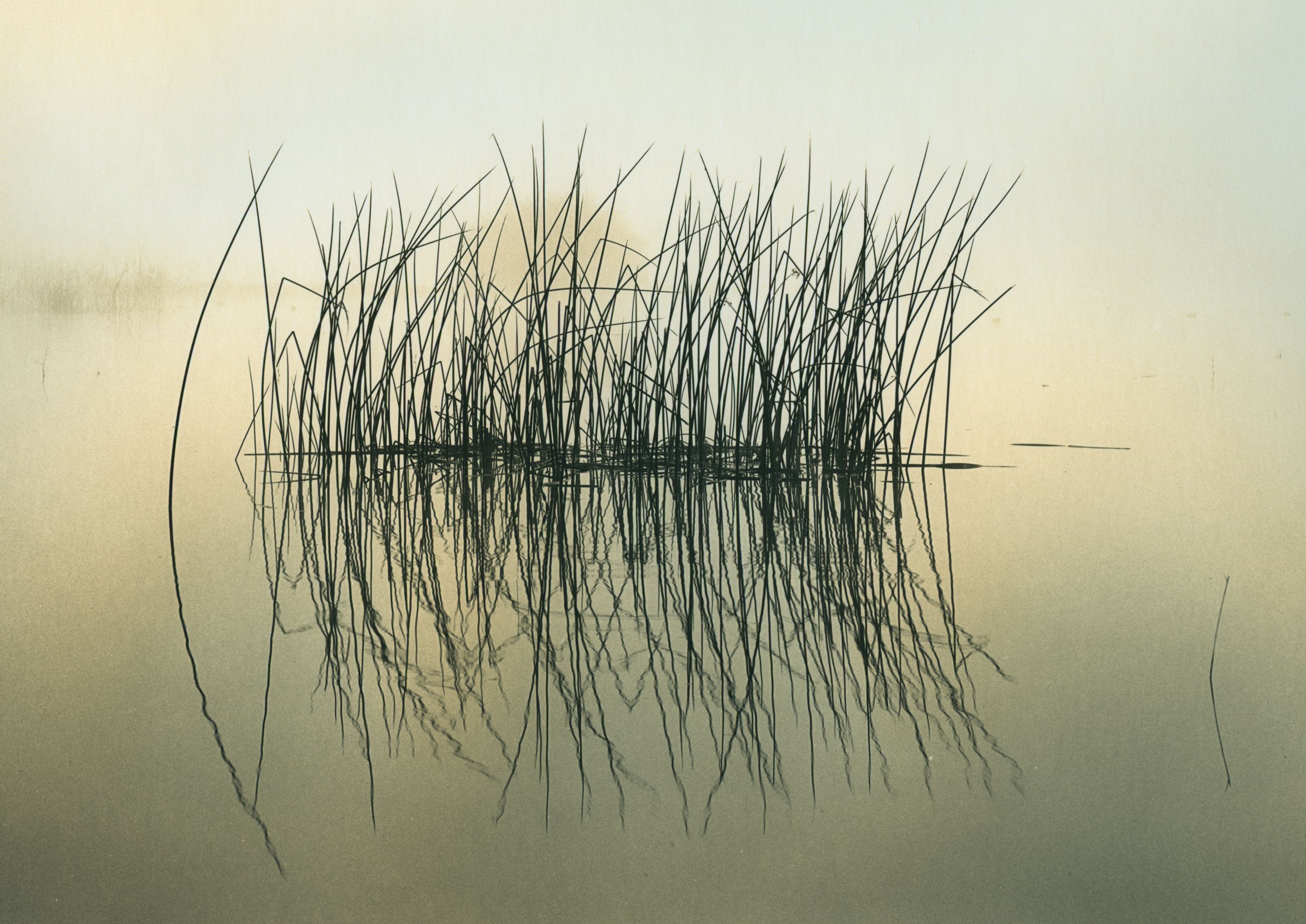
In his “Tules” series, acclaimed photographer Roman Loranc focuses on lacustrine wetlands and the vegetation at the water’s edge—reeds, grasses, trees—using traditional silver gelatin printing techniques. His black-and-white or sepia photographs convey a quiet and meditative space where natural shapes become geometric abstracts and the stillness of water exists through the movement of plant life, for an overall paradoxical, ambiguous, and solemn landscape.


Roman Loranc is a self-taught photographer who began his journey as an artist in the early 1960s when he received a 35mm camera for his first communication. Over time he learned to print and develop on his own and continues to do so. Roman uses a 4×5 Linhof field camera and shoots the majority of his photographs with a 210mm Nikkor lens, using Kodak’s classic Tri-X film, and prints on multigrade fiber paper. Roman shapes the photo from start to finish. The innate drama of the landscapes is reproduced through a variable split-toning (sepia and selenium) technique. The photographer does all the printing, spotting, and archival mounting. More about his work here.


All images with permission of the photographer @ Roman Loranc.

Banner image: Tule raft.

Print Friendly, PDF & Email

Share:

  • Share on Facebook (Opens in new window) Facebook
  • Share on Bluesky (Opens in new window) Bluesky
  • Share on X (Opens in new window) X
  • Share on Reddit (Opens in new window) Reddit
  • Share on Mastodon (Opens in new window) Mastodon
  • Share on Threads (Opens in new window) Threads
  • Share on LinkedIn (Opens in new window) LinkedIn
  • Share on WhatsApp (Opens in new window) WhatsApp
  • Share on Pinterest (Opens in new window) Pinterest
  • Share on Tumblr (Opens in new window) Tumblr
  • Share on Telegram (Opens in new window) Telegram

YOU MIGHT LIKE:

Tags: issue001 top

Post navigation

❮ Previous Post: October 2026
Next Post: Into the Sun by C.F. Ramuz ❯

Sponsor's news:

The World Society Foundation's latest publication.

Explore the latest issue, featuring a special topic on "A role for Europe in the global arena," sponsored by the World Society Foundation.
Conference announcements from our sponsor the World Society Foundation. Click for more information on the events.
Call for papers! Contribute to our upcoming issues.
Geopolitical
Ostrum
Interview
mobility
Ramuz
Film
tules
lady
Books
pawn
contributors
  • X
  • Instagram
  • Linkedin

Copyright © 2025-2026 GlobalEurope Journal. All rights reserved. ISSN: 3070-3352.

Theme: Oceanly by ScriptsTown