
By Roman Loranc


After photographing California over two decades, I think of myself as a regional photographer, but that does not mean that photography cannot be understood beyond the region. In fact, extensive travel across Europe has solidified my belief that the ancient groves of California native oaks are just as sacred as the holy spaces and cathedrals of Europe.
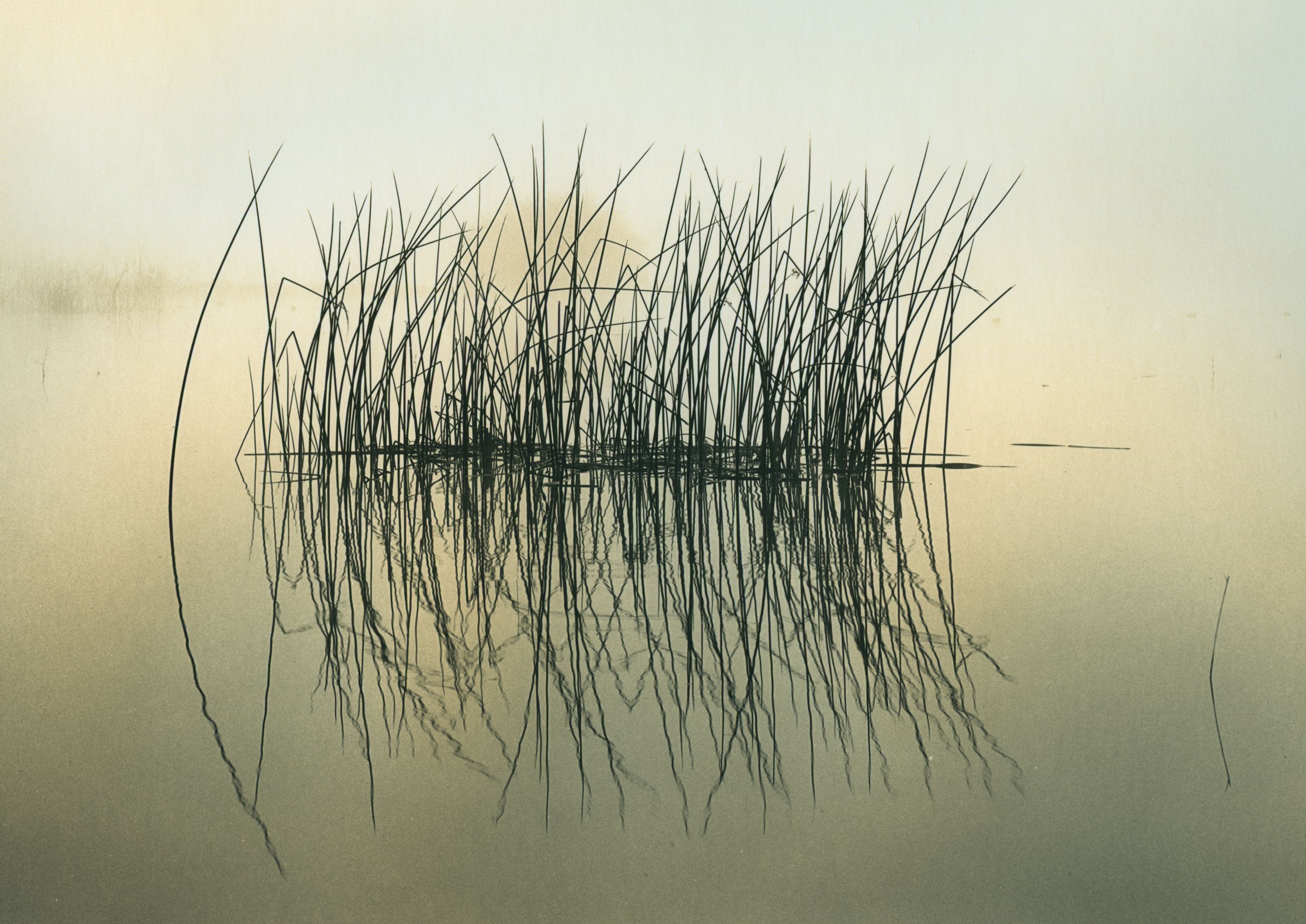
In his “Tules” series, acclaimed photographer Roman Loranc focuses on lacustrine wetlands and the vegetation at the water’s edge—reeds, grasses, trees—using traditional silver gelatin printing techniques. His black-and-white or sepia photographs convey a quiet and meditative space where natural shapes become geometric abstracts and the stillness of water exists through the movement of plant life, for an overall paradoxical, ambiguous, and solemn landscape.
Roman Loranc is a self-taught photographer who began his journey as an artist in the early 1960s when he received a 35mm camera for his first communication. Over time he learned to print and develop on his own and continues to do so. Roman uses a 4×5 Linhof field camera and shoots the majority of his photographs with a 210mm Nikkor lens, using Kodak’s classic Tri-X film, and prints on multigrade fiber paper. Roman shapes the photo from start to finish. The innate drama of the landscapes is reproduced through a variable split-toning (sepia and selenium) technique. The photographer does all the printing, spotting, and archival mounting. More about his work here.
All images with permission of the photographer @ Roman Loranc.
Banner image: Tule raft.
