
By Charlotte Halpern
This is part of a special issue sponsored by the World Society Foundation: A Role for Europe in the Global Arena.
This article examines how European cities contributed to the emergence and international diffusion of a sustainable urban mobility model within the broader context of global climate governance. It shows how local experiments in accessibility, public space, and multimodal transport evolved into a wider sustainable mobility agenda linking climate mitigation, urban livability, and social inclusion. The contribution of European cities operated less through policy export than through experimentation, policy learning, and transnational diffusion. The article also highlights growing challenges, including political contestation, metropolitan inequalities, climate adaptation, and the emergence of new centers of urban innovation beyond Europe. It argues that in the future, the role of European cities depends on their ability to embed mobility transitions within broader socio-economic and territorial strategies while continuing to contribute to global efforts to address climate and urban sustainability challenges.
Among the many efforts undertaken to improve urban life over the past three decades, the development of sustainable mobility policies stands out as one of the most significant areas of innovation in European cities. Across the continent, local authorities have experimented with new approaches to transport planning, public space management, and urban development that have sought to reduce dependence on private automobiles while improving accessibility and quality of life. Initially developed in a small number of pioneering cities, these approaches progressively spread across municipalities of different sizes and within different contexts, contributing to the emergence of a distinctive model of sustainable urban mobility.
When it emerged in the 2000s, this model represented a shift away from post-war approaches to transport planning centered on accommodating growing levels of motorization through road construction, parking provision, and traffic management. Instead, the new model gave increasing attention to accessibility, livability, and the relationship between mobility, public space, and urban development (Anciaes and Jones 2021). Streets increasingly came to be viewed not only as transport corridors but also as places that support social interaction, economic activity, and urban life. In this respect, European cities translated longstanding urban concerns[1] into a new generation of public policies and planning practices. Climate change and environmental objectives gave renewed urgency to these debates, while European programs and networks enabled cities to transform broad principles into scalable and transferable policy solutions. Sustainable mobility consequently emerged at the intersection of concerns about congestion, air pollution, public health, social inclusion, and urban space, helping redefine mobility as a broader question of urban development rather than a narrow transport problem.
The significance of these developments extends beyond Europe. Through policy learning, city networks, European programs, and transnational partnerships, ideas initially developed in European cities circulated internationally and contributed to broader debates on urban sustainability and climate governance. However, the influence of European cities rarely took the form of policy export in the traditional sense. Rather, it was built through experimentation, demonstration, and the dissemination of practical solutions that could be adapted to different contexts. Yet the conditions under which this model emerged have changed significantly. Persistent difficulties in reducing transport emissions (ICPP 2022), growing political contestation of sustainable urban mobility policies, and the emergence of new centers of urban innovation beyond Europe all raise questions about the future relevance of the so-called European sustainable urban mobility model.
Against this backdrop, this article takes stock of that model, examining both its contribution to global debates on climate and urban governance and the challenges associated with its continued evolution, diffusion, and adaptation. Drawing on previous research on sustainable urban mobility (Halpern 2022; Halpern and Ray 2022),[2] the article argues that European cities became influential actors in global climate governance not because they offered a universal model to be replicated, but because they pioneered an integrated approach to urban mobility that linked climate, accessibility, and quality-of-life objectives while encouraging experimentation, policy learning, and adaptation across diverse urban contexts. The article first examines how this approach emerged and was consolidated across European cities. It then explores how the approach circulated through transnational networks, European programs, and broader communities of practice. Finally, it analyses the political, metropolitan, and international challenges that increasingly shape the future of sustainable mobility both within and beyond Europe.
Developing an Alternative Urban Mobility Model in Europe
European cities have pioneered an alternative approach to urban mobility centered on accessibility, multimodality, and sustainable urban planning. Although implemented in different ways across Europe, these innovations progressively spread across cities and contributed to the emergence of a distinctive sustainable urban mobility model.
From Moving Cars to Improving Accessibility
For much of the post-war period, transport planning sought to accommodate growing levels of motorization through road construction, traffic management, and parking provision. Success was often measured by traffic speed and road capacity. From the 1990s onwards, concerns about environmental degradation, congestion, and urban livability encouraged policymakers across European cities to rethink automobile-centered transport policies. This shift was driven by a diverse coalition of planners, mobility experts, civil society organizations, and citizen movements seeking to reclaim urban space from cars. Increasing emphasis was placed on accessibility rather than mobility itself, which ensured that people could reach jobs, services, and amenities while environmental and social costs were minimized. This distinction proved fundamental, fostering a more systemic approach linking transport, land-use planning, public space, and urban quality of life (Davies and Altshuler 2019).
The result was a more integrated understanding of mobility that connected transport to land-use planning, housing, street design, and public space. The sustainable mobility paradigm described by Banister (2008; 2011) emphasized the need to move beyond technological solutions and address the structural factors generating demand for car travel. In this context, many European cities invested in multimodal systems combining public transport, cycling, walking, and shared mobility services. The objective was not to eliminate cars but to reduce their dominance and expand mobility choices.
Reallocating Road Space
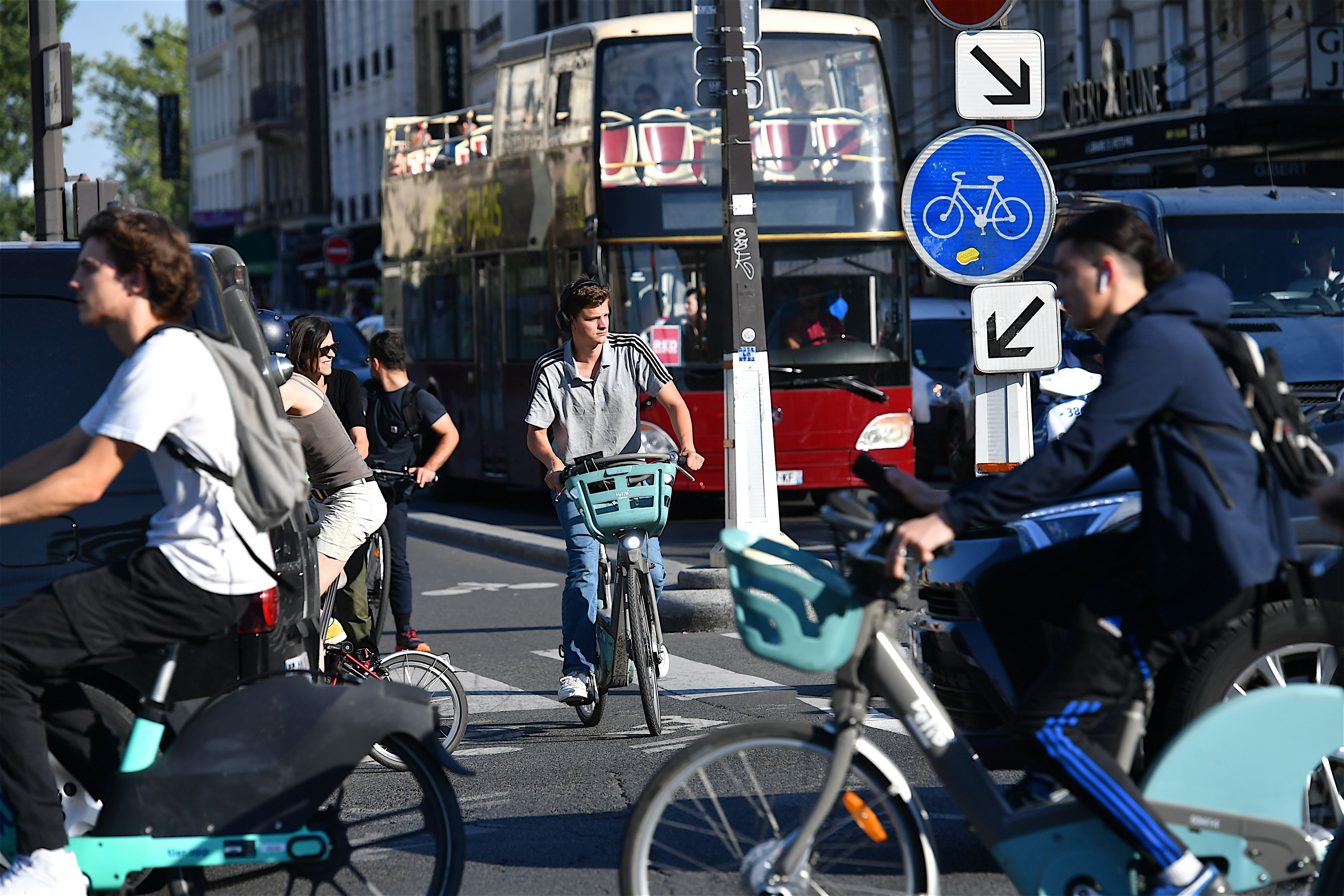
The most visible expression of this new approach has been the reallocation of road space. For decades, streets were designed primarily to facilitate the circulation and storage of private vehicles. From the early 2000s onwards, many European cities began to challenge the traditional allocation of urban space to private vehicles. Cities such as Copenhagen (Denmark) and Malmö (Sweden) demonstrated that sustained investment could make cycling and public transport central components of urban mobility systems. Elsewhere, metropolitan authorities combined investments in alternative transport modes with broader efforts to rebalance public space. Paris (France) progressively reduced parking provision and pedestrianized major public areas, while London (UK) expanded congestion charging[3] and low-emission measures and Greater Manchester (UK) integrated mobility planning into a wider strategy for accessibility and urban regeneration. Similar policy approaches spread southward to Porto (Portugal) and Lucca (Italy) before extending eastward to Cluj-Napoca (Romania), Budapest (Hungary), Gdynia (Poland), and Klaipėda (Lithuania) through investments in cycling infrastructure, public transport, and public-space improvements.
Together, these initiatives transformed sustainable urban mobility from a series of local experiments into a broader European agenda for urban transformation. Although often contested, they reflected a profound shift in the governance of streets and public space. More broadly, European cities helped advance a conception of sustainable mobility centered not simply on cleaner vehicles but on the reshaping of the relationship between mobility, public space, and urban well-being.
The Role of the EU: Learning, Experimentation, and Diffusion
While these transformations were developed and implemented at the city scale, they were supported by a wider European ecosystem of regulations, programs, and networks. Although the European Union (EU) has limited formal authority over urban mobility, it has played an important role in creating the conditions for experimentation, learning, and diffusion (Halpern and Ray 2022). Since the 1990s, European programs have funded pilot projects, research initiatives, and exchanges of experience. The CIVITAS initiative, launched by the European Commission in 2002 to promote experimentation and policy learning in sustainable urban mobility, has encouraged cities to test innovative mobility solutions, while Sustainable Urban Mobility Plans (SUMPs) were enacted to provide a common framework promoting integrated and participatory approaches to mobility planning (European Commission 2024). European city networks such as Eurocities, Polis, and ICLEI[4] further facilitated the circulation of ideas, enabling cities to learn from one another’s successes and failures. New approaches to mobility thus spread through peer learning, practical experimentation, and the exchange of expertise.
Yet this diffusion did not occur in a purely voluntary environment. It unfolded “in the shadow of [a] hierarchy” (Héritier 1996) created by European legislation and standards on vehicle emissions, air quality, road safety, and climate targets. These regulatory frameworks, often implemented by national governments, strengthened incentives for local authorities to act while increasing the legitimacy of sustainable mobility policies. At the same time, pioneering cities often moved faster than national and regional authorities, challenging policy frameworks designed to accommodate a wider range of territorial, economic, and industrial interests. Whereas cities increasingly prioritized accessibility, public space, and reduced car dependence, higher levels of government also had to consider the mobility needs of rural areas and the strategic importance of automotive industries. Sustainable mobility therefore became an important arena of competition between different visions of the mobility transition.
Taking the Model Global: European Cities and Transnational Urban Climate Governance
European cities became influential actors in the international circulation of ideas about climate-friendly urban development. In this context, sustainable mobility emerged as an important dimension of urban climate governance, through which cities increasingly operated as international actors in their own right (Acuto 2013). The growing influence of European cities was closely tied to their emergence as recognized laboratories of urban innovation (Davies and Altshuler 2019). As sustainable mobility policies spread across Europe, attention increasingly shifted from experimentation to dissemination. Experiences across a growing number of cities demonstrated that approaches initially developed by a handful of pioneers could be adapted to diverse contexts. Cities such as Copenhagen (Denmark), Antwerp (Belgium), Lyon (France), and Budapest (Hungary) played an active role by documenting their experiences and publishing practical guidance for policymakers and practitioners. Conferences, study visits, awards, rankings, and benchmarking exercises further contributed to transforming local projects into recognized policy models. Labels such as livable city, healthy streets, superblocks, and 15-minute city provided common reference points through which diverse experiences could be compared and communicated. Influential figures such as Jan Gehl, renowned Danish architect and urban designer, and Carlos Moreno (Franco-Colombian researcher focusing on smart and sustainable cities), alongside political leaders including Anne Hidalgo (former Paris mayor from 2014 to 2026) and successive mayors of Barcelona, as well as leading transport authorities such as Transport for London (TfL) and the Budapest Centre for Transport (BKK), helped translate technical mobility interventions into broader narratives about accessibility, public space, public health, and urban quality of life, increasing the visibility of these narratives well beyond specialist transport circles.
This process also relied on a dense ecosystem of public and private actors. European city networks such as Eurocities (a network of major European cities) and POLIS (a network of European cities promoting innovation in urban transport) facilitated exchanges of knowledge, experience through working groups, joint projects, study visits, and policy advocacy among municipalities, while global networks such as C40 (a global network of large cities committed to climate action) and ICLEI further connected mobility initiatives to international climate commitments, reporting frameworks and collaborative programs on urban sustainability. Industrial actors also contributed to the dissemination of urban mobility innovations. Public transport manufacturers such as Alstom, a French multinational specializing in rail and urban transit systems, and Siemens, a German provider of rail technologies and mobility infrastructure, as well as engineering and planning firms such as Arup (UK), bike-sharing operators including JCDecaux, and automotive companies such as Volvo and Michelin, increasingly invested in partnerships with municipalities, transport authorities, and real estate developers to launch demonstration projects testing new mobility technologies, services, and street redesign solutions under real-world conditions. They also participated in broader programs supporting digital mobility services, smart urban infrastructure, and data-driven transport management. Their involvement helped showcase solutions, provide technical expertise, and support the scaling up of local experiments.
The growing internationalization of sustainable mobility was further reinforced by the UN Sustainable Development Goals, particularly SDG 11 on sustainable cities and communities. Working alongside organizations such as the OECD, development banks, cooperation agencies, and think-and-do tanks—including the Institute for Transportation and Development Policy (ITDP) and the World Resources Institute (WRI)—city networks helped codify, evaluate, and disseminate urban mobility practices through guidelines, indicators, benchmarking exercises, training programs and policy recommendations. European cities thus became important nodes within a broader infrastructure of learning and cooperation linking municipalities, businesses, researchers, and international organizations.
This development represents a distinctive form of European influence. Rather than exporting a fixed model, European cities have helped build transnational communities of practice around sustainable mobility. Their influence stems less from formal authority than from their capacity to demonstrate, refine, and disseminate approaches linking climate objectives, accessibility, public space, and quality of life. Through experimentation, networking, and coalition building, they have contributed to making sustainable mobility a recognized component of urban climate governance worldwide.
A Contested Model: Challenges and Limits of European Sustainable Urban Mobility Leadership
The growing international visibility of European cities planning should not obscure a more complex reality. The sustainable mobility agenda is increasingly facing political, social, and economic pressures. Measures once presented as consensual responses to climate change, congestion, and declining urban quality of life have become the subject of intense public debate in Europe. At the same time, the geography of urban innovation has evolved, with new actors and models emerging beyond Europe. As a result, the future influence of European cities in global debates on sustainable urban development cannot be taken for granted.
The Politics of Sustainable Urban Mobility
Sustainable mobility policies inevitably redistribute access to urban space. Whether through cycle lanes, pedestrianization schemes, low-emission zones, parking restrictions, or congestion charging, sustainable urban development measures create winners and losers. While many initiatives have generated positive environmental and social outcomes, they have also become increasingly contested. Across Europe, opposition to restrictions on car use has often mobilized concerns about individual freedom, economic costs, and territorial inequalities. Debates surrounding London’s Ultra Low Emission Zone, traffic restrictions in Paris, or the expansion of cycling infrastructure in several cities illustrate how mobility policies can become politically charged. These controversies reflect wider tensions surrounding climate policies and distributive justice.
As Lockwood (2021) argues, backlash often emerges when environmental policies are perceived as imposing disproportionate costs on specific groups or territories. This challenge is particularly acute in mobility policy, where daily routines, employment patterns, and residential choices remain closely tied to automobile use. Measures intended to promote sustainability may therefore be experienced by the population as constraints, particularly where alternatives remain insufficiently developed.
These tensions reveal the limits of city-led approaches. While cities have often pioneered mobility innovations, maintaining political support and the model’s long-term viability requires embedding these innovations within broader national and regional strategies that address housing, employment, spatial cohesion, and the challenges of maintaining industrial competitiveness in a rapidly evolving technological and geopolitical environment.
Scaling up Sustainable Mobility Socially and Spatially
The European urban sustainable mobility agenda faces a second challenge: scaling up policies initially developed in dense urban centers to larger metropolitan regions. Many of the most celebrated innovations in cycling, pedestrianization, and road-space reallocation emerged in municipalities where population density, public transport provision, and political support created favorable conditions for experimentation. Extending these approaches to metropolitan areas characterized by fragmented governance arrangements, suburbanization, and longer commuting distances has proven more complex.
These difficulties reflect broader transformations affecting European cities. Rising housing costs, changing labor markets, and metropolitan expansion have progressively reshaped the geography of accessibility. In many urban regions, lower-income households have been displaced towards suburban and peri-urban areas where dependence on private vehicles remains high and alternatives in the form of public transport, active mobility infrastructure, and nearby services are often more limited. Under these conditions, mobility transitions cannot be reduced to transport policy alone. They increasingly intersect with questions of housing, employment, territorial cohesion, and social inclusion. Recent debates on transport equity have further emphasized the uneven distribution of the benefits and burdens associated with mobility transitions (Lucas et al. 2019).
Restricting car use without improving affordable alternatives risks reinforcing existing inequalities. Addressing these challenges requires moving beyond a city-centered perspective. The success of sustainable mobility increasingly depends on metropolitan governance arrangements capable of coordinating transport, housing, land-use planning, and climate policy across multiple jurisdictions. It also requires stronger involvement from regional, national, and European authorities able to connect local initiatives to wider investment strategies and territorial development goals. In this context, the long-term viability of the European model depends less on the success of individual urban projects than on its capacity to embed mobility transitions within broader strategies for social inclusion, climate adaptation, and economic transformation.
Beyond Europe: New Centers of Urban Innovation
The growing contestation of the sustainable urban mobility agenda is also occurring at a time when Europe’s position within global urban innovation is changing. During the 1990s and 2000s, many of the most visible experiments in cycling policy, public-space transformation, and integrated planning emerged from European cities. Today, however, innovation is increasingly emanating from different places across the world.
Moreover, the ecosystem of actors involved in urban mobility has broadened considerably. Alongside public authorities and traditional transport operators, digital platforms, micromobility companies, data providers, and technology firms have become influential participants in debates about accessibility, climate adaptation, public space, and urban governance. And many of these actors have emerged outside Europe. Ride-hailing companies such as Uber, Grab, and Didi, together with new providers of micromobility (such as bike- and scooter-sharing), digital payments, and mobility-as-a-service platforms, have reshaped people’s expectations about urban mobility and accelerated the circulation of new ideas across regions. Innovation is therefore no longer driven primarily by governments, planners, and transport agencies but increasingly by interactions among cities, firms, investors, technology providers, and international organizations.
Many mobility challenges outside Europe differ significantly from those encountered in European cities. Across the world, rapid urbanization, economic informality, metropolitan expansion, mass-transit provision, and climate adaptation measures have generated distinct policy priorities and governance challenges. In this context, urban actors in Latin American, Asian, and African cities have not merely transplanted European solutions but adapted them to local circumstances and developed new approaches of their own. In those cities, rapid bus transit systems, electrified bus fleets, new forms of shared mobility, as well as transit-oriented development and integrated ticketing systems allowing users to move seamlessly across metropolitan-wide transport networks operated by multiple providers, have expanded through collaborations involving local governments, transport operators, development banks, and international organizations. At the same time, innovation increasingly extends beyond transport infrastructure. Cities in Latin America have used tactical urbanism—a planning approach based on temporary, low-cost, and easily reversible interventions,[5]—to test low-cost interventions in urban systems, as well as the reallocation of road space to public uses, allowing cities to experiment with alternative street designs while engaging local communities. At the same time, cities across Asia, from Mumbai to Tokyo, have developed programs addressing the gendered dimensions of mobility through the implementation of safer public transport systems and improved street design—for example in terms of street lighting, enhanced visibility and surveillance around transport hubs, women-only carriages or services, and the redesign of stations and pedestrian routes to improve safety and ease of access. These initiatives recognize that women often face greater constraints on mobility due to safety concerns, caregiving responsibilities, and more complex travel patterns, which can limit their access to economic and social opportunities.
In those places, sustainable urban mobility is increasingly understood not as the diffusion of a successful European model but as the product of continuous exchanges and mutual learning across diverse urban contexts. These developments have been accompanied by profound changes in the production and circulation of policy knowledge. Organizations such as UITP, WRI, and other international partners have worked to document, evaluate, and disseminate effective urban mobility practices, while digital platforms, webinars, observatories, and professional communities have enabled cities to exchange experiences on a global scale.
This decentering does not diminish the contribution of European cities to global sustainable urban planning, but it challenges any notion of European exceptionalism. Increasingly, ideas emerging in one city circulate through complex networks linking municipalities, researchers, international organizations, practitioners’ firms, and advocacy groups across multiple regions. Europe’s role consequently rests less on promoting its model of sustainable urbanism than on participating in transnational processes where knowledge and adaptation schemes are shared and collaboration is made possible.
Europe’s Urban Influence in a Fragmented World
Although urban mobility innovations have growingly circulated across the world, a persistent challenge remains and should not be obscured. Indeed, despite decades of experimentation and international cooperation, transport remains one of the most difficult sectors to decarbonize anywhere in the world. Road vehicles continue to account for most transport emissions,[6] while rising mobility demand offsets many gains achieved through vehicle efficiency and electrification. Yet this does not diminish the significance of the transformations observed across many European cities, as sustainable mobility policies have certainly helped improve public space for urban dwellers and expanded their transport choices, at the same time as they have reoriented urban development towards broader goals of accessibility and quality of life in the city.
Despite challenges, the experience of European cities in governing sustainable urban mobility offers a useful perspective on Europe’s role in addressing global urban challenges. Supported by European programs, city networks, and transnational partnerships, local experiments in various European cities have evolved into a broader policy agenda linking facilitated mobility and access to public space, social inclusion, and climate action planning. Through this agenda, European cities have demonstrated how urban policy can reconcile multiple objectives while adapting to diverse local contexts. Their influence has rarely operated through direct policy export or formal authority, but it has relied instead on experimentation, knowledge accumulation, and the dissemination of practical solutions through transnational networks of cities, experts, firms, and international organizations.
Nevertheless, it has become clear that cities alone cannot deliver the wider transformations required to achieve climate neutrality, indicating limits on the European urban mobility model. Since mobility transitions depend on complementary action in the housing sector, land-use planning, energy systems, industrial policy, and territorial development, they must also respond to shifting political priorities, including rising concerns about affordability, territorial cohesion, economic resilience, and security. In this context, the growing prominence of cities in climate and urban governance is increasingly accompanied by a renewed role for national governments, as industrial policy, energy security, strategic autonomy, and regional development return to the forefront of public action. Meanwhile, innovation is increasingly emerging from a wider range of cities and regions across the world.
Hence, Europe’s contribution to global sustainable urbanization may derive less from its geopolitical power than from its capacity to develop, test, and circulate practical responses to complex urban challenges it has experienced. In particular, the future relevance of the European sustainable urban mobility model will depend on its ability to connect climate mitigation objectives with broader social goals of accessibility, inclusion, resilience, territorial cohesion, and economic development, all the while aligning local urban experimentation with wider national and international priorities.
Charlotte Halpern (https://orcid.org/0000-0001-6527-4473) holds a PhD in political science and is an FNSP senior research fellow with tenure at Sciences Po, Centre for European studies and comparative politics (CEE), CNRS, France. She has done extensive teaching and research on state restructuring, comparative climate governance and the selection of policy instruments. Her current research focuses on the governing of ecological transitions, with a focus on urban sustainable mobility and climate action, and in a comparative perspective. She is the co-director of the LIEPP (Laboratory for interdisciplinary evaluation of public policies) environmental policy research group and the Sciences Po executive master programme “Regional governance and urban development”. She is an elected member of the International Public Policy Association (IPPA)’s executive committee.
References
Acuto, Michele. 2013. “City Leadership in Global Governance.” Global Governance 19 (3): 481–98. https://doi.org/10.1163/19426720-01903009.
Anciaes, Paulo, and Peter Jones. 2022. “Pedestrian Priority in Street Design: How Can It Improve Sustainable Mobility?” Transportation Research Procedia 60: 220-227. https://doi.org/10.1016/j.trpro.2021.12.029.
Banister, David. 2008. “The Sustainable Mobility Paradigm.” Transport Policy 15 (2): 73–80. https://doi.org/10.1016/j.tranpol.2007.10.005.
Banister, David. 2011. “Cities, Mobility and Climate Change.” Journal of Transport Geography 19 (6): 1538-46. https://doi.org/10.1016/j.jtrangeo.2011.03.009.
Davis, Diane E. and Altshuler, Alan. eds. 2019. Transformative Urban Transport: The Role of Political Leadership, Oxford: Oxford University Press.
European Commission. 2024. Sustainable Urban Mobility Planning and Monitoring. Brussels: Directorate-General for Mobility and Transport. https://transport.ec.europa.eu/transport-themes/urban-transport/sustainable-urban-mobility-planning-and-monitoring_en.
Halpern, Charlotte. 2022. “Policy Solution Ownership: Road Space Reallocation as a New Approach to Urban Mobility.” In The Political Formulation of Policy Solutions, edited by Philippe Zittoun, Frank Fischer, and Nikolaos Zahariadis. Bristol: Bristol University Press.
Halpern, Charlotte, and Parnika Ray. 2022. Road Space Reallocation for Sustainable Urban Mobility in the EU: The Balancing Act between EU Regulations and Cities as Urban Space Managers. LIEPP Policy Brief No. 60. Paris: Sciences Po. https://hal.science/hal-03701457.
Héritier, Adrienne. 1996. “The Accommodation of Diversity in European Policy-Making and Its Outcomes: Regulatory Policy as a Patchwork.” Journal of European Public Policy 3 (2): 149-167. https://doi.org/10.1080/13501769608407027.
IPCC. 2022. Climate Change 2022: Mitigation of Climate Change. Contribution of Working Group III to the Sixth Assessment Report of the Intergovernmental Panel on Climate Change. Cambridge: Cambridge University Press. https://doi.org/10.1017/9781009157926.
Jacobs, Jane. 1961. The Death and Life of Great American Cities. New York: Random House.
Lockwood, Matthew. 2021. “Right-Wing Populism and the Climate Change Agenda: Exploring the Linkages.” Environmental Politics 30 (5): 712–32. https://doi.org/10.1080/09644016.2020.1808881.
Lucas, Karen, Karel Martens, Floridea Di Ciommo, and Ariane Dupont-Kieffer, eds. 2019. Measuring Transport Equity. Amsterdam: Elsevier.
Newman, Peter, and Jeffrey Kenworthy. 1989. Cities and Automobile Dependence: An International Sourcebook. Aldershot: Gower.
Pucher, John, and Ralph Buehler. 2008. “Making Cycling Irresistible: Lessons from the Netherlands, Denmark and Germany.” Transport Reviews 28 (4): 495–528. https://doi.org/10.1080/01441640701806612.
Notes
[1] As expressed by Jacobs (1961) and Newman and Kenworthy (1989).
[2] This article draws extensively on Halpern (2022) and Halpern and Ray (2022), as well as research conducted with the support of three EU-funded projects (CREATE, MORE, and SUMP-PLUS) under the Horizon 2020 research and innovation programme. The author thanks Peter Jones for his role as scientific coordinator across these projects, as well as Jenny McArthur, Juliette Thijs, Francesco Sarti, Roberto Rodriguez, Natalia Cappellini, and Parnika Ray for their contributions to different phases of the research. All views expressed are those of the author.
[3] Fees charged for driving through certain spaces at certain times of the day.
[4] Formerly the International Council for Local Environmental Initiatives, now known as Local Governments for Sustainability.
[5] For example, pop-up cycle lanes, temporary pedestrian zones, or tactical plazas.
[6] Transport accounts for around 23 percent of global energy-related CO₂ emissions, with road vehicles responsible for approximately 70 percent of transport emissions (IPCC 2022).
Photo: Oliverouge 3 | Shutterstock.com
